The APEC summit in Shenzhen has become a major diplomatic stage for Chinese President Xi Jinping and Russian President Vladimir Putin to criticize Western protectionism, sanctions and economic restrictions ahead of their expected meeting with US President Donald Trump.
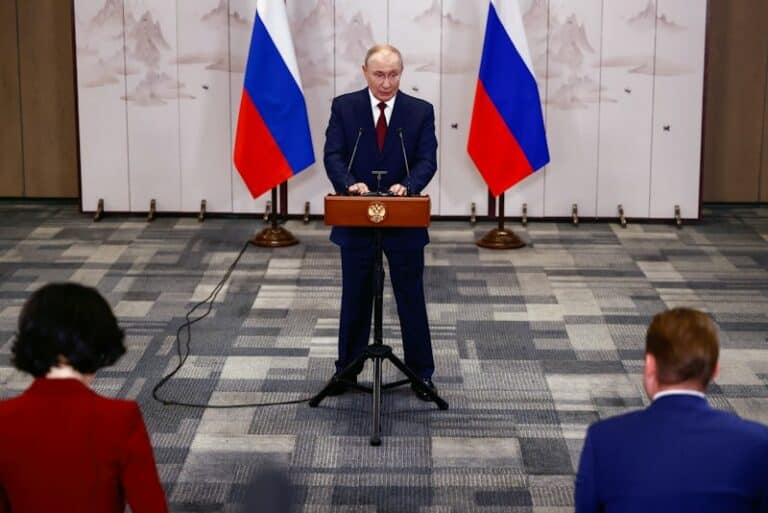
Addressing the gathering, Xi called for greater international cooperation, open trade and investment, while Putin attacked Western sanctions and tariffs, arguing that economic restrictions had lost much of their effectiveness. Their interventions highlighted growing disagreements over global trade, technological competition and the international balance of power.
The summit is taking place against the background of strained relations between Washington, Beijing and Moscow, with trade disputes, the war in Ukraine and other geopolitical tensions expected to feature prominently in discussions among the three leaders.
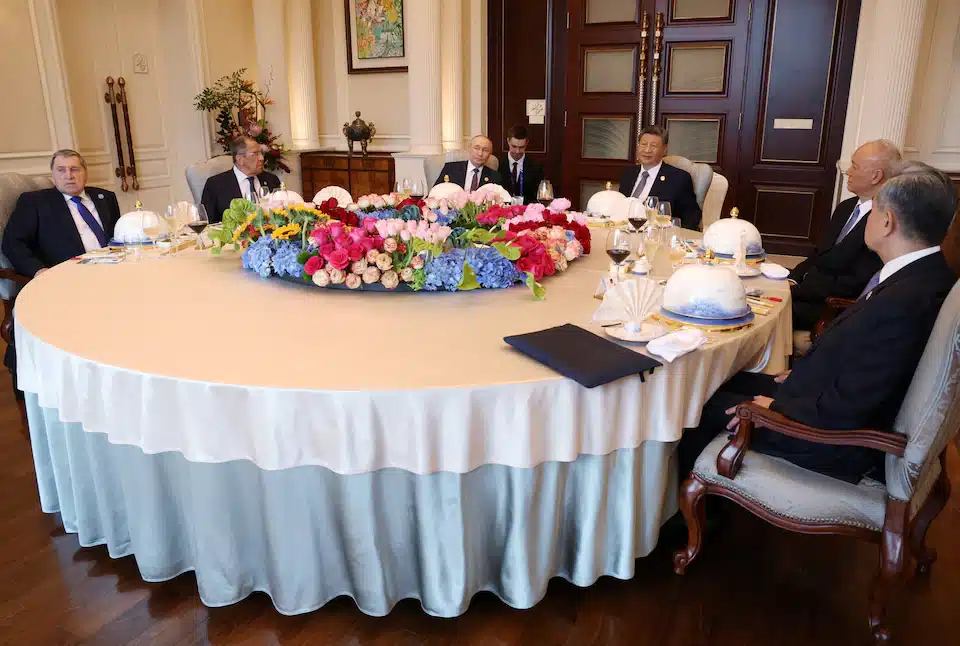
Xi calls for open trade and stronger multilateral cooperation
Xi used his address to urge countries to support free and open trade and investment, stressing the importance of a rules-based international economic system.
He called for stronger cooperation through multilateral institutions, including the World Trade Organization (WTO), and emphasised the need to maintain stable global supply chains.
The Chinese president’s message appeared directed at growing resistance to Beijing’s economic policies among Western governments, particularly the United States.
Washington has introduced restrictions aimed at limiting China’s access to advanced technologies, including artificial intelligence chips. The measures have become a major source of tension between the world’s two largest economies.
Xi’s position was that countries should avoid protectionism and unilateral actions that could undermine international trade. China has also pledged to reduce tariffs and open more areas of its market, while insisting that it will resist measures it considers discriminatory or intended to obstruct its development.
US restrictions on advanced AI chips intensify trade tensions
The dispute over advanced semiconductors illustrates the increasing connection between economic competition and national security.
The United States has restricted China’s access to sophisticated artificial intelligence chips produced by companies such as Nvidia. Washington considers the controls necessary to protect its technological advantage and prevent sensitive computing capabilities from strengthening China’s military and strategic position.
Beijing has opposed the restrictions and threatened retaliatory measures, describing the American approach as an attempt to contain its technological progress.
The disagreement has expanded beyond conventional trade disputes. Access to semiconductors, artificial intelligence, manufacturing technology and critical supply chains has become central to the wider rivalry between the two countries.
Western countries question China’s economic policies
Xi’s call for open trade comes as Western governments continue to express concern about China’s growing trade surplus, which has exceeded $1 trillion annually.
Critics argue that China’s industrial policies and manufacturing dominance have created an imbalance in global commerce, putting pressure on industries and employment in other economies.
Some trading partners are also concerned that Beijing’s influence over critical supply chains could give it additional geopolitical leverage.
China rejects much of the criticism, maintaining that its economic model is appropriate for a country seeking to develop its industrial and technological capabilities.
George Chen of The Asia Group suggested that Xi’s message could resonate with countries in the Global South. He said the Chinese president was presenting a contrast between Beijing’s technology strategy and Washington’s increasingly restrictive approach.
For developing economies, the competing positions of China and the United States raise questions about access to investment, technology and international markets. Many countries want to benefit from relations with both powers without becoming caught in their strategic rivalry.
Putin attacks Western sanctions and economic restrictions
Putin also used the gathering to challenge Western economic policies, particularly the sanctions imposed on Russia following its invasion of Ukraine.
The Russian president criticised sanctions, tariffs and export controls, describing them as instruments through which Western countries seek to maintain their international influence.
He referred to Western powers as former hegemons and described Europe as being in a humiliating decline.
Putin argued that the sanctions imposed on Russia had not achieved their intended purpose. Instead, he claimed that the restrictions had made his country more resilient and weakened the effectiveness of traditional economic pressure.
His remarks reflected Moscow’s longstanding opposition to Western sanctions and its argument that powerful countries should not use economic restrictions to dictate the decisions of other sovereign states.
Ukraine conflict continues to test Russia
Putin’s speech came as Russia continued its war against Ukraine, which has entered its fourth year.
Western governments have imposed extensive sanctions on Russian financial institutions, businesses, individuals and energy exports since the invasion. They have also continued providing support to Ukraine.
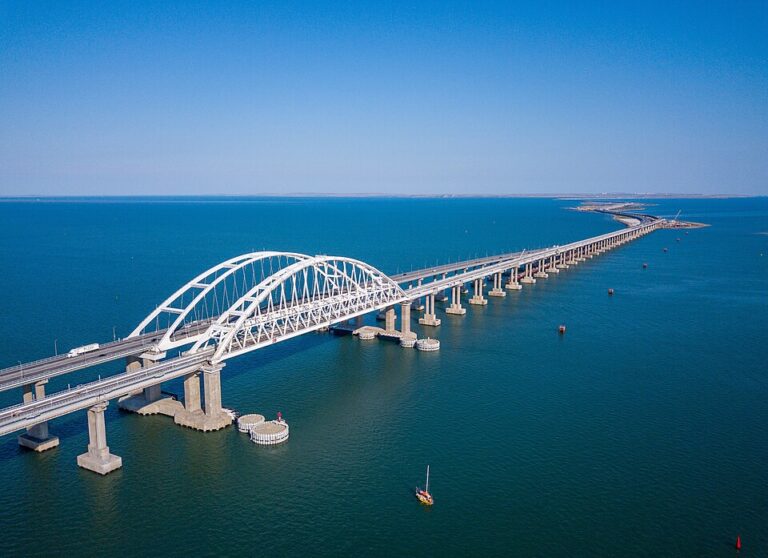
The destruction of the vital Kerch road bridge linking Crimea with Russia has dealt a significant blow to Moscow. The crossing is strategically important because it connects the annexed peninsula with Russian territory.
Despite the continuing conflict and economic restrictions, Putin maintained that Russia had adapted to Western pressure and that sanctions had become less effective as an instrument of international coercion.
His criticism broadly echoed Xi’s opposition to unilateral restrictions, although the two leaders were addressing different disputes involving their respective countries.
Xi and Putin reaffirm strategic partnership
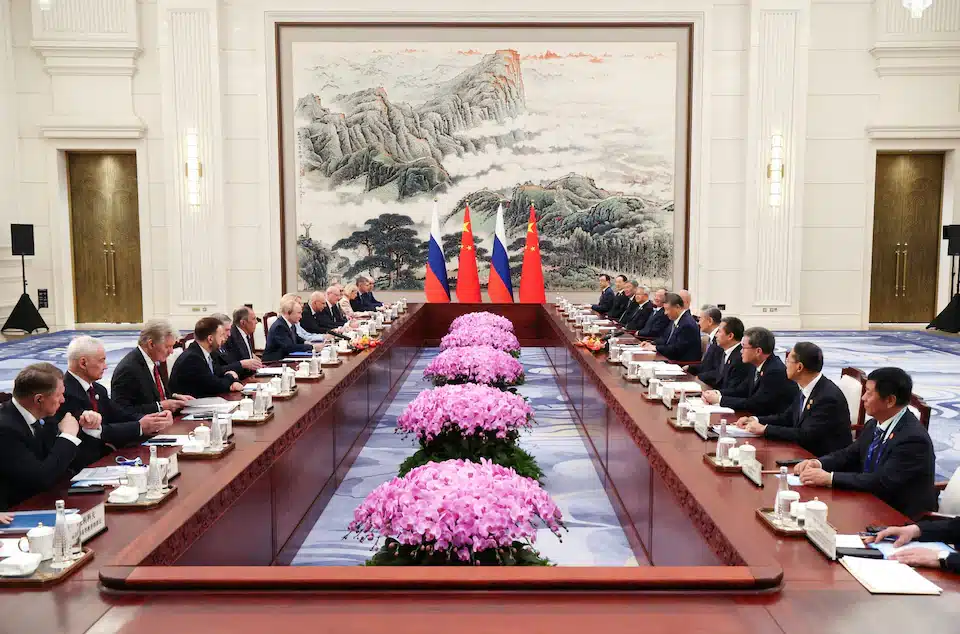
The Chinese and Russian presidents also held a bilateral meeting on the sidelines of the gathering, where they praised the state of their relationship.
Both leaders described their partnership as stable and positive and pledged additional measures to promote a multipolar international order.
The idea of a multipolar world is central to their shared criticism of Western dominance. It represents their preference for an international system in which influence is distributed among several major powers rather than concentrated in the United States and its traditional allies.
China and Russia have strengthened cooperation in diplomatic, economic and strategic affairs, particularly as both face difficult relations with Western governments.
Their partnership has become an important feature of international politics, although the two countries continue to pursue their own national interests and do not necessarily share identical positions on every issue.
Trump, Xi and Putin prepare for high-stakes meeting with Trump as Part of APEC Summit
The diplomatic attention surrounding the gathering is expected to intensify with the planned meeting between Trump, Xi and Putin on Thursday.
The three leaders could discuss Russia’s war in Ukraine, the US conflict with Iran, international trade, artificial intelligence, nuclear weapons and other major geopolitical concerns.
The proposed meeting has attracted attention because agreements or understandings among the three countries could influence international security and economic relations far beyond their borders.
The gathering has also prompted comparisons with the 1945 Yalta Conference, where the leaders of the United States, Britain and the Soviet Union discussed the post-Second World War settlement and the distribution of influence in Europe.
Smaller countries concerned about great-power negotiations
The comparisons have raised concerns among smaller countries, particularly in Europe and Asia, that major powers could reach agreements affecting their security and political interests without giving them sufficient consideration.
The Kremlin dismissed the Yalta comparisons as games played by political scientists, while Beijing maintained that the planned meeting would promote peace.
Nevertheless, the prospect of discussions involving the leaders of the United States, China and Russia has renewed debate about the influence of powerful countries over the international system.
Trump arrived in the region after visiting Manila, where he met regional allies and pledged to deepen defence cooperation with the Philippines amid tensions in the South China Sea.
He also raised the possibility of meeting North Korean leader Kim Jong Un in China, although no confirmed arrangement had been announced.
Regional security adds to diplomatic tensions
Security developments elsewhere in Asia have further complicated the international atmosphere surrounding the summit.
Taiwan and Japan reported incursions by Russian military aircraft into their airspace on Tuesday, highlighting continuing security concerns in the region.
Trump’s visit is also his first trip to Asia since the Republican Party’s defeat in the midterm elections. Analysts expect Washington and Beijing to seek relative stability in their relationship despite their disagreements over trade, technology and strategic influence.
The two presidents are also expected to meet again at the G20 summit in Miami in December, which would mark their fourth meeting this year.
As Reuters reported, the diplomatic engagements are unfolding at a time of intense competition among major powers, with economic restrictions, military conflicts and technological rivalry shaping international relations.
The APEC summit in Shenzhen has therefore become more than a regional economic gathering. It is providing a platform for Xi and Putin to challenge Western policies while setting the stage for discussions with Trump that could influence trade, international security and the future balance of global power.
About The Author