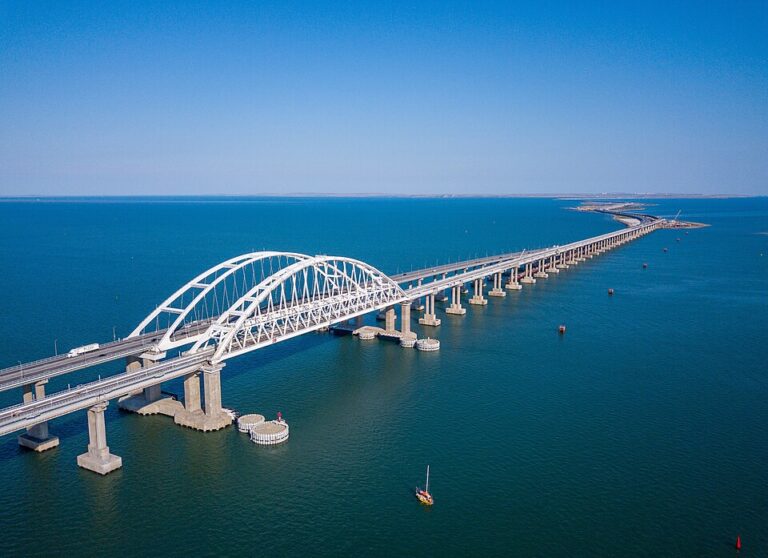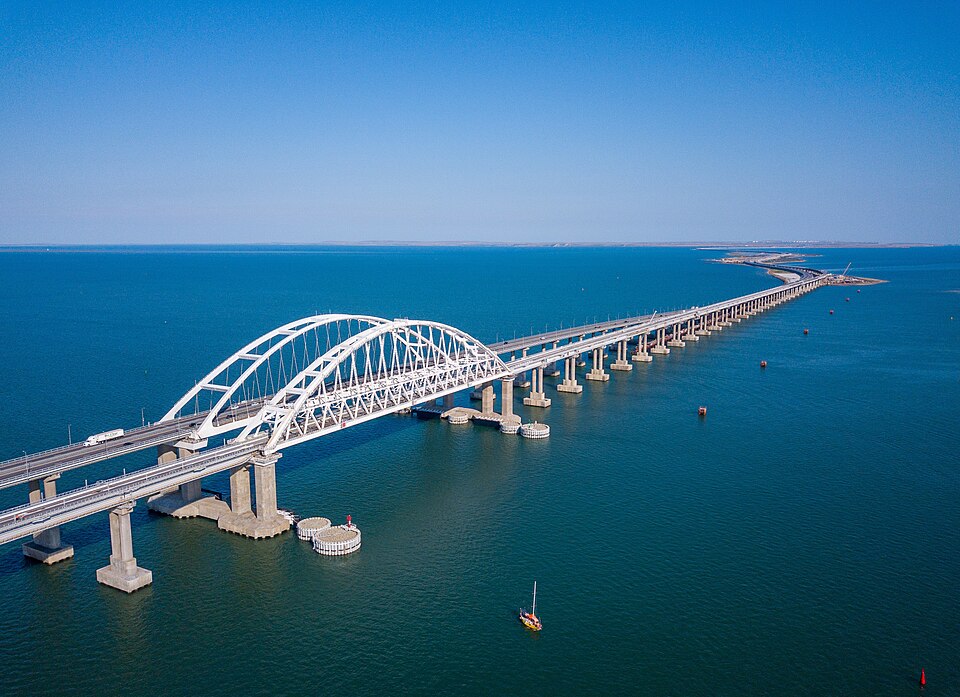
The Ukraine strikes on Crimean Bridge have intensified, with another reported attack on Wednesday marking the third time the strategic crossing has been targeted within one week. The latest incident forced Russian authorities to suspend road traffic and train services while emergency teams assessed the damage.
Sergei Aksyonov, the Russian-installed head of Crimea, announced the latest disruption in a Telegram post, confirming that traffic had been temporarily halted following what he described as a new attack on the bridge.
“Following a new attack on the Crimean Bridge, traffic has been temporarily halted. All relevant services are on site and at work. An assessment of the damage is under way,” Aksyonov wrote.
Russia’s Transport Ministry subsequently reported that nobody had been wounded in the incident. However, train services across the crossing were also suspended as authorities responded to the situation.
The Wednesday incident followed two earlier attacks on the same structure during the week, making it the third reported strike in a short period against a transport link that remains strategically important to Moscow.
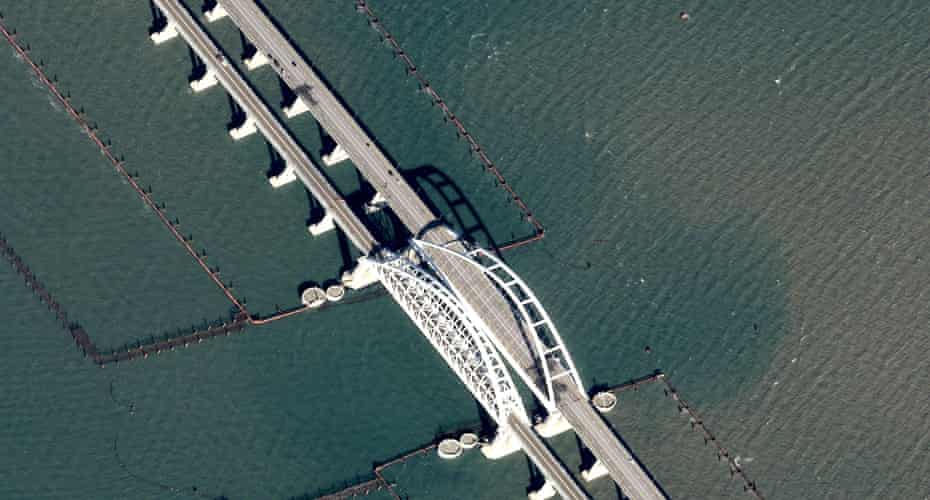
Repeated strikes expose the bridge’s vulnerability
The latest disruption comes after earlier operations inflicted serious damage on the crossing, including the destruction of a 227-metre section of its road span.
The damage affected a substantial portion of the road infrastructure, while the railway corridor appeared to remain operational despite suffering some damage.
The repeated incidents have placed renewed attention on the security of the crossing and Russia’s ability to protect infrastructure that plays a significant role in maintaining its presence in Crimea.
The Crimean Bridge, also known as the Kerch Strait Bridge, connects the Russian mainland to the peninsula that Moscow seized from Ukraine in 2014.
It consists of road and railway sections and provides a direct connection for civilian transportation and the movement of supplies between Russia and Crimea.
Since its construction, the bridge has carried considerable political importance for President Vladimir Putin‘s government. It is widely regarded as one of the most visible symbols of Russia’s annexation of the peninsula.
Its military value is equally significant because the crossing has served as a route for moving personnel, equipment and other supplies to Russian forces operating in Crimea and surrounding areas.
Repeated attacks therefore threaten not only transportation but also Russia’s ability to maintain an important supply connection to the occupied territory.
Zelenskyy describes earlier operation as unprecedented
Ukraine had already acknowledged responsibility for an earlier operation against the bridge during the same week.
President Volodymyr Zelenskyy described that mission as an unprecedented military operation, explaining that it followed extensive planning and involved the use of weapons developed within Ukraine.
According to the account of the operation, domestically produced Palianytsia drones were deployed against the road section, while Neptune and other missiles targeted the adjoining railway infrastructure.
The operation reportedly resulted in the destruction of the 227-metre section of the road span, causing serious disruption to the crossing.
Zelenskyy presented the mission as the result of a complicated campaign rather than an isolated strike, highlighting Ukraine’s growing ability to develop and deploy weapons capable of reaching strategically important Russian targets.
The latest reported incident has further complicated efforts to maintain uninterrupted movement across the bridge.
Although the full extent of the new damage had not been established in the immediate aftermath, the suspension of road and railway services demonstrated the operational consequences of another attack.
A history of attacks dating back to 2022
The latest incidents are not the first time Ukraine has targeted the crossing since Russia launched its full-scale invasion.
In October 2022, an explosion involving a truck bomb damaged the bridge, killing several people and causing part of the road section to collapse.
The blast also ignited fuel tankers on a train travelling across the railway section, creating a major fire and disrupting transportation.
Russia subsequently carried out repairs and restored traffic, seeking to return the bridge to normal operation.
However, the crossing was targeted again in July 2023, when a sea-drone attack caused further damage and disrupted movement.
Those incidents established the bridge as one of the most prominent targets in Ukraine’s campaign against Russian infrastructure.
The attacks also forced Moscow to devote considerable attention and resources to protecting and repairing a structure that carries both strategic and symbolic significance.
The latest succession of strikes suggests that the crossing remains exposed to further Ukrainian operations despite previous security measures and repair work.
Ukraine’s message to Moscow and its international partners
The attacks have also attracted attention because of their possible political implications.
A Ukrainian armed forces source told The Guardian that the operations were intended to embarrass Putin ahead of his meeting with US President Donald Trump and Chinese President Xi Jinping in China.
“The bridge is a symbol of Putin’s rule. Destroying it sends a message to the other two great leaders that Putin is not as strong as he pretends,” the source said.
The statement reflects the political importance Ukraine attaches to the bridge, particularly because of its association with Putin’s decision to annex Crimea.
Damaging the crossing can therefore serve two purposes: disrupting an important Russian transport route and challenging the image of strength that the Kremlin seeks to project.
The timing of the operations also places them within a broader diplomatic environment in which Russia continues to pursue international engagement while facing sustained military pressure from Ukraine.
For Kyiv, the bridge represents a visible target through which it can demonstrate its ability to strike infrastructure that Moscow considers strategically important.
Russia confronts another transportation disruption
The latest suspension of road traffic and railway services highlights the continuing difficulties facing Russian authorities as they attempt to secure the crossing.
Every disruption affects the movement of people and goods between Russia and Crimea, while significant damage can require extensive repair work before normal operations resume.
The railway section is particularly important because it provides another route for transporting supplies to the peninsula.
Even when the bridge remains structurally usable, repeated security incidents can create uncertainty, delay transportation and place additional pressure on the authorities responsible for its operation.
Russia has previously restored the crossing after major attacks, but the latest developments demonstrate that repairs alone have not ended the threat.
Authorities were still assessing the damage following Wednesday’s incident, and the full operational impact of the latest attack remained unclear.
With three attacks reported within one week, the Crimean Bridge has once again become a focal point in the conflict, underlining Ukraine’s determination to keep pressure on Russia’s military and logistical infrastructure.
About The Author