Global food inflation is expected to intensify in the coming months and persist into 2027 as war-related shipping disruptions, rising fertiliser costs and El Niño-driven drought threaten food supplies, placing millions of vulnerable households under greater financial pressure.
From Asia to the Middle East and North Africa, consumers are already struggling with rising prices for essential food items, including rice, bread, sugar, cooking oil, onions and pulses.
The United Nations’ Food and Agriculture Organization (FAO) has warned that existing pressures on the global food system could become more severe towards the end of 2026 and throughout next year.
In Indonesia, rice prices have climbed to record levels, while Egypt has experienced a significant increase in bread prices. India has also recorded record-high sugar prices following a weak monsoon that affected agricultural production.
Global Food Inflation Threatens Household Budgets
The rising cost of food is particularly damaging to low- and middle-income countries, where households spend a larger proportion of their earnings on basic necessities.
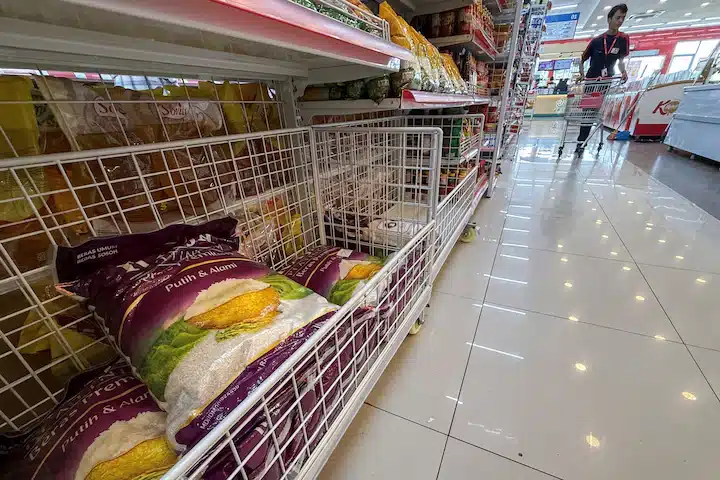
Muhamad Yasin, a 63-year-old parking attendant in Jakarta, Indonesia, said he had reduced the number of meals he consumed because food had become increasingly expensive.
He explained that a meal consisting of rice, tempeh and tofu previously cost between 7,000 and 8,000 Indonesian rupiah, equivalent to approximately $0.39 to $0.44.
However, the same meal now costs around 15,000 rupiah, forcing him to adjust his spending despite earning only 200,000 to 300,000 rupiah weekly.
Yasin, a father of four, represents the growing number of consumers struggling to maintain their standard of living as food prices continue to rise.
According to the World Bank, food prices outpaced overall inflation in 22 per cent of the 150 countries it analysed during the September quarter, compared with 14 per cent in the previous quarter.
The FAO Food Price Index, which tracks monthly changes in internationally traded food commodities, averaged 136 points in September. This was its highest level since November 2022.
The continuing increase has raised concerns about food affordability, potential shortages and the possibility of social unrest in countries where consumers are already experiencing economic difficulties.
Wars and Shipping Disruptions Drive Food Prices Higher
Black Sea and Red Sea Disruptions Affect Grain Supplies
Attacks on grain infrastructure in the Black Sea region have disrupted wheat shipments, forcing major importers, including Egypt and Indonesia, to search for alternative supplies.
The continuing Russia-Ukraine war has affected the movement of agricultural commodities, creating uncertainty for countries that depend heavily on imported wheat and other essential food products.
Meanwhile, insecurity in the Red Sea has forced some shipping companies to divert vessels along longer routes around Africa, increasing transportation times and freight costs.
Shipping rates have risen by approximately 50 per cent on certain important international routes, including those connecting the Black Sea with Southeast Asia.
Higher oil prices and additional insurance premiums associated with conflict have contributed to the increase, making it more expensive to transport food commodities between exporting and importing countries.
These disruptions threaten to increase food prices further, particularly in countries that rely on international markets to meet domestic demand.
Iran War Raises Fertiliser and Farming Costs
The US-Israeli war on Iran has also contributed to rising agricultural costs by increasing fuel prices and disrupting fertiliser exports through the Strait of Hormuz.
Fertiliser is essential for maintaining agricultural productivity, and higher prices can make farming more expensive, potentially discouraging production or increasing the costs ultimately passed on to consumers.
Although fertiliser prices have fallen from the peaks recorded earlier in the conflict, they remain elevated, adding to the financial pressure facing farmers and food producers.
Wheat prices have risen by more than 30 per cent in 2026, while rice prices in major Asian exporting countries have increased by between 10 and 13 per cent despite substantial inventories.
Manish Tiwary, chairman and managing director of Nestlé India, acknowledged the impact of rising commodity prices on businesses, describing the operating environment as challenging.
His comments reflect wider concerns among food manufacturers, which must manage higher raw-material costs while consumers become increasingly sensitive to price increases.
El Niño Drought Threatens Agricultural Production
Weather conditions are creating another major challenge for the global food supply, with El Niño-driven drought threatening harvests in India and Southeast Asia.
India has experienced its weakest monsoon in more than a decade, contributing to production shortfalls that have pushed up the prices of several essential commodities.
Prices of sugar, onions and pulses in India rose by more than 10 per cent in September compared with the previous month.
The combination of weaker harvests, expensive agricultural inputs and supply disruptions has intensified pressure on food markets.
In Indonesia, rice prices have reached record levels amid forecasts of delayed rainfall, raising concerns about the availability and affordability of a staple consumed by millions of people.
The consequences of poor weather can extend beyond individual harvest seasons. When production falls, countries may need to purchase additional supplies internationally, increasing competition for commodities and putting further upward pressure on prices.
However, the outlook is not uniformly negative. Favourable wheat harvests in the Southern Hemisphere are expected to provide some relief, although lower-than-expected production in major exporters could create additional price risks.
Food Prices Rise Across Egypt, India and Indonesia
The effects of global food inflation are already visible in markets across several countries.
In Egypt, the price of unsubsidised bread has increased to approximately five Egyptian pounds for a large loaf, compared with four pounds in July.
For consumers, the increase comes alongside higher production expenses, including the cost of flour, electricity, water, yeast and labour.
Sayed Abdel Hamid Mohamed, a baker in downtown Cairo, said producing bread had become more expensive because virtually every major input had risen in price.
He explained that hiring skilled workers now costs more, while utilities and other materials required for baking have also become more expensive.
Tarek Azab, a customer at the bakery, said prices had continued increasing over several years, describing the repeated increases as a persistent burden.
Cooking oil prices in the United Arab Emirates have climbed by approximately 40 per cent, while vegetable oil prices in Indonesia have increased by seven per cent this year.
Indonesia, the world’s largest palm oil producer, has nevertheless experienced higher vegetable oil prices, illustrating how domestic production does not necessarily shield consumers from broader market pressures.
In India, the combination of weather-related production shortfalls and rising commodity costs has added to the pressure on household budgets.
Importers Could Trigger Another Price Surge
Food Demand Expected to Increase
Economists warn that food prices could rise further as countries that delayed purchases following strong domestic harvests return to international markets.
Importers across the Middle East and Africa may need to replenish supplies as local inventories shrink, potentially creating a fresh wave of demand for globally traded commodities.
Alexander Karavaytsev, a senior economist at the International Grains Council in London, warned that demand could increase significantly within the coming months as importers resume purchasing.
A sudden rise in demand could place additional pressure on markets already affected by shipping disruptions, higher transportation costs and uncertainty surrounding agricultural production.
The risk is particularly significant because the cushion previously provided by large global grain inventories is beginning to weaken.
FAO chief economist Maximo Torero said earlier harvests and substantial stocks had helped absorb supply disruptions, but those buffers were increasingly coming under pressure.
He warned that the combination of declining reserves and persistent supply challenges could make commodity price increases more pronounced.
Food Manufacturers Face Higher Costs
Food manufacturers are also preparing for higher expenses as they renew contracts for raw materials.
Processors that typically purchase supplies through contracts lasting between three and six months are now facing higher prices when negotiating new agreements.
Currency depreciation is adding to the burden in countries where imported commodities are purchased in foreign currencies but sold locally.
Franciscus Welirang, a director of Indonesian food company PT Indofood, said increased shipping expenses were having a greater effect when converted into rupiah because of the Indonesian currency’s weakness.
Beyond higher costs, food processors are encountering difficulties securing sufficient raw materials for production.
A senior executive at an Indonesian flour-milling company said several mills were operating below capacity because the Russia-Ukraine war had reduced wheat arrivals.
Data from commodities intelligence firm Kpler showed that Indonesian wheat arrivals fell by 41 per cent year-on-year to 491,000 metric tonnes in September.
The decline highlights how international conflicts can affect food availability far beyond the regions where fighting takes place.
Read also: Daniel Dubois vs Moses Itauma: British heavyweight rivalry could define boxing’s future
https://swiftreportnow.com/daniel-dubois-vs-moses-itauma-british-heavyweig/
Global Food Inflation Could Persist Into 2027
Despite the mounting concerns, some agricultural commodities currently have sufficient inventories to limit immediate shortages.
Soybean and corn supplies remain ample, although future availability will depend on production in the United States and South America.
Higher oil prices have also supported prices for both crops because of their growing use in biofuels, creating another connection between energy markets and food costs.
Wheat supplies could receive support from favourable harvests in the Southern Hemisphere. However, any production setbacks in major exporting countries such as Australia and Argentina could add further upward pressure to prices.
The combination of geopolitical conflicts, costly fertiliser, weather-related production risks and rising freight rates means the outlook remains uncertain.
Maximo Torero said the global food system would experience a greater impact towards the end of 2026, at the beginning of 2027 and potentially throughout next year.
The warning raises concerns for governments already struggling to protect household purchasing power while managing inflation and limited public resources.
For vulnerable families, the consequences could include reduced meals, lower nutritional quality and difficult choices between food and other essential expenses.
Unless shipping conditions improve, agricultural production strengthens and commodity supplies recover, global food inflation could remain a major economic and humanitarian challenge well into 2027.