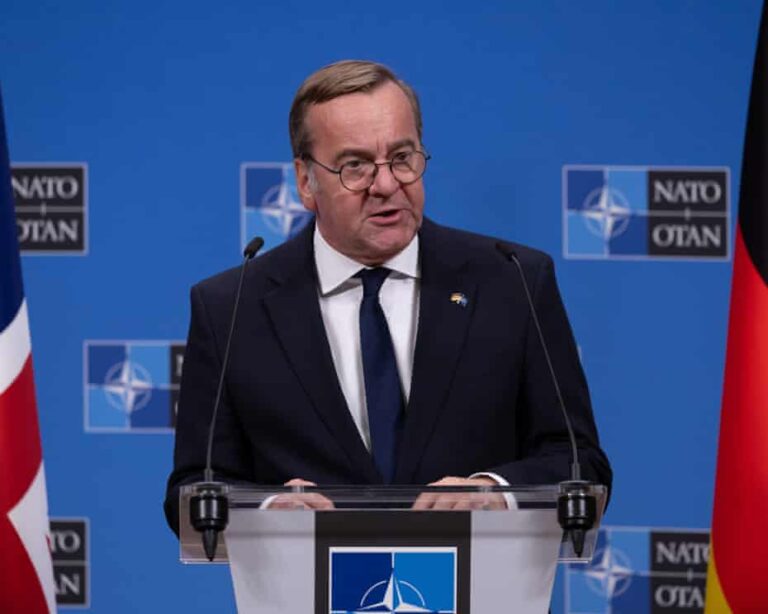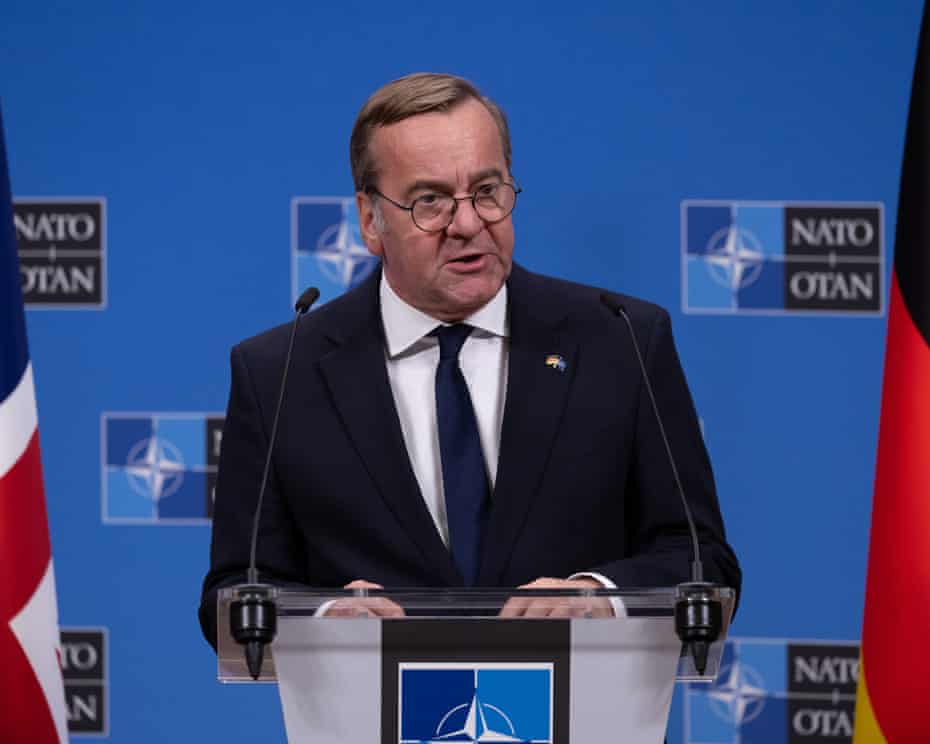
The Ukraine deep strikes dispute has intensified divisions among Western allies after Germany’s Defence Minister Boris Pistorius strongly criticized Washington’s position on Kyiv‘s attacks against Russian military targets, describing the US criticism as “quite a stupid thing”.
Pistorius’s remarks followed comments by Elbridge Colby, the US Undersecretary of Defence, who questioned whether Ukraine’s long-range strikes inside Russia had achieved meaningful military results. Colby argued that the attacks had neither helped bring the conflict to an end nor significantly slowed Russian advances along the frontline.
The German minister rejected that assessment, defending Ukraine’s right to attack strategic military installations and facilities being used to sustain Russia’s invasion.
His response has brought renewed attention to differences between Washington and some of its European partners over the extent of military action Ukraine should be allowed to undertake against Russia.
The disagreement is particularly significant because the United States, Germany and Britain have all played important roles in supporting Kyiv since Russia launched its full-scale invasion. However, their latest comments suggest that they do not always share the same assessment of the military tactics needed to weaken Moscow.

Germany challenges America’s assessment of Ukrainian attacks
Pistorius argued that criticism of Ukraine’s operations should be considered alongside Russia’s continuing attacks on Ukrainian territory.
He specifically pointed to Russian strikes against essential infrastructure supplying electricity, water and heating to communities across Ukraine.
The German defence minister described such attacks as terrorism, questioning why Washington was focusing on the effectiveness of Ukraine’s military operations rather than the destruction caused by Russia’s assault on civilian infrastructure.
His position reflects Germany’s argument that Ukraine must retain the ability to strike legitimate military targets that contribute to Russia’s war effort.
For Kyiv, attacks against military facilities inside Russia are part of a broader effort to disrupt the operations sustaining the invasion. Ukraine has consistently maintained that it has the right to defend itself against Russian aggression.
Washington questions the strategic value of deep strikes
Colby’s criticism centred on whether Ukraine’s long-range attacks had delivered the expected strategic benefits.
He maintained that the operations had not stopped Russian advances or brought the war closer to a conclusion.
The American position raises questions about how the effectiveness of such attacks should be measured. While they may disrupt Russian military activities, Washington appears concerned that they have not produced a decisive change on the battlefield.
Pistorius, however, rejected the suggestion that the operations should be judged solely by whether they immediately alter the course of the war.
His intervention highlights the difficulty Western governments face in agreeing on a common military approach while supporting a country fighting for its survival.
Britain defends Ukraine’s military operations
Britain has also expressed support for Ukraine’s long-range attacks, presenting them as an important part of efforts to weaken Russia’s ability to continue the invasion.
Defence Minister Wes Streeting argued that the strikes help degrade Russian President Vladimir Putin’s war machine.
According to Streeting, the operations buy Ukraine valuable time and save lives by putting pressure on the military capabilities Moscow uses to sustain its offensive.
His comments place Britain closer to Germany’s position than the assessment expressed by Colby.
The differing statements from London, Berlin and Washington show that support for Ukraine does not necessarily translate into complete agreement over the methods Kyiv should use.
For European governments, weakening Russia’s military capacity remains central to protecting Ukraine and preventing further aggression. However, the debate over deep strikes also reflects concerns about escalation and the wider consequences of the conflict.
Ukraine promises stronger retaliation against Russia
Ukraine has indicated that it will continue responding forcefully to Russian attacks.
Yehvenii Khmara said Kyiv would retaliate two or three times as strongly for every Russian strike against Ukrainian territory.
His warning reinforced Ukraine’s determination to defend itself and reject any suggestion that it should remain passive while Russian forces continue their attacks.
The statement also reflects the position that Ukraine’s military response must be strong enough to impose costs on Moscow and disrupt its ability to sustain the war.
The debate over long-range operations therefore goes beyond disagreements among Ukraine’s international partners. It also concerns Kyiv’s ability to determine how best to protect its territory and military interests.
Trump meets Xi Jinping in Shenzhen amid international tensions
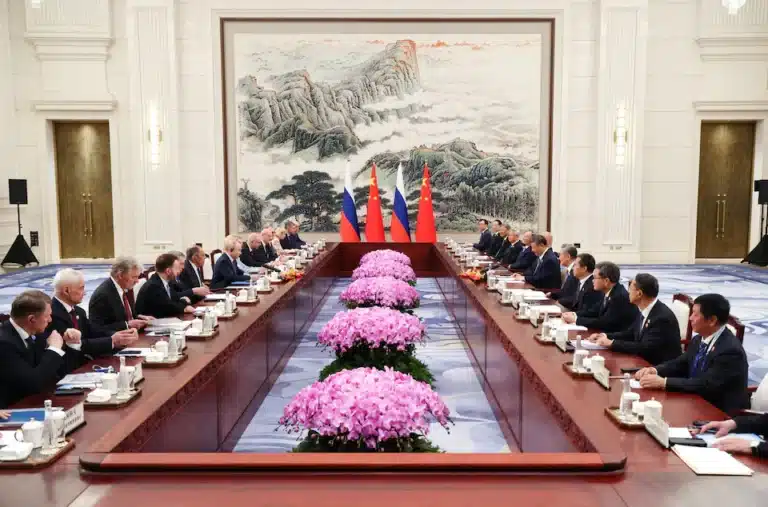
The disagreement over Ukraine is unfolding as world leaders gather in Shenzhen, China, for the Asia-Pacific Economic Cooperation summit.
US President Donald Trump is presently meeting Chinese President Xi Jinping after being welcomed by the Chinese leader upon his arrival in the city.
Russian President Vladimir Putin is also at the centre of the diplomatic attention surrounding the summit, with a meeting involving Trump, Xi and Putin expected to take place on Thursday.
The gathering is attracting international interest because of the three countries’ influence over global security, economic relations and the future of the war in Ukraine.
Trump’s engagement with Xi comes at a sensitive moment for relations between Washington and Beijing, while Russia’s participation adds another significant dimension to the discussions.
The possibility of a meeting involving the three leaders has also raised questions about whether the Ukraine conflict could feature prominently in their conversations.
Any discussion about the future of the war is likely to attract attention from Kyiv and European governments, particularly if it concerns possible negotiations, international pressure on Moscow or the security arrangements that could follow a settlement.
Canada promises increased pressure on Moscow
Canadian Prime Minister Mark Carney has also used the APEC gathering to reaffirm his country’s position on Russia.
Carney said sanctions against Moscow would increase for as long as the war in Ukraine continued.
He made the remarks in Shenzhen, according to Agence France-Presse, signalling that Canada intends to maintain economic pressure on Russia rather than ease restrictions while the conflict remains unresolved.
The Canadian position adds to the pressure being maintained by Western governments, although the latest disagreement over Ukraine’s military operations shows that their approaches are not entirely identical.
Sanctions remain one of the principal tools available to countries seeking to punish Russia economically and discourage its continued military campaign.
Disagreement raises questions about Western strategy
The latest exchange between Pistorius and Colby has exposed another challenge for countries supporting Ukraine: agreeing on how far Kyiv should go in taking the war to Russian territory.
Germany and Britain have defended the military value of Ukraine’s operations, while the American criticism has questioned whether the strikes are producing sufficient results.
Ukraine, meanwhile, insists that it must be able to respond to Russian attacks and target military facilities connected to the invasion.
The diplomatic developments in Shenzhen add another layer of uncertainty, particularly with Trump meeting Xi and a separate engagement involving Putin expected.
For Kyiv, the priority remains securing the support needed to defend its territory while preventing Russia from gaining further military advantages.
The Ukraine deep strikes dispute therefore reflects more than a disagreement over one category of military operation. It exposes competing views among Western allies about how to weaken Russia, protect Ukraine and bring the conflict closer to an end.
About The Author