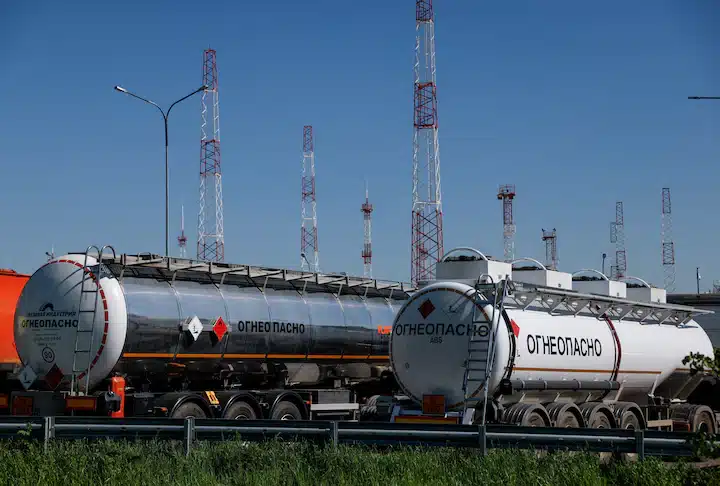
China and India are on course for record Russian oil imports in 2026, as the two countries increase purchases to compensate for disrupted Middle Eastern supplies, although demand for Russian crude is expected to weaken next year.
Seaborne Russian oil shipments to China and India averaged 3.4 million barrels per day (bpd) through mid-November, an increase of approximately 530,000 bpd compared with the same period last year, according to Vortexa Analytics data.
The surge in purchases has helped Moscow sustain oil revenues despite Ukrainian drone attacks targeting Russian refineries, which have disrupted processing capacity and increased the volume of crude available for export.
However, traders and analysts expect Russian oil demand from its two biggest customers to decline in 2027 as Middle Eastern supplies stabilise and regain market share.
China and India strengthen Russian oil trade
China and India together account for more than 80% of Russia’s crude oil exports, according to estimates from industry sources familiar with the trade.
The increase in purchases has been supported by temporary United States sanctions waivers introduced to maintain global oil supplies during the Middle East crisis. The exemptions have expanded the availability of vessels and suppliers handling Russian crude.
Russia’s oil exports are projected to increase by 6% in 2026 to 244.7 million metric tonnes, equivalent to approximately 4.9 million bpd, according to a forecast by its Ministry of Economic Development.
Higher oil prices have also strengthened Moscow’s earnings, with Brent crude rising nearly one-third since the outbreak of the Iran war.
China increases Russian oil imports
China’s Russian oil imports rose significantly between January and October, reinforcing Moscow’s position as a major supplier to the world’s largest crude importer.
Chinese customs data showed that Russian oil shipments increased by 17% to 2.34 million bpd during the period, valued at $59.6 billion.
The volumes represented approximately 24% of China’s total oil imports, marking a record share for Russian crude, despite a 15% decline in China’s overall oil imports as Middle Eastern supplies weakened.
Kpler analyst Muyu Xu said lower shipping risks and improved supply reliability had been major factors behind China’s increased purchases of Russian crude since the war began.
However, China may reduce its dependence on Russian oil in 2027 as its growing reliance on a single supplier becomes a concern for Beijing.
Michal Meidan, head of China Energy Research at the Oxford Institute of Energy Studies, said Russian crude had become less attractive to Chinese refiners because it was no longer consistently discounted.
She noted that some Russian grades were trading at higher premiums to Brent crude than Gulf supplies, creating financial pressure on smaller independent Chinese refineries known as teapots.
Meidan said Chinese refiners were likely to return to Middle Eastern crude as supply flows stabilised, with some already favouring Brazilian oil.
The decline in Iranian oil supplies, partly linked to the US naval blockade, has also strengthened demand for Russian crude and pushed spot premiums for ESPO oil delivered into eastern China to nearly $30 per barrel above ICE Brent at certain points.
India records strong Russian oil purchases
India, the largest buyer of Russian crude shipped by sea, has also increased purchases significantly in 2026.
Kpler data showed India’s Russian oil imports averaged 1.99 million bpd through early November, representing an annual increase of approximately 250,000 bpd.
Trade sources said India’s imports of Russian crude rose about 10% between January and October to 1.87 million bpd, accounting for roughly 38% of the country’s total oil imports.
Indian refiners expect Russian oil imports to average approximately 1.9 million bpd for the full year, despite earlier reductions in purchases following threats of higher US tariffs.
The increased volumes have helped India secure supplies during disruptions to Middle Eastern oil flows, while Russian crude has remained an important component of its energy mix.
Russian oil demand expected to decline in 2027
Despite the record purchases, Russian oil demand in China and India is expected to lose momentum next year if Middle Eastern supplies return to normal.
Read also: Russia threatens Estonia with ‘open war’ over border closure and alleged support for Ukraine
https://swiftreportnow.com/russia-threatens-estonia-with-open-war-over/
Indian refiners are expected to resume purchases closer to pre-Iran war levels as supply conditions improve, with pricing likely to determine the volume of Russian crude they continue to import.
China is similarly expected to diversify its supply sources, particularly if Gulf oil becomes more readily available and competitively priced.
The outlook suggests Russia’s exceptional oil export performance in 2026 may be partly driven by temporary geopolitical disruptions rather than a permanent shift in global energy trade.
With Middle Eastern supplies potentially recovering, Moscow could face stronger competition for market share from traditional Gulf producers in both China and India.
About The Author