Colombia’s President Abelardo de la Espriella has arrived in Cartagena to take control of a tense supermarket hostage siege involving at least 20 people, after armed men seized approximately 30 customers and employees during an attempted robbery in the popular tourist city.
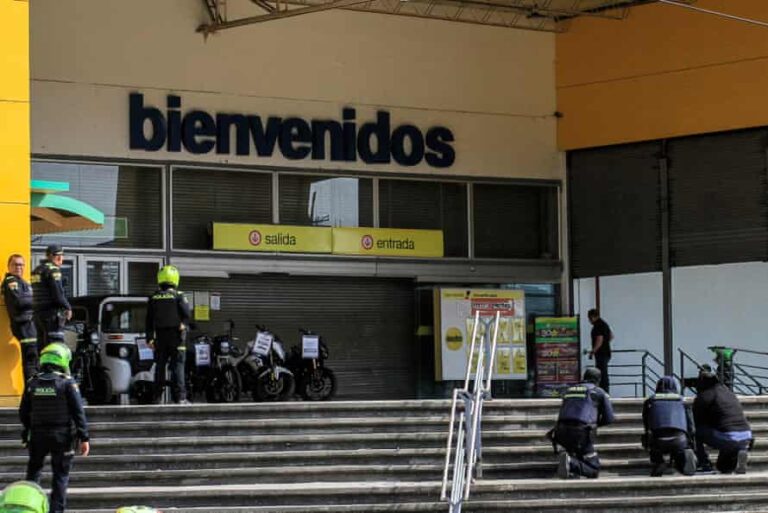
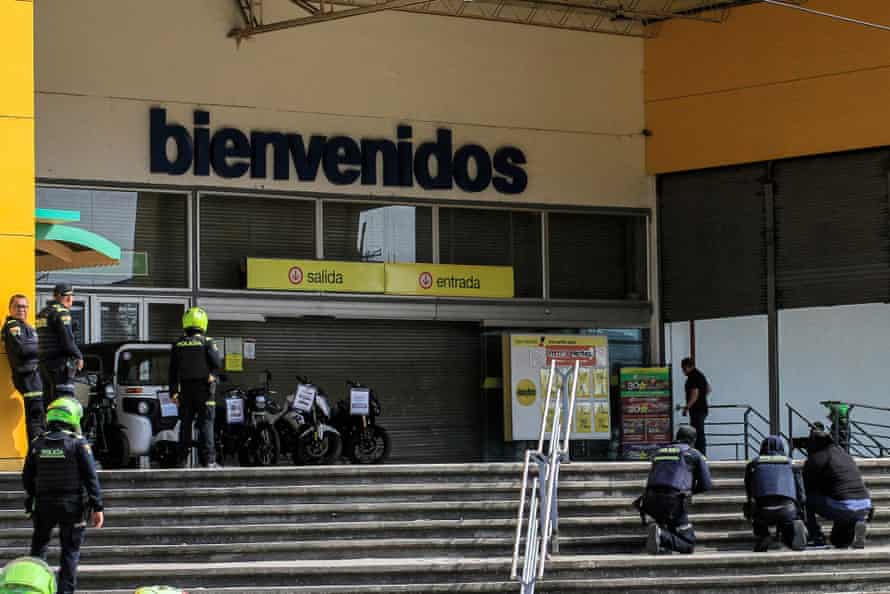
The president’s motorcade arrived on Tuesday night as police officers, naval personnel and special forces maintained a security cordon around the Éxito supermarket in the La Castellana neighbourhood. Ten hostages, including five elderly women, had been released by nightfall, but at least 20 people remained in captivity.
No injuries had been reported as of the latest update in the Guardian report, while security personnel continued efforts to secure the release of those being held inside the building.
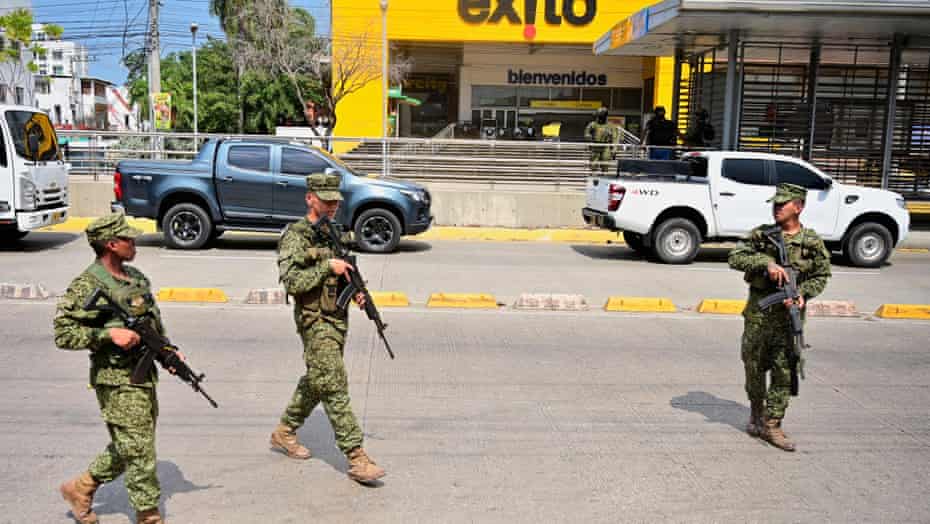
Armed men seize 30 people during attempted robbery
The hostage crisis began at approximately 8:30am local time on Tuesday when armed men reportedly entered the supermarket intending to rob an armoured cash-in-transit vehicle expected to collect the previous day’s takings.
According to the president, the suspected robbers planned to intercept the vehicle during its scheduled collection of money from the store.
However, supermarket employees reportedly noticed suspicious movements through security cameras and alerted the national police, prompting officers to surround the premises.
The intervention developed into a prolonged standoff as the armed men held customers and employees hostage inside the supermarket.
Although approximately 30 people were initially seized, police confirmed that 10 had been released by Tuesday night. The released group included five elderly women.
Customers were believed to be among those still being held, alongside supermarket employees who were unable to escape when the gunmen arrived.
The situation generated considerable anxiety among relatives of the trapped workers, who struggled to establish contact with their loved ones.
Jacob Perez, whose son reportedly works at the supermarket, expressed his fears to Agence France-Presse.
“My son is there,” he said.
“He didn’t leave work and he’s not answering his phone. I think they took it from him.”
President issues warning to hostage-takers
Before travelling to Cartagena, De la Espriella addressed the unfolding crisis and suggested that the incident appeared to be an attempted robbery rather than an operation connected to the country’s wider armed conflict.
The right-wing president, who has promoted a tough approach to criminal activities, described the suspected perpetrators as “common criminals”.
He also expressed confidence that the hostages would emerge safely while warning the gunmen about the consequences of their actions.
The president said the prolonged confrontation “will turn out well for the hostages, but I’m not so sure it will turn out quite so well for the hostage-takers”.
His arrival in Cartagena placed him directly at the centre of an operation involving scores of security personnel, the navy and special forces.
Footage circulated on social media showed dozens of people rushing out of the supermarket during the releases, while local media reports showed snipers positioned on nearby buildings as security forces maintained their positions.
Cartagena hostage siege raises security concerns
The hostage crisis has heightened security concerns in Cartagena, one of Colombia’s most popular tourist destinations, attracting hundreds of thousands of visitors annually.
The supermarket is located approximately six miles from the city’s historic centre, known for its 500-year-old fortress walls overlooking the Caribbean Sea.
The incident has raised concerns about the vulnerability of commercial establishments and public spaces to armed criminal activities, particularly amid a broader deterioration in Colombia’s security situation.
De la Espriella has been in office for just over three months and is known for his populist rhetoric and hardline approach to crime. He has previously projected an uncompromising image, including appearing publicly with a gun at his waist.
The hostage operation comes at a particularly difficult moment for the country, following separate attacks involving explosives and drones that have left people dead and several others injured.
Car bomb attack kills security guard and injures more than 20
While the Cartagena hostage crisis was unfolding, Colombia was also dealing with the aftermath of a car bomb attack outside the headquarters of the Meta departmental government in Villavicencio.
The explosion occurred on Monday night, killing a security guard and injuring more than 20 people.
De la Espriella attributed the attack to a dissident faction of the Revolutionary Armed Forces of Colombia (Farc), accusing criminal groups of attempting to intimidate his administration.
Speaking at a press conference in Villavicencio before travelling to Cartagena, the president declared:
“Narco-terrorism is desperate because we are confronting it decisively. It intends to intimidate us and force us to retreat in search of another false peace process.”
His remarks referenced the landmark 2016 peace agreement between the Colombian government and the Farc, whose signing marked its 10th anniversary on Tuesday.
Although the agreement substantially reduced violence and brought an end to the Farc’s principal insurgency, it did not completely resolve Colombia’s decades-long armed conflict.
Implementation challenges and opposition from dissident factions and other armed groups have allowed violence to persist in several parts of the country.
Drone attack injures civilians in Cúcuta
Another security incident occurred in the early hours of Monday in Cúcuta, where gunmen believed to belong to the National Liberation Army (ELN) used drones to drop explosives targeting a local police command.
However, the explosives struck residential buildings instead, injuring three civilians, including an 18-month-old baby.
The ELN is an armed group that never signed a peace agreement with the Colombian government.
Although drone attacks by criminal organisations have become increasingly common, the incident marked the first time such an attack had targeted a departmental capital.
The combination of the Cúcuta drone attack, the Villavicencio car bombing and the Cartagena hostage crisis has intensified concerns about the growing security challenges confronting Colombia’s government.
With at least 20 people still being held at the supermarket when the latest report was published, attention remained focused on the president-led operation and the efforts of security forces to secure their release.
About The Author