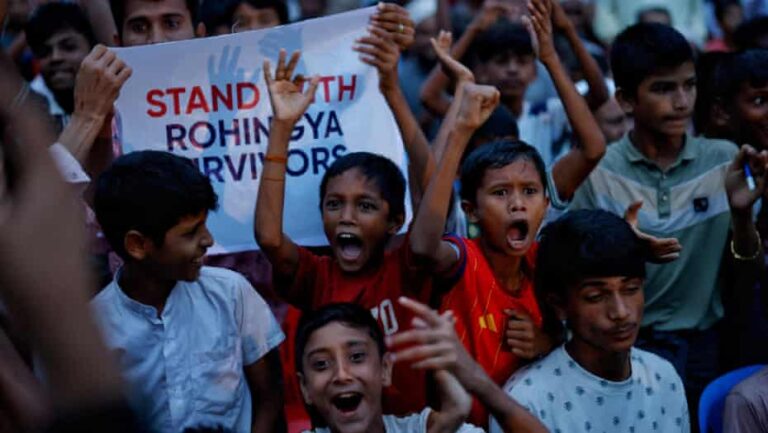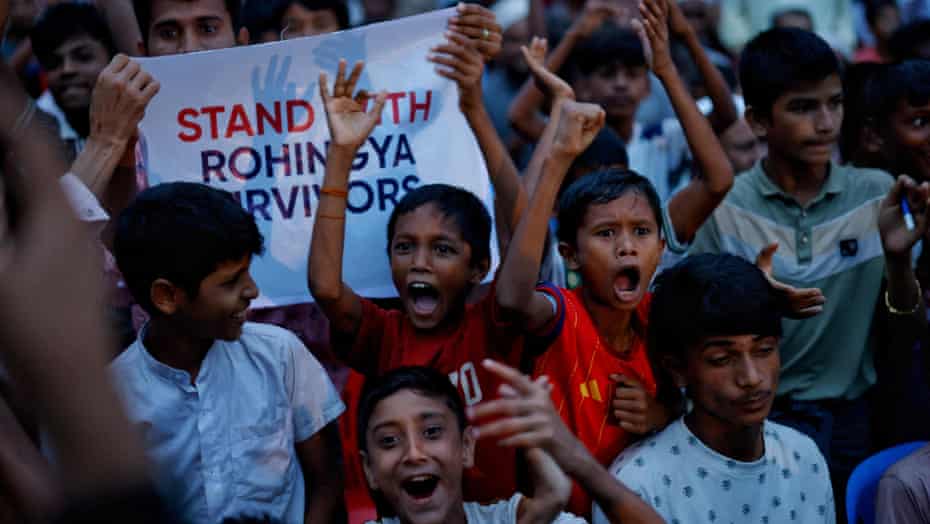
The ICJ genocide verdict against Myanmar has intensified international demands for accountability over atrocities committed against the Rohingya Muslim minority, prompting sharply different diplomatic responses from the United States and European Union.
The International Court of Justice (ICJ) found Myanmar responsible for genocide in a historic judgment that could influence future proceedings involving allegations of similar crimes against other populations.
While the European Union described the decision as a landmark achievement for international justice, the administration of President Donald Trump adopted a more cautious position.
Washington said it was examining the judgment and emphasised the importance of preventing the politicisation of the world’s highest court.
The decision is particularly significant because the ICJ has never previously found a state responsible for genocide, making the Myanmar proceedings an important development in the interpretation of international law.
The judgment has also attracted attention because other countries, including Israel and Russia, are involved in separate proceedings concerning allegations connected to genocide.
Washington adopts cautious position over the court’s decision
The United States State Department confirmed that the American government was reviewing the judgment but stressed the need to protect the International Court of Justice from political interference.
The response comes against the background of the Trump administration’s wider criticism of international legal institutions, particularly the International Criminal Court (ICC).
President Trump’s government has taken a hostile position towards the ICC, which it regards as a renegade globalist institution, and has vowed to dismantle it.
However, the ICC and ICJ are separate organisations with different mandates. The International Criminal Court prosecutes individuals accused of serious international crimes, while the ICJ settles legal disputes between states and provides advisory opinions.
Although Washington has challenged the ICC, the administration has not questioned the legitimacy of the International Court of Justice.
The State Department also reiterated American support for Myanmar’s people and expressed concern about continuing human rights violations affecting the Rohingya and other minority communities.
It stated that the United States remained the largest single humanitarian donor responding to the Rohingya refugee crisis.
This position demonstrates Washington’s attempt to balance its humanitarian concerns with its cautious approach to the court’s judgment.
EU insists Myanmar must obey the ICJ decision
The European Union delivered a stronger diplomatic message, demanding that Myanmar implement the court’s ruling fully and without delay.
A spokesperson for the bloc emphasised that decisions of the International Court of Justice carry binding obligations under international law.
The EU also reaffirmed its confidence in the court’s contribution to resolving international disputes peacefully and defending the rule of law.
In its statement, the spokesperson said:
“The European Union holds the ICJ in the highest regard and remains steadfast in its support for its critical role in the peaceful resolution of disputes and the upholding of the rule of law at international level.”
Brussels also drew attention to the suffering experienced by the Rohingya, whose communities have endured displacement, violence and years of uncertainty.
“The Rohingya people have endured immense suffering, including displacement and violence, and their plight must not be forgotten. This landmark ruling underscores the imperative of justice for victims and the necessity of upholding international law.”
The European Union’s position reflects its determination to see the judgment translated into practical action rather than remain a symbolic legal victory.
United Nations and Britain demand accountability
The United Nations secretary general, António Guterres, welcomed the judgment and described it as an important affirmation of international justice.
He said the ruling demonstrated that perpetrators of serious atrocities should not be allowed to escape responsibility for their actions.
Guterres described the decision as:
“a demonstration of international justice and a reaffirmation that impunity for such horrific acts must not stand”.
Britain also announced a diplomatic response following the announcement of the judgment.
Foreign secretary Ed Miliband confirmed that the UK government was expelling Myanmar’s defence attaché from Britain.
He additionally called for an urgent meeting of the United Nations Security Council to discuss the court’s decision and its wider implications.
Australia’s foreign minister, Penny Wong, also demanded justice for victims, insisting that individuals responsible for Myanmar’s military’s grave human rights abuses should face accountability.
The reactions from these governments and international institutions have increased pressure on Myanmar to address the findings and demonstrate compliance with its international obligations.
The 2017 military campaign that devastated Rohingya communities
The allegations examined by the court stem from Myanmar’s military operations in Rakhine state in August 2017.
At the time, the military described its campaign as a clearance operation launched in response to an attack by a Rohingya insurgent group.
However, the operation was followed by widespread accusations of atrocities against civilians, including mass killings, sexual violence and the destruction of thousands of homes.
The violence forced large numbers of Rohingya to flee Myanmar, with many crossing into neighbouring Bangladesh to escape the military campaign.
The ICJ said evidence showed that Myanmar’s forces killed approximately 10,000 Rohingya people.
Under the 1948 Genocide Convention, establishing genocide requires proof of an intention to destroy a protected national, ethnic, racial or religious group, either wholly or partly.
The court examined whether the actions against the Rohingya met that legal threshold.
Its judgment represents a major development for survivors and families who have spent years seeking recognition and justice through international institutions.
More than one million Rohingya remain displaced in Bangladesh
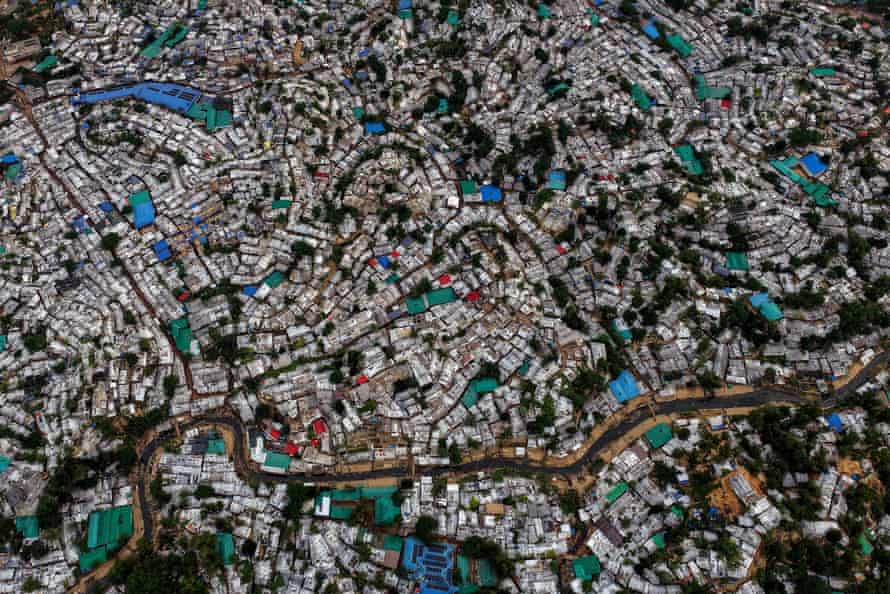
The humanitarian consequences of the military campaign continue to affect the Rohingya population, with approximately 1.2 million refugees now living in Bangladesh.
Most are concentrated in overcrowded settlements across the Cox’s Bazar district, where living conditions remain difficult.
The camps face persistent challenges, including fire outbreaks, infectious diseases, inadequate sanitation and landslides during the monsoon season.
Restrictions on employment opportunities also limit refugees’ ability to earn a living and become financially independent.
For many families, displacement has meant years of uncertainty without a clear prospect of returning safely to their communities in Myanmar.
The court’s decision has renewed international attention on their plight, although the judgment alone cannot immediately resolve the humanitarian crisis.
Ensuring accountability, protecting refugees and creating conditions for a safe and dignified future remain major challenges for the international community.
Why the judgment matters beyond Myanmar
The decision could have consequences extending beyond the Rohingya case because it may influence how future allegations of genocide are examined under international law.
One particularly significant proceeding involves South Africa’s case against Israel over its military offensive in Gaza.
Pretoria has accused Israel of violating the Genocide Convention, an allegation the Israeli government strongly denies.
In January 2024, the ICJ issued provisional measures ordering Israel to ensure that acts of genocide were not committed against Palestinians in Gaza.
That interim decision did not amount to a final finding that Israel had committed genocide. The substantive proceedings remain ongoing and are expected to take years to conclude.
The United States has opposed South Africa’s case, adding another dimension to the diplomatic disagreements surrounding international legal proceedings.
The Myanmar judgment could nevertheless provide important context for understanding how the court evaluates evidence and applies the requirements of the Genocide Convention.
Ukraine’s case against Russia also remains before the ICJ
Another major international dispute before the court involves Ukraine’s allegations against Russia.
Following Moscow’s full-scale invasion in February 2022, Kyiv accused Russia of using fabricated claims of genocide in Ukraine to justify its military action.
Ukraine subsequently brought proceedings before the International Court of Justice, seeking to challenge Russia’s assertions under the Genocide Convention.
The case illustrates how international law has become an important arena for disputes involving military aggression, state responsibility and allegations of genocide.
Together, the proceedings involving Myanmar, Israel and Russia demonstrate the growing significance of the ICJ in determining disputes between states.
However, each case has its own evidence, legal arguments and procedural history, meaning the Myanmar judgment does not automatically determine the outcome of the other proceedings.
International justice faces the challenge of enforcing its decisions
Although the court’s decision represents an important legal milestone, ensuring that Myanmar complies with its obligations remains a major challenge.
The reactions from the European Union, United Nations, Britain and Australia suggest that international pressure will continue.
Washington’s cautious response also leaves open questions about how the Trump administration will engage with the judgment and the broader international legal system.
Read also: Shenzhen trilateral summit brings Trump, Xi and Putin together over Ukraine war and nuclear security
https://swiftreportnow.com/shenzhen-trilateral-summit-brings-trump-xi-and/
For the Rohingya, the ultimate measure of justice will be whether the decision contributes to accountability, protection from further abuses and a future in which their rights are respected.
The ICJ genocide verdict against Myanmar has therefore become more than a judgment concerning one country. It has renewed debate about the authority of international law, the responsibility of states and the ability of global institutions to protect vulnerable populations.
About The Author