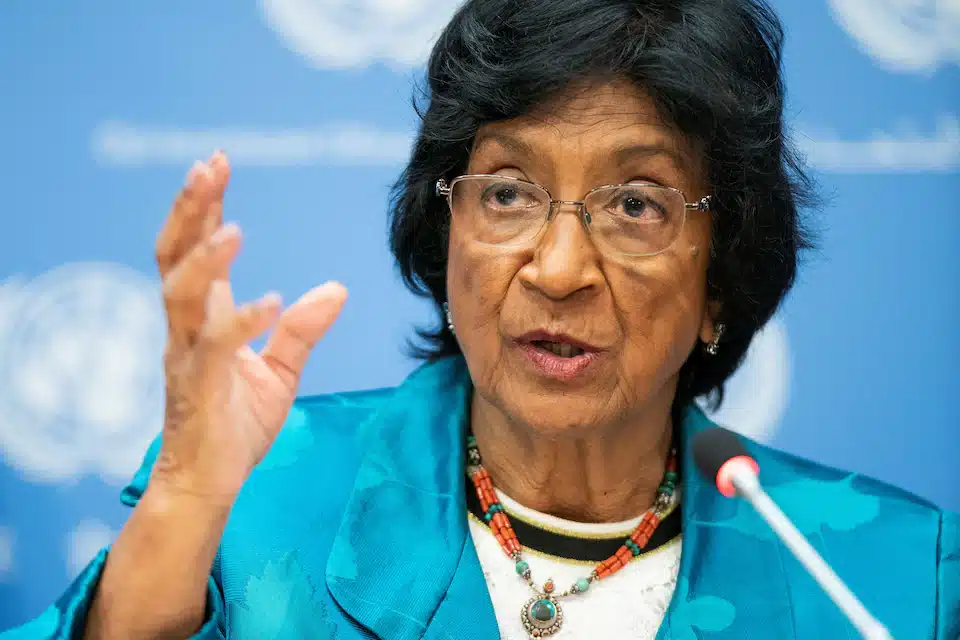
Navi Pillay has won the 2026 Nobel Peace Prize for her efforts to promote peace and international law, receiving the prestigious award as international legal institutions face growing pressure and renewed controversy over accountability for alleged international crimes.
Pillay, an 85-year-old South African jurist and former judge of the International Criminal Court (ICC), was announced as this year’s laureate on Friday, October 9, 2026.
The Nobel Committee recognised her longstanding contribution to international justice, including her work on international courts and her leadership of a United Nations commission that concluded Israel had committed genocide in Gaza. Israel rejected that report.
The announcement came on the same day the United States imposed sanctions on the ICC, an institution that US President Donald Trump has repeatedly criticized following its actions involving Israeli Prime Minister Benjamin Netanyahu.
Why Navi Pillay Won the 2026 Nobel Peace Prize
The Nobel Committee said Pillay was being honoured for her work promoting peace and international law at a time when the international legal system faces significant challenges.
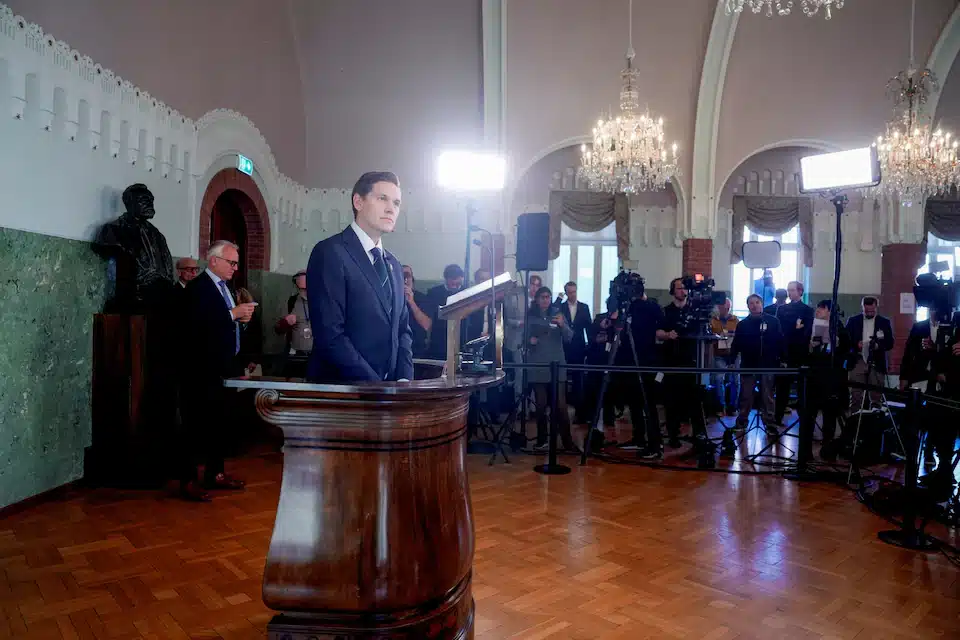
In its citation, the committee warned that international institutions were under pressure and that political power was increasingly being exercised at the expense of established legal frameworks.
“The system of international law is under tremendous pressure, and its institutions are under attack,” the committee said.
It added: “We see a shift towards power politics at the expense of legal frameworks and global respect for law and justice. Whenever might overtakes right, it undermines stability, trust and peaceful co-existence.”
The committee did not directly mention Trump or Israel in its citation. However, the timing of the announcement drew attention because of Washington’s continuing confrontation with the ICC.
Pillay’s career has included work as a judge on several international courts, alongside her service as United Nations High Commissioner for Human Rights from 2008 to 2014.
Nobel Committee Highlights Pillay’s Record on Justice
The committee described Pillay as a figure who had consistently worked to hold states and national leaders accountable.
It highlighted a common thread between her early legal work defending opponents of apartheid in South Africa and her later service in international judicial institutions.
The citation said her career demonstrated a commitment to human rights and accountability across different political and legal settings.
Pillay’s recognition also places her among South Africans who have received the Nobel Peace Prize, following Nelson Mandela and FW de Klerk, Archbishop Desmond Tutu, and Albert Luthuli.
Her award is being presented against a backdrop of disagreements over the authority of international courts and the extent to which powerful states should be subject to international legal scrutiny.
Navi Pillay’s Role in the UN Gaza Genocide Report
Pillay chaired the United Nations Commission of Inquiry on the Occupied Palestinian Territory, which concluded in a report released in 2025 that Israel had committed genocide in Gaza.
The findings became a major point of international controversy, with Israel dismissing the report as “scandalous”.
The commission’s conclusions and Israel’s rejection of them have remained part of the wider international debate over the war in Gaza, civilian protection and the application of international law.
Pillay referred to the report when she spoke after learning that she had won the Nobel Peace Prize.
“The last thing I did is the delivery of the report on Gaza, naming what’s happening there as genocide,” she told a gathering in Nuremberg, Germany, according to footage shared on social media by the head of Amnesty International.
Her leadership of the commission was among the aspects of her recent work that attracted attention following the Nobel announcement.
Netanyahu’s Office Condemns the Nobel Decision
The award prompted a sharp response from Israeli Prime Minister Benjamin Netanyahu’s office, which criticised the Nobel Committee’s decision.
In a statement posted on X, the office said: “The Nobel Prize committee has lost its moral compass.”
It continued: “It has awarded its highest honour to a bigot who built her career around inventing and propagating blood libels against the one and only Jewish state.”
The statement reflects Israel’s strong opposition to Pillay’s work concerning the Palestinian territories and the commission’s findings about Gaza.
The Nobel Committee’s stated rationale, meanwhile, focused on Pillay’s efforts to promote peace and international law and its concerns about pressure on international legal institutions.
The competing responses underscore how her award has become part of a broader dispute over international accountability, the Gaza war and the role of legal institutions in addressing alleged violations.
US Sanctions Against the ICC Add to the Controversy
The Nobel announcement coincided with the United States imposing sanctions on the International Criminal Court, which is based in The Hague.
Trump has repeatedly criticised the court, particularly following its actions involving Netanyahu and his former defence minister over the Gaza conflict.
The US had previously imposed targeted sanctions on several ICC prosecutors and judges. On Friday, Washington went further by imposing sanctions on the court itself, according to the report by Reuters.
The timing gave the Nobel announcement additional international significance, although the committee did not explicitly present the award as a direct criticism of the US president.
Joergen Watne Frydnes, chair of the Nobel Committee, said the international legal system was facing serious pressure.
“Of course, the most powerful states have particular responsibility, but we see it all over the world, unfortunately,” he told Reuters.
He added: “The institutions are under attack. Many judges are being sanctioned.”
ICC President Welcomes Pillay’s Recognition
ICC President Tomoko Akane welcomed the decision to honour Pillay, describing the award as significant at a time of challenges to international justice.
In a statement, Akane said: “At a time of profound challenges to the international legal order and the rule of law, this recognition carries particular significance.”
Her response highlighted the importance attached to the Nobel Committee’s decision by officials working within international judicial institutions.
However, Haakon Gjerloew, acting director of the Peace Research Institute Oslo, cautioned against interpreting the award as a direct attack on Trump.
“I think it’s generally rather a promotion of an international legal world order. Of course, he might react to someone who has been part of the ICC, but it’s not a direct attack on Trump,” Gjerloew told Reuters.
His comments distinguished the committee’s stated support for international law from interpretations that the award was specifically intended to challenge the US president.
Who Is Navi Pillay?
Born in Durban, in South Africa’s Natal province, Navanethem “Navi” Pillay comes from a family of Indian Tamil origin.
She entered the legal profession during apartheid, a period when South Africa’s racial system imposed extensive discrimination on the Black majority and other non-white communities.
In 1967, she became the first woman to establish a law practice in Natal. Following the end of apartheid, she became the first non-white woman to serve on South Africa’s High Court.
Her legal career subsequently expanded into international judicial work, including service at the International Criminal Tribunal for Rwanda and the International Criminal Court.
Pillay also served as United Nations High Commissioner for Human Rights between 2008 and 2014, placing her at the centre of international efforts to address human rights concerns.
Her work has involved questions of accountability, discrimination, international criminal justice and the obligations of governments under international law.
Pillay Continues to Serve on the International Court of Justice
Despite her age, Pillay continues to work as a judge. According to the Nobel Committee’s citation, she is serving on the International Court of Justice in proceedings concerning allegations of genocide against Myanmar.
The International Court of Justice and the International Criminal Court are separate institutions with different responsibilities. The former resolves legal disputes between states and gives advisory opinions, while the latter prosecutes individuals for specified international crimes.
Pillay’s experience across international legal institutions has formed a central part of the case for recognising her work.
The Nobel Committee linked her early defence of people who opposed apartheid with her later service in international courts, arguing that accountability and justice had been consistent themes throughout her career.
Pillay Dedicates Nobel Peace Prize to Survivors and Justice Defenders
After receiving the news in Nuremberg, Germany, Pillay dedicated the award to people affected by international crimes and those who work to defend international justice.
She said the recognition belonged to “all the survivors of international crimes as well as to practitioners and defenders of international justice whose compassion and courage continue to ensure that impunity will not be allowed to reign”.
She also delivered a message to world leaders, stressing their obligations under international law.
“You are under legal obligation … to protect human rights and refrain from war,” she said.
Pillay learned of the award while attending a legal conference in the German city of Nuremberg, where the building hosting the gathering was associated with the international tribunal established after the Second World War to prosecute Nazi crimes.
The setting gave the announcement an additional historical connection to the development of international criminal justice.
During her remarks, Pillay also joked about the possibility of sharing the award with Trump, drawing laughter from the audience.
“If you clap a little bit more, I may share this prize with Trump,” she said.
The comment appeared to reference Venezuelan opposition leader Maria Corina Machado, the 2025 Nobel Peace Prize laureate, who gave her Nobel medal to Trump in January in an effort to gain support for her campaign for democratic change in Venezuela.
Trump has repeatedly said he deserved to receive the Nobel Peace Prize.
When Will Navi Pillay Receive the Nobel Peace Prize?
Pillay’s award is worth 12 million Swedish crowns, approximately $1.2 million, according to Reuters.
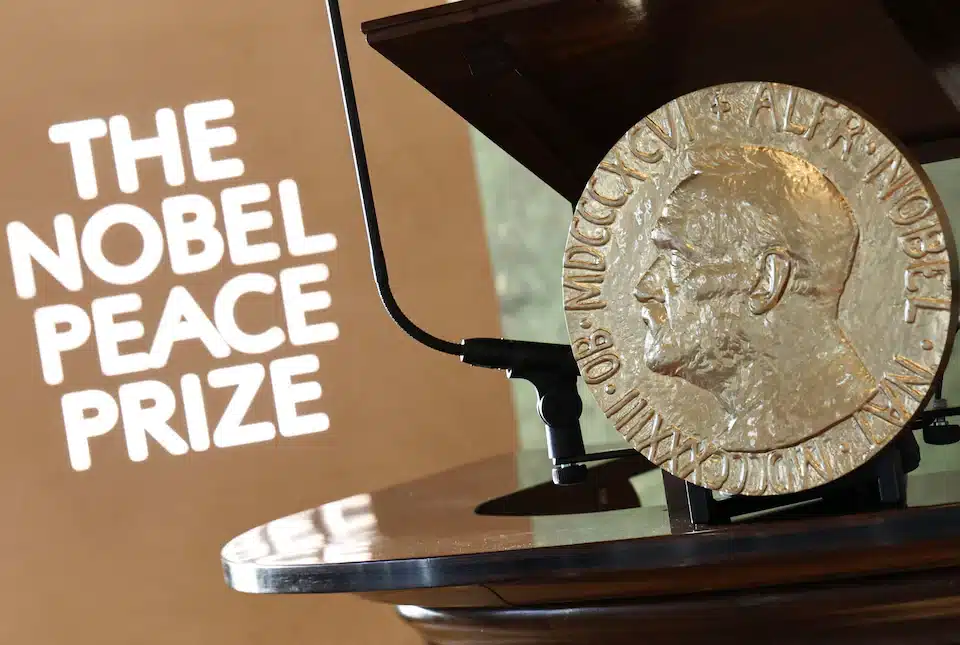
The Nobel Peace Prize is scheduled to be presented in Oslo on December 10, the anniversary of the death of Swedish industrialist Alfred Nobel, whose will established the awards.
Read also: Holborn and St Pancras by-election: Labour defeats Zack Polanski as Green leader vows to stay
https://swiftreportnow.com/holborn-and-st-pancras-by-election-labour-def/
The announcement was the fifth Nobel Prize awarded during the week, following the prizes for literature, chemistry, physics and medicine.
Pillay’s selection has placed international law and the independence of judicial institutions at the centre of renewed global attention.
While the Nobel Committee emphasised the importance of preserving international legal frameworks, Israel condemned the decision, and Washington’s sanctions against the ICC added another dimension to the debate.
The award therefore recognises Pillay’s decades of legal and human rights work while drawing attention to continuing disagreements over international justice, accountability and the responsibilities of powerful states.