Russia targets European companies over Ukraine while largely sparing American businesses as Moscow seeks to rebuild economic ties with Washington under President Donald Trump, according to a Reuters analysis of Russian government data.
Since Trump returned to the White House in January 2025, Russian President Vladimir Putin has placed 20 foreign-owned companies under temporary administration. Only three were linked to the United States, while the remaining businesses were controlled by European companies.
The figures suggest that Russia’s response to Western support for Ukraine has disproportionately affected European businesses operating within its borders. Meanwhile, improving relations between Moscow and Washington appear to be helping American companies protect their commercial interests.
Russian officials have justified the measures by pointing to Europe’s support for Ukraine and what Moscow describes as hostile actions against Russian property abroad.
Russia’s Seizure of European Business Assets Intensifies
Russia has intensified its intervention in foreign-owned businesses as tensions with European governments remain high over the war in Ukraine.
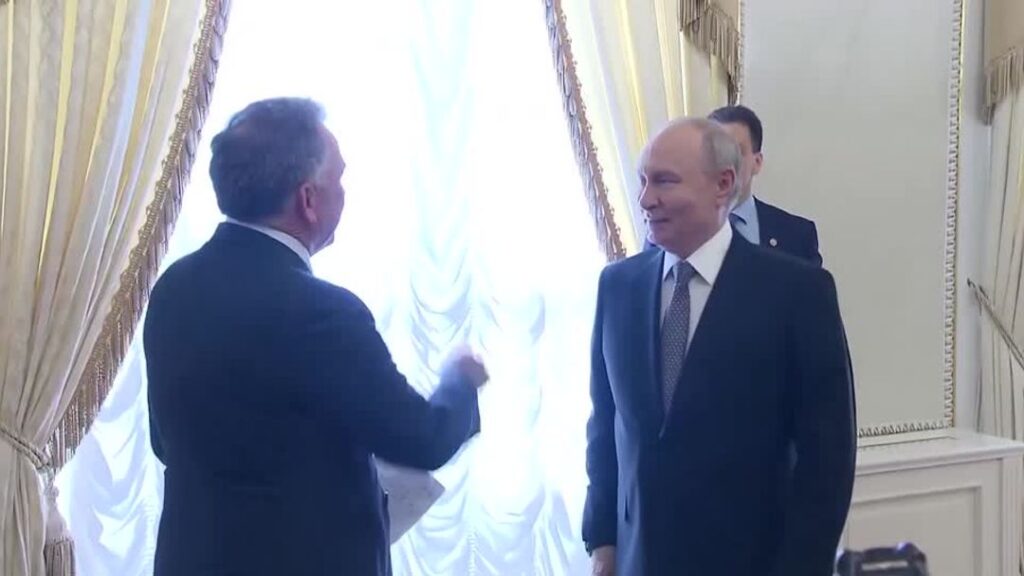
Since September, Moscow has taken control of local operations belonging to several prominent European companies, including Swiss food group Nestlé and French retailers Auchan and Metro.
The latest measures have also affected smaller businesses associated with France, Germany, Sweden and Belgium.
Kremlin spokesman Dmitry Peskov acknowledged that the nationalities of the companies were among the factors considered when decisions were made.
He linked the measures to what Russia considers illegal seizures of Russian property in European countries, presenting Moscow’s actions as a response to developments involving Russian assets abroad.
However, the measures have raised concerns among European governments and business representatives about the security of foreign investments in Russia.
Nestlé, Auchan and Metro Face Russian Intervention
The inclusion of Nestlé, Auchan and Metro highlights the scale of the pressure facing European companies that continue to operate in Russia.
Nestlé, the Swiss food manufacturer, previously said it would take steps to protect its rights after Russian authorities moved its local business under external administration.
The company declined to provide further comment when approached about the latest developments. Auchan, Metro and the other affected companies did not respond to requests for comment.
Temporary administration can place a company’s local operations under state-appointed management, potentially limiting the original owners’ ability to control their assets and business decisions.
For multinational companies, such intervention creates uncertainty over ownership rights, financial returns, operational control and the possibility of eventually withdrawing from the Russian market.
The latest developments could also discourage other European businesses from maintaining or expanding their commercial presence in the country.
Why Russia Is Treating American Companies Differently
The relatively small number of American companies affected by Russia’s measures has drawn attention to the changing relationship between Moscow and Washington.
Of the 20 foreign-owned businesses placed under temporary administration since Trump’s inauguration, only three were linked to the United States.
A person close to Russian financial regulators told Reuters that Moscow had little incentive to adopt an equally tough approach towards American firms while economic negotiations with Washington were progressing.
The source suggested that Russia’s approach reflected the Kremlin’s interest in improving commercial relations with the United States.
This apparent difference in treatment has created a contrast between American businesses and their European competitors, many of which are operating under greater uncertainty.
Nevertheless, the figures do not establish that every American company is protected from Russian intervention. US businesses have also faced seizures and other challenges since Russia launched its full-scale invasion of Ukraine.
Trump’s Return Creates New Commercial Opportunities
Relations between Russia and the United States have warmed as Trump pursues diplomatic engagement with Putin and explores potential economic agreements.
The two countries have discussed opportunities involving energy and other commercial sectors, while Washington has taken steps to ease certain restrictions affecting Russian goods.
Trump signed an executive order on October 17 waiving key sanctions and tariffs on Russian products before they were due to take effect.
The move followed discussions about restoring economic links between the two countries and came amid broader efforts to negotiate an end to the war in Ukraine.
Russia appears keen to use the improving relationship to encourage American companies to return to the country or expand their existing operations.
For Moscow, renewed US investment could bring capital, technology and commercial partnerships while providing an opportunity to demonstrate that Russia remains open to selected international business relationships.
However, the long-term prospects for these arrangements will depend on political developments, the future of sanctions and whether negotiations over Ukraine produce a lasting settlement.
Putin and Trump’s Envoys Discuss Economic Cooperation
The latest diplomatic engagement included a meeting between Putin and US special envoy Steve Witkoff in St Petersburg on October 21.
The discussions focused on efforts to resolve the war in Ukraine, but the restoration of economic ties between Russia and the United States was also an important consideration.
Russian news agencies reported that Putin expressed interest in rebuilding commercial relations with Washington.
Trump’s representatives, including Witkoff and Jared Kushner, have used the prospect of multibillion-dollar business agreements as an incentive in efforts to persuade Putin to pursue a peaceful settlement.
Negotiations began in Riyadh, Saudi Arabia, in February 2025, and economic cooperation has remained part of the wider diplomatic discussions.
Russian negotiator Kirill Dmitriev, who heads the Russian Direct Investment Fund, has advocated the return and expansion of American businesses in Russia.
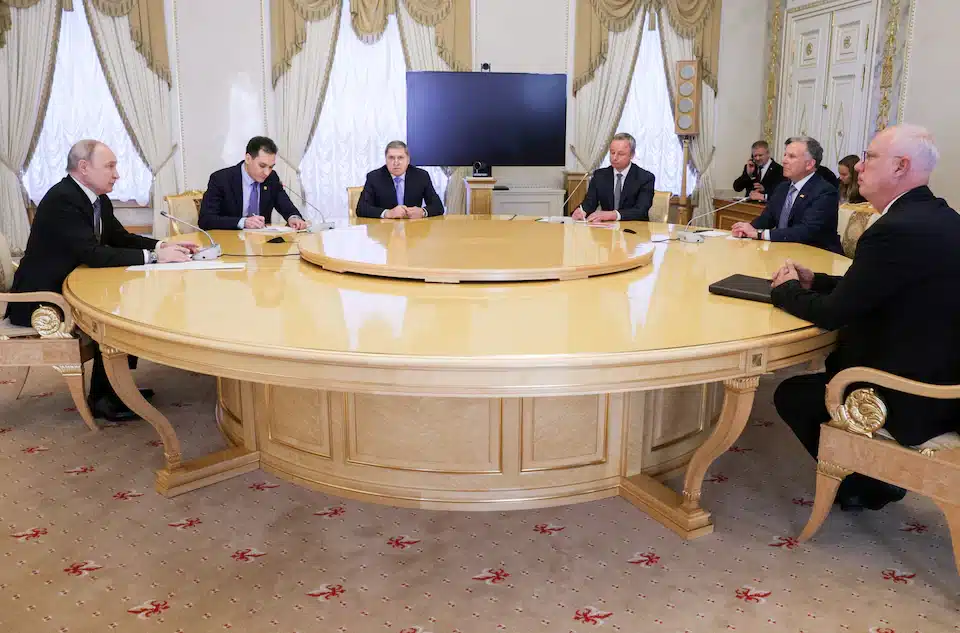
Dmitriev recently described Washington’s decision to ease certain trade restrictions as a historic moment and indicated that the two countries could announce new joint initiatives.
He also suggested that some projects might move forward before the war ends, although the United States has previously indicated that major commercial agreements would be difficult while the conflict continues.
US Businesses Hope for Protection Under Trump
American business representatives in Moscow have expressed greater optimism about their prospects than their European counterparts.
Robert Agee, president of the American Chamber of Commerce in Russia, previously said European companies were less optimistic because of European government policies.
The chamber estimates that approximately 300 American companies remain in Russia, despite years of geopolitical tensions, sanctions and business uncertainty.
Agee told Russian media in December 2025: “We have Trump and they don’t, and our hopes are linked to him.”
The statement reflects the extent to which some American businesses associate their commercial prospects with Trump’s approach to relations with Putin.
However, the favourable outlook does not guarantee that US companies will avoid future difficulties. Russia has previously targeted American businesses, and some Russian officials who oppose diplomatic engagement could still push for additional interventions.
One current partnership involving the Russian Direct Investment Fund is a joint investment with New York-listed Titan International in a tyre factory in Volgograd.
A person familiar with the situation said Dmitriev had privately highlighted the project as an example of a successful American business operation in Russia. Titan did not respond to a request for comment.
European Union Condemns Russia’s Asset Seizures
European officials have criticised Russia’s treatment of foreign-owned businesses, arguing that the measures undermine property rights and create an unsafe investment environment.
A spokesperson for Switzerland’s State Secretariat for Economic Affairs said available information supported the perception that European companies were being targeted more frequently than American businesses.
The European Commission also condemned the recent asset seizures, describing them as actions taken without due process.
A Commission spokesperson said the measures amounted to “forced expropriation in all but name” and represented a continuing pattern of economic retaliation.
The spokesperson added that the European Union had measures available to respond, including sanctions against individuals or entities benefiting from forced expropriations.
Such responses could further complicate relations between Moscow and European capitals, particularly as the war in Ukraine continues and governments debate future economic and security arrangements.
The European Commission’s concerns also highlight the potential consequences for international investors who fear that political disagreements could expose their assets to state intervention.
Russia’s Actions Raise Questions About Investment Security
The seizure of foreign business assets has become a major concern for companies assessing whether to remain in Russia.
A previous report estimated that Moscow had confiscated more than $50 billion worth of private property belonging to Russian and foreign owners over three years.
Such figures underline the financial risks associated with operating in a market where geopolitical tensions can influence ownership and management decisions.
For European businesses, the latest measures suggest that commercial operations could remain vulnerable to developments involving their home governments and Russia’s relations with the West.
American companies may currently perceive a more favourable environment because of Washington’s diplomatic engagement with Moscow. However, that advantage could change if relations deteriorate or Russia’s economic priorities shift.
The situation also raises broader questions about whether foreign investors can rely on consistent treatment when their governments disagree with the Kremlin.
What Russia’s Different Treatment of US and European Firms Means
Russia’s apparent preference for sparing most American companies while targeting European businesses reflects the increasingly political nature of international commerce.
Moscow has an incentive to encourage US investment as it seeks closer relations with Trump’s administration and explores possible economic agreements.
At the same time, the Kremlin continues to view European support for Ukraine as a source of confrontation, creating additional risks for businesses associated with European countries.
The pattern could put European companies at a disadvantage if American competitors gain opportunities to expand in Russia while their European rivals face restrictions or the loss of assets.
Nevertheless, the current situation remains fluid. Negotiations between Washington and Moscow could stall, sanctions could change again, and further Russian interventions could affect businesses from different countries.
For now, the contrast is clear: Russia targets European companies over Ukraine while seeking opportunities to rebuild economic relations with the United States.
The outcome will depend on whether diplomatic engagement leads to lasting improvements in relations and whether Russia provides credible protections for foreign businesses operating within its borders.