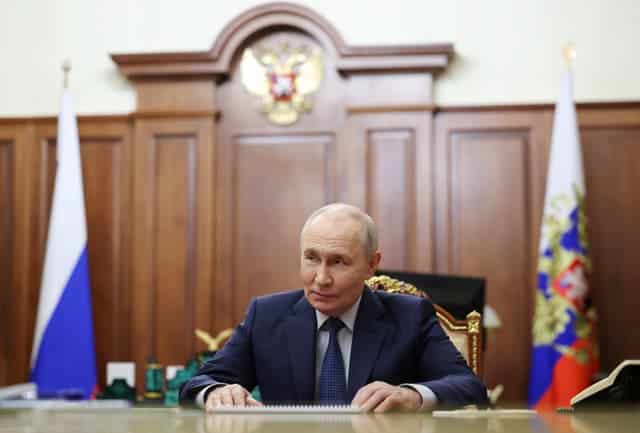
Russia threatens Estonia with open war– has threatened Estonia with “open war” over the Baltic country’s decision to close its border crossings with Moscow for six months, escalating tensions between the two neighbours amid the continuing Ukraine conflict.
The warning came after Estonia announced that it would shut the crossings from 1 December, citing alleged attempts by Russian security services to set fire to an Estonian defence company.
Moscow summoned Estonia’s diplomatic envoy on Monday and accused the Nato and European Union member of pursuing hostile actions against Russia.
Russian officials warned that the alleged provocations, including claims that Ukrainian drones were allowed to use Estonian airspace to attack Russian targets, could trigger a direct military confrontation as Russia threatens Estonia.
The threat adds another dangerous dimension to the wider conflict, with Moscow and Nato countries increasingly exchanging accusations over security incidents around Russia’s western borders.
Moscow issues warning over Estonia’s border decision
Russia’s latest warning followed Estonia’s announcement that its border crossings with Russia would remain closed for at least six months beginning on 1 December.
Estonian authorities linked the decision to alleged hostile activities by Russian security services, including an attempted arson attack targeting a defence company.
The Russian government rejected Estonia’s position and summoned an Estonian representative to communicate its objections.
During the meeting, Moscow reportedly described Estonia’s actions as provocative and extremely dangerous, warning that they were approaching the threshold of “open war” with Russia.
The accusation that Estonia has permitted Ukrainian drones to operate through its airspace has also become a major part of the dispute.
However, the allegations have not been independently established in the information provided. Estonia’s border decision nevertheless illustrates the growing security concerns confronting countries along Russia’s western frontier.
Ukraine expands attacks on Russian military-linked shipping
The confrontation with Estonia comes as Ukraine continues to extend its military operations beyond the immediate battlefield, including attacks against Russian-linked vessels operating far from the war zone.
Ukraine recently confirmed strikes against two Russian ships at the Libyan port of Benghazi, an operation that has prompted Moscow to threaten what it described as “painful consequences”.
One of the vessels, the Russian naval corvette Merkury, was struck by Ukrainian naval drones. The ship reportedly capsized and sank, leaving only its bow visible above the water.
Ukraine also attacked the dry cargo ship MV Angara, which President Volodymyr Zelensky said had been used to transport weapons.
Zelensky described the operation as an exemplary strike, while Libya’s government condemned the attack.
A Russian Ka-27 helicopter was also destroyed alongside the corvette, according to the Ukrainian president.
The Benghazi operation followed another drone attack against a cargo ship linked to the Russian military in the Gulf of Finland, suggesting an expanding campaign against Moscow’s maritime supply networks.
Western countries concerned about Ukraine’s operations
Ukraine’s attacks on Russian-linked vessels have raised concerns among Western observers about the possibility of further escalation and the potential consequences for countries outside the immediate conflict zone.
The operations form part of a growing pattern of targeted Ukrainian special forces activities against Russian military and logistical interests.
Although Kyiv has sought to weaken Moscow’s ability to sustain its invasion, the expansion of these operations could create new diplomatic and security complications.
The latest strike in Libya has particularly attracted attention because it occurred outside the traditional theatre of fighting between Russia and Ukraine.
Russia drone incident raises concern in Poland
Meanwhile, Poland has reported another incident involving a Russian drone entering its airspace during an attack on western Ukraine.
Polish armed forces said the unmanned aircraft briefly crossed into Polish territory during a nighttime Russian assault before changing direction and moving eastwards.
Although permission had been granted to shoot it down, Polish military officials decided against using weapons because of concerns about possible civilian casualties and the consequences of destroying the aircraft.
The incident came after three Russian Kh-101 missiles reportedly landed in Poland on Friday, intensifying fears that the war could spill further into Nato territory.
Poland’s military has also warned of the need to strengthen its airspace monitoring capabilities as Russian attacks continue close to its borders.
The latest incursion adds to a series of incidents that have placed eastern European Nato members on heightened alert.
US delays Patriot missile transfers to Ukraine
Ukraine is also facing uncertainty over the delivery of additional American-made Patriot air defence interceptors, which Kyiv urgently needs to counter Russian missile and drone attacks.
The Financial Times reported that US Defence Secretary Pete Hegseth had yet to approve the transfer of approximately 60 Patriot interceptors that Washington had already agreed to provide.
The weapons include PAC-3 and PAC-2 missiles held in European arsenals and financed by Ukraine’s Western allies.
Some of the PAC-3 interceptors were scheduled for delivery between September and December, but the newspaper reported that none of the outstanding shipments had received approval for transfer.
A separate effort to obtain US authorisation for Ukraine to manufacture its own Patriot interceptors has also reportedly encountered delays at the Pentagon.
Last month, Washington approved a $2.1 billion sale of 500 Patriot PAC-3 missiles to Ukraine, although deliveries are not expected until the early 2030s.
A Pentagon spokesperson told the Financial Times that American policy on support for Ukraine had not changed, while declining to provide further details about the outstanding transfers.
Zelensky renews call for Ukraine to join Nato
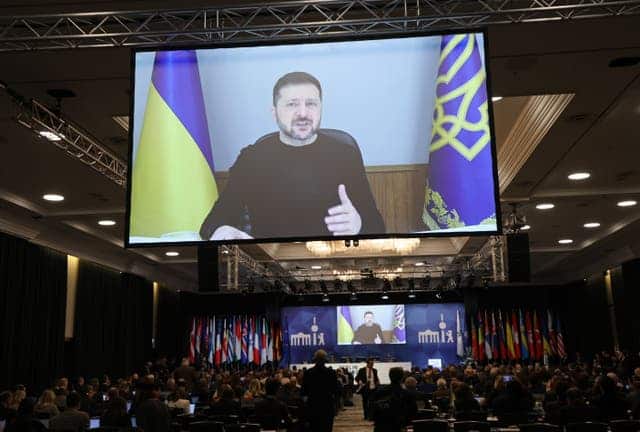
Ukrainian President Volodymyr Zelensky has renewed his appeal for Nato membership, arguing that joining the alliance would provide the country with stronger security guarantees after the war.
Speaking to the Nato Parliamentary Assembly in Berlin on Monday, Zelensky questioned whether admitting Ukraine would offer a more reliable way of protecting the country against future Russian aggression.
He also argued that Ukraine could contribute its battlefield experience and military technology to the alliance.
Nato Secretary General Mark Rutte said membership remained a decision for the alliance, acknowledging that some member states did not currently support Ukraine’s accession.
German Chancellor Friedrich Merz, however, said it had been a mistake not to admit Ukraine at the 2008 Nato summit in Bucharest.
He argued that accepting Ukraine into the alliance at the time might have prevented the current war.
Tajikistan withdraws from International Criminal Court
In another development connected to Moscow’s international relations, Tajikistan has formally notified the United Nations of its decision to withdraw from the International Criminal Court.
The notification was submitted on 20 November, the same day Russian President Vladimir Putin visited the Central Asian country.
The ICC issued an arrest warrant for Putin in March 2023 over alleged responsibility for the unlawful deportation and transfer of Ukrainian children from occupied areas of Ukraine to Russia.
Member states are required to arrest him if he enters their territory, subject to the court’s obligations and procedures.
The ICC said it had taken note of Tajikistan’s withdrawal with concern, warning that countries leaving the Rome Statute risk weakening international efforts to ensure accountability.
The court also stressed that withdrawal would not remove obligations arising during the period when a country remained a member.
The developments underline the widening diplomatic consequences of the Ukraine war, as Russia faces military pressure from Kyiv while tensions continue to grow between Moscow and European Nato members.
About The Author