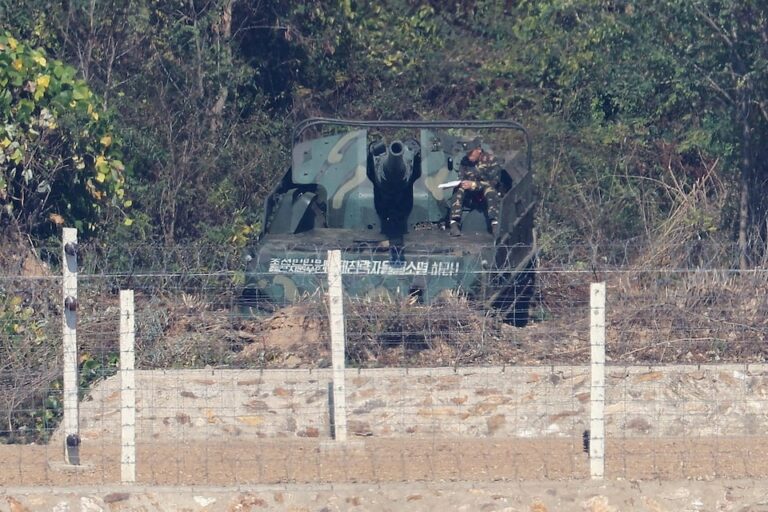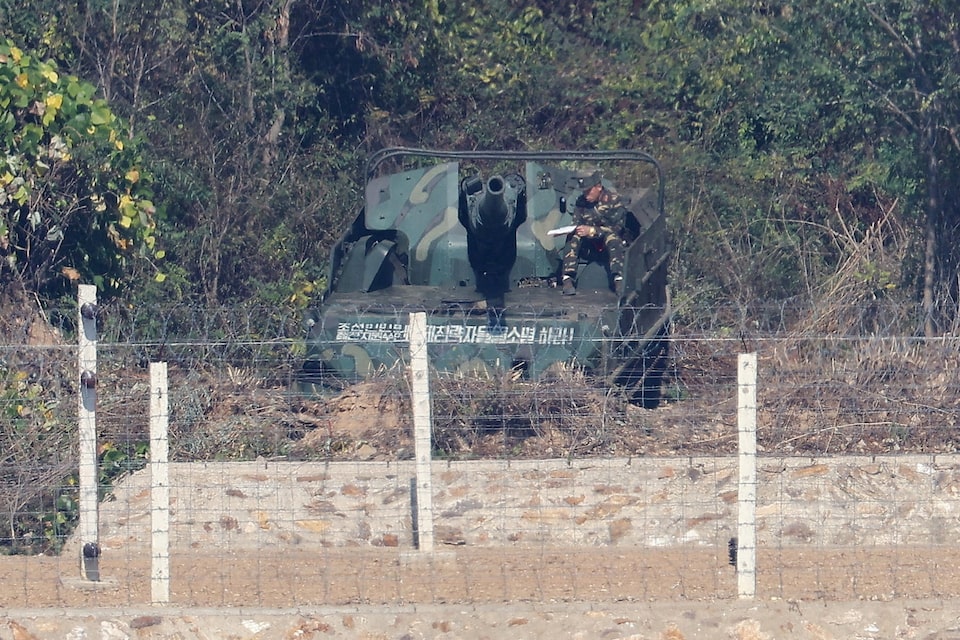
North Korea nuclear deterrent development will be accelerated, Pyongyang has announced, arguing that recent military cooperation between the United States and South Korea poses a growing threat to its security.
The declaration, carried by North Korean state media on Monday, followed the Iron Mace exercise, which brought together American nuclear capabilities and South Korean conventional military forces.
Kim Jong Sik, a senior official in North Korea’s ruling Workers’ Party, accused Washington of maintaining its determination to pressure his country through nuclear power.
He argued that the latest exercise demonstrated the need for Pyongyang to expand its nuclear capabilities more rapidly, warning that the perceived threat from its adversaries continued to intensify.
Kim described the United States as pursuing what he called a “wild ambition to stifle North Korea with nukes.”
His remarks indicate that North Korea intends to use the exercise as further justification for strengthening its military capabilities, despite the allies’ stated objective of improving their readiness to respond to security threats.
Iron Mace exercise sparks fresh confrontation
The joint military exercise took place between September 29 and October 2, according to South Korean military authorities.
Its principal objective was to improve coordination between US nuclear capabilities and South Korea’s conventional forces, strengthening cooperation between the allies during a potential security crisis.
For Washington and Seoul, such arrangements form part of their efforts to deter North Korea and prepare for possible military contingencies.
Pyongyang interprets the same activities differently, repeatedly accusing the two countries of conducting exercises that threaten its government and could precede an attack.
Kim Jong Sik said the latest drills, alongside other joint military activities, demonstrated why North Korea needed to reinforce its nuclear forces without delay.
The competing interpretations have kept security tensions elevated on the Korean Peninsula, where military exercises and weapons development frequently trigger warnings from the opposing side.
North Korea has consistently maintained that its nuclear arsenal is necessary to prevent foreign military intervention and protect its sovereignty.
The United States and South Korea, meanwhile, regard their defence cooperation as an important response to North Korea’s advancing nuclear and missile programmes.
Unusual intervention by North Korean weapons official
The identity of the official delivering Pyongyang’s latest nuclear policy message has attracted attention from regional analysts.
Kim Jong Sik is a key figure involved in North Korea’s nuclear and missile development and production. However, statements addressing broader nuclear policy are more commonly issued by officials from the defence or foreign ministries.
Yang Moo-jin, professor emeritus at the University of North Korean Studies, suggested that Kim’s responsibilities might be broadening beyond weapons development and production.
His assessment raises the possibility that Kim is becoming more involved in communicating or shaping the country’s wider nuclear and missile policy.
The development is significant because North Korea’s weapons programme remains central to its national security strategy and its confrontation with Washington and regional allies.
Pyongyang has continued to prioritise its military capabilities despite international sanctions and diplomatic efforts aimed at limiting its nuclear ambitions.
The latest statement provides another indication that North Korea is determined to maintain its nuclear programme as a central feature of its defence posture.
However, the declaration does not establish that a specific weapons test or military deployment is imminent.
Border dispute compounds Korean Peninsula tensions
The latest nuclear warning comes amid renewed friction between North and South Korea following a mine explosion near the border in September.
North Korea subsequently threatened to restart propaganda broadcasts through loudspeakers directed towards South Korean territory by the end of October.
Such broadcasts have long been a source of hostility between the neighbours, with both sides historically using the border installations to deliver political messages intended to influence audiences across the divide.
The threat raised concerns that the countries could experience another escalation beyond their existing military disagreements.
South Korea’s military said on Monday, however, that it had not confirmed that North Korea had carried out the threatened action.
That assessment suggests there was no verified indication of a resumption of the broadcasts at the time of the announcement.
Nevertheless, the combination of border incidents, military exercises and increasingly hostile rhetoric continues to complicate relations between the two countries.
Nuclear arms race concerns persist
North Korea’s renewed commitment to strengthening its nuclear forces could further complicate efforts to ease tensions in East Asia.
The United States and South Korea have continued developing joint defence arrangements in response to Pyongyang’s weapons programmes, while North Korea presents those arrangements as evidence that it needs stronger deterrence.
This creates a cycle in which military preparations by one side prompt warnings and countermeasures from the other.
The Iron Mace exercise was intended to improve cooperation between the allies, but North Korea has used it to reinforce its argument for faster nuclear development.
Whether Pyongyang translates its latest declaration into additional tests, weapons production or other military activities remains uncertain.
Read also: Obama backs Democrats in final push to challenge Trump ahead of midterms
https://swiftreportnow.com/obama-backs-democrats-in-final-push-to-challe/
For neighbouring countries, the central concern is that further advances in nuclear and missile capabilities could increase the risks associated with any future confrontation.
The latest North Korea nuclear deterrent statement therefore highlights the continuing gap between the security objectives of North Korea and those of the United States and South Korea.
With tensions also affecting relations along the inter-Korean border, the prospect of a near-term improvement in the regional security environment remains uncertain.
About The Author