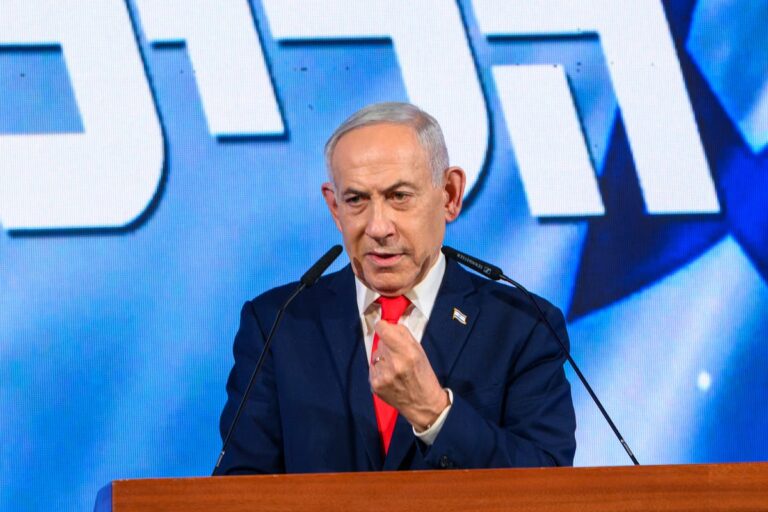
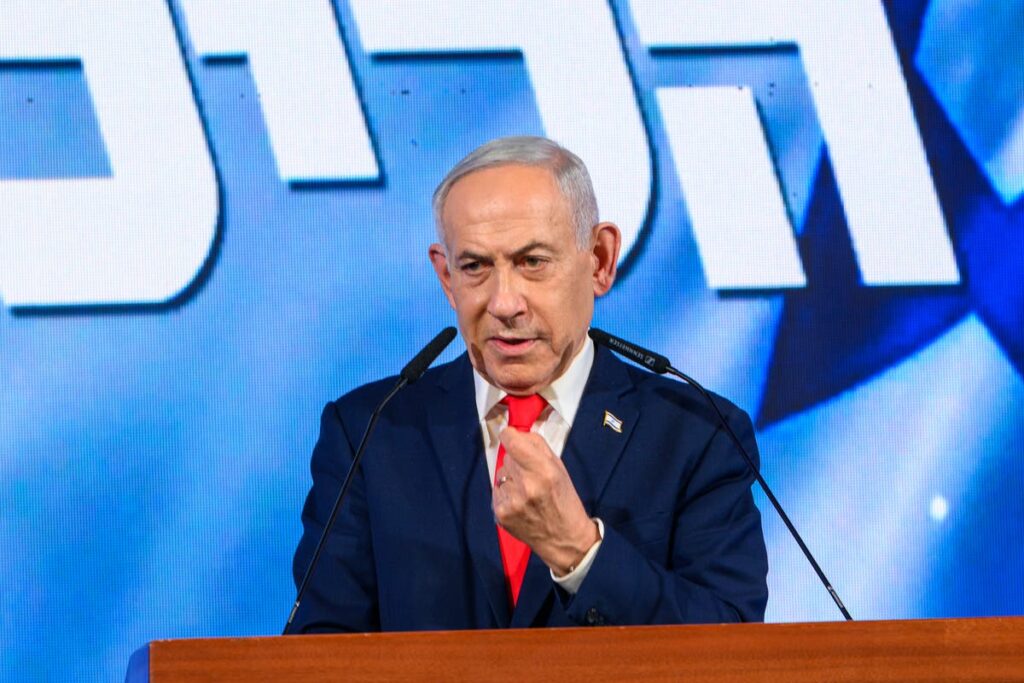
The Israel election crisis has intensified after Donald Trump said he would “take a look” at the possibility of getting involved in coalition negotiations, while Israeli police rejected Benjamin Netanyahu’s claims that Arab parties had stolen the election.
The political uncertainty follows Tuesday’s general election, which left Netanyahu’s right-wing bloc short of the parliamentary majority needed to form a government. Meanwhile, Arab-led parties are projected to secure a historic 19 seats in the 120-member Knesset, potentially giving them significant influence over the next administration.
Netanyahu has accused Arab parties of undermining the election, but Israeli police have found no supporting evidence for the allegations. The dispute has further complicated negotiations over who will govern the country.
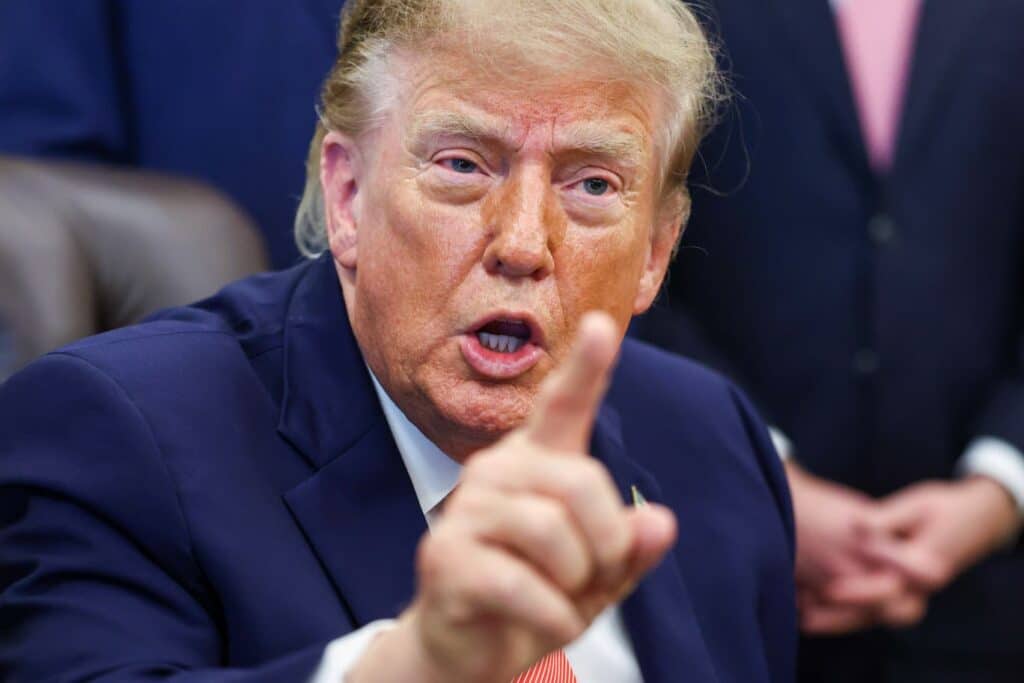
Trump, who has previously expressed support for Netanyahu and his Likud party, has not ruled out becoming involved in efforts to form the next Israeli government.
Trump leaves door open to involvement in coalition talks
Asked about the possibility of intervening in Israel’s coalition negotiations during an interview with Axios, Trump said he had not previously considered the idea but added: “I will take a look.”
The comment prompted speculation about whether Washington might attempt to influence the formation of Israel’s next government.
However, a US official subsequently clarified that the president had not made a decision about whether the United States would intervene. The official also dismissed reports suggesting that Washington had already chosen its preferred outcome as “false and premature”.
Trump’s position is significant because of his longstanding relationship with Netanyahu and his administration’s close ties with Israel.
Nevertheless, his remarks do not amount to a commitment to intervene. Whether the US president ultimately becomes involved remains uncertain, particularly as Israeli political parties negotiate over possible governing arrangements.
Israeli police reject Netanyahu’s election theft allegations
Netanyahu’s claims that Arab parties had “stolen” Tuesday’s election have been rejected by Israeli police, who said there was no evidence supporting the allegations.
According to a report by The Times of Israel, a police source said: “Election day passed with very few irregular incidents concerning the integrity of the election, even when compared to previous elections.”
The source added: “It should be emphasised that there is no investigative- or intelligence-based supporting evidence for the claims.”
The response directly challenges the allegations made by Netanyahu and members of his Likud party.
The official elections committee had also found no evidence of widespread irregularities, according to the report.
Analysts believe Netanyahu’s accusations could be linked to the strong performance of Arab-led parties, whose projected seats could help opposition forces assemble a parliamentary majority and end his tenure as prime minister.
Arab parties emerge as potential kingmakers
Arab-led parties are projected to win 19 seats in the 120-member Knesset, up from the 10 seats held by Arab parties in the outgoing parliament.
The result would represent one of their strongest electoral performances in generations and could make their support important in determining the next government.
Netanyahu’s alliance is opposed to forming a government that depends on Arab-led parties. His opponents, however, face a difficult decision over whether to cooperate with them to secure the parliamentary numbers needed to remove him from office.
Yousef Jabareen, leader of the Joint List alliance, argued that Netanyahu was attacking Arab parties because their support could prove decisive.
“Netanyahu knows that without the Arab parties, there’s no majority to unseat him. That’s why he incites against us,” Jabareen said.
He added: “The opposition should reject that incitement.”
Jabareen also said his alliance was prepared to cooperate with political forces seeking to replace Netanyahu and change his policies.
“The ball is now in Eisenkot’s court. Whoever wants to remove Netanyahu and change his policies – we are ready to cooperate to topple his government,” he said.
However, cooperation with Arab-led parties could create divisions within the opposition bloc, particularly among Jewish voters and politicians opposed to working with the Joint List.
Balad leader accuses Israeli politicians of racism
The refusal of major Israeli political parties to form a coalition with Arab-led parties has prompted accusations of discrimination.
Sami Abu Shehadeh, leader of the Balad party, accused Israel’s main political leaders of racism for treating Arab political representation as unacceptable despite the electoral support it has received.
“This is racism,” Abu Shehadeh told Al Jazeera.
He continued: “We are a legitimate elected leadership of the national minority. The vast majority of our people decided that we are their leadership.”
His comments reflect wider concerns about the role of Arab citizens in Israeli national politics.
Arab Israelis account for approximately 20 per cent of Israel’s population but have historically faced marginalisation in national political decision-making.
Daniel Shek, a former Israeli ambassador, described the resurgence of Arab electoral support as one of the most significant developments in the election.
“Probably the most important phenomenon of this election is the rise and the revival of the Arab vote,” Shek said.
He added: “The statement is clear: You cannot disregard such a large portion of the electorate in the calculations for Israeli politics.”
The projected 19 seats could therefore become central to negotiations, even if several parties continue to oppose a formal coalition with Arab-led groups.
Netanyahu vows to confront Iran and rejects Arab-backed government
Despite falling short of a parliamentary majority, Netanyahu has maintained that his political alliance represents a decisive majority among Jewish voters and those who support the Jewish state.
Speaking to supporters at Likud party headquarters in Jerusalem on Wednesday, he warned against establishing a government that relied on Arab-led parties.
“It is simply forbidden to endanger Israel and form a government that rests on anti-Zionist Arab parties. Parties that oppose our very existence, that see Hamas as a charitable organisation, that call our soldiers war criminals,” Netanyahu said.
He also described the threat from Iran as an issue that Israel must confront, presenting cooperation with Trump as an opportunity to address what he called an existential danger.
Netanyahu said Israel had a “historic, once-in-a-lifetime opportunity” alongside the US president to eliminate the threat posed by Iran.
“Because as long as that fanatical regime exists, a regime that has inscribed on its banner, that has defined the very purpose of its existence as the destruction of ours, it will try again to annihilate us,” he said.
He added: “And it is within our power, together with our wonderful friend president Trump, to remove this threat once and for all.”
His comments suggest that national security and relations with Washington will remain central to his political argument as coalition negotiations continue.
Election count leaves both major blocs short of a majority
With nearly 90 per cent of ballots counted, Netanyahu’s alliance was projected to secure 53 seats, while the bloc aligned with opposition leader Gadi Eisenkot was on course for 48.
Neither side had reached the 61 seats required to command a majority in the 120-member Knesset.
The figures represented a reversal from pre-election opinion polls and initial exit polls, which had placed Eisenkot’s alliance ahead.
The remaining ballots included an estimated 430,000 to 480,000 double-envelope votes cast by soldiers, prisoners, diplomats overseas and other voters unable to vote at their designated polling stations.
Officials were expected to begin counting these ballots on Thursday, with the process anticipated to conclude by Thursday evening. Final official results were expected on November 4.
The outstanding votes could influence the final distribution of seats, although the figures available at the time of the report already indicated that coalition negotiations would be necessary.
Netanyahu faces difficult choices over his political future
The election has left Netanyahu facing a difficult path to forming another government. His right-wing bloc has fallen short of a majority, while his opponents must overcome ideological differences and disagreements about cooperation with Arab-led parties.
Political analysts have identified several possible outcomes, including an agreement between rival factions, a minority administration or another election if negotiations fail.
Any arrangement involving Arab-led parties could provoke opposition from sections of the Israeli electorate, while excluding them could make it harder for Netanyahu’s opponents to assemble the necessary parliamentary support.
The political deadlock also raises questions about the role of foreign governments in Israel’s domestic affairs, particularly if Trump decides to become involved in the negotiations.
For now, the outcome remains uncertain. The final vote count, the willingness of political leaders to compromise and the position of Arab-led parties will all influence the next stage of the process.
The Israel election crisis has therefore become a test of Netanyahu’s political survival, the influence of Arab representation and the ability of Israel’s rival political blocs to build a workable government. With police rejecting claims of election theft and Trump leaving open the possibility of involvement, coalition negotiations are likely to remain under intense scrutiny.
About The Author