Spain has begun three days of national mourning after the Spain train crash killed 68 people and injured scores of others, triggering an urgent search for missing passengers and renewed questions about the safety of the country’s high-speed railway network.
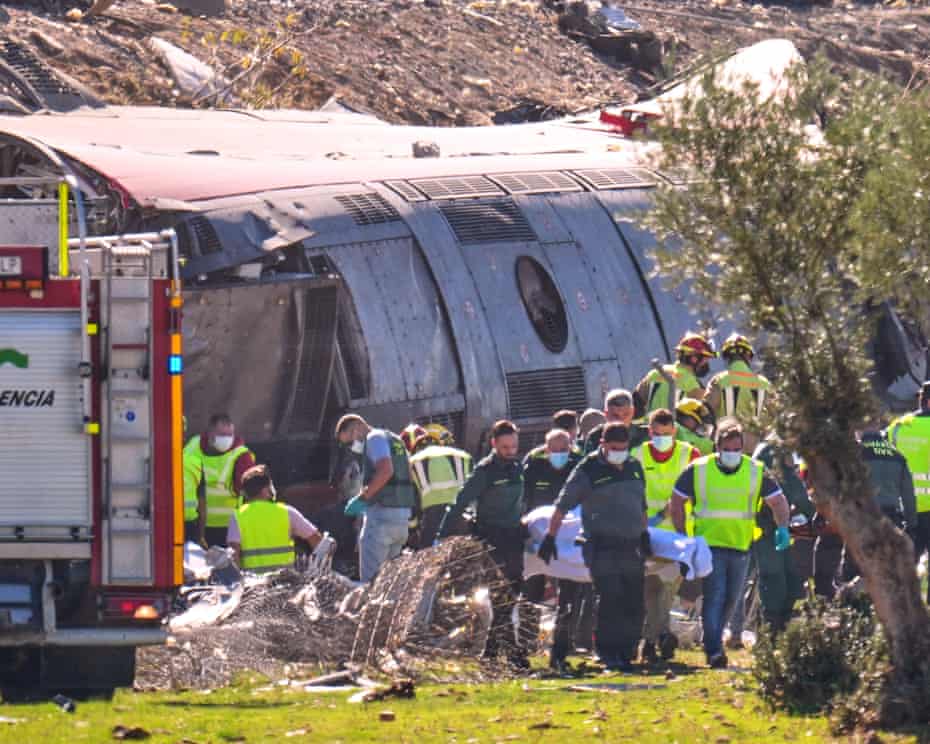
Emergency workers spent the night searching through twisted metal and damaged carriages following Wednesday’s collision near Urda, a town in the Castilla-La Mancha region, approximately 130km south of Madrid.
The disaster involved two passenger trains operated by Spain’s state-owned Renfe and private rail company Iryo. Both were travelling in the same direction along the railway connecting Madrid with Andalusia in southern Spain.
According to initial reports, the Iryo train stopped before the Renfe service travelling behind it crashed into its rear. The impact sent several carriages off the tracks, leaving passengers trapped and emergency responders facing a difficult rescue operation.
Spanish authorities said 107 people had required hospital treatment, including 15 whose conditions were classified as serious. The death toll could still change as investigators and rescue teams continue examining the wreckage.
Spain begins three days of national mourning
The Spanish government declared three days of mourning as the country grappled with the scale of the tragedy and families waited anxiously for information about relatives who had been aboard the trains.
Prime Minister Pedro Sánchez expressed concern over the disaster, describing it as unacceptable for Spain to experience two deadly high-speed railway accidents in the same year.
“It is unacceptable for a country like Spain to suffer two high-speed train accidents in the same year, as we have,” Sánchez said.
The prime minister also pledged that authorities would investigate the circumstances surrounding the collision. He said any identified failures in security systems or negligence would be addressed with the utmost severity.
The declaration of mourning comes as emergency personnel continue recovery operations and investigators begin the complex task of establishing exactly how the collision occurred.
The tragedy has also renewed public scrutiny of Spain’s railway infrastructure, particularly because the latest accident follows another fatal collision involving trains operated by the same two companies earlier this year.
Emergency crews search wreckage for more victims
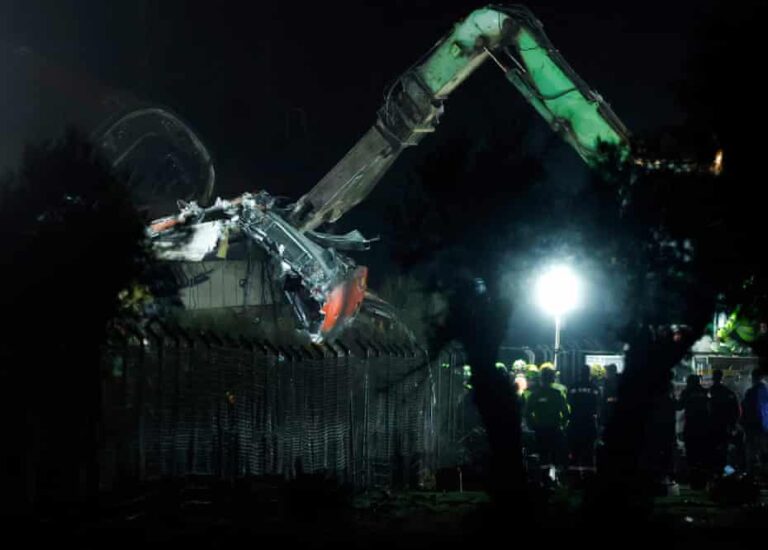
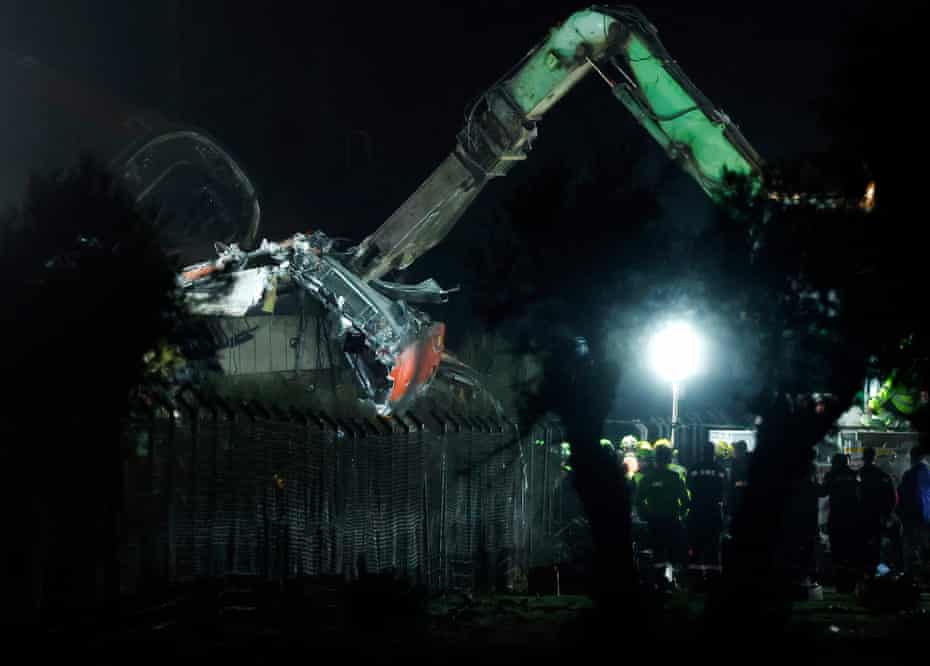
Rescue teams worked through the night to locate victims among the wreckage, using heavy machinery and cranes to lift damaged sections of the trains.
According to Agence France-Presse, emergency responders removed mangled metal from the crash site as they searched areas that had not yet been fully examined.
Emiliano García-Page, leader of the Castilla-La Mancha regional government, warned that more victims could be discovered because rescuers had not been able to reach the bottom of some carriages.
The condition of the wreckage has complicated the operation, with emergency personnel needing to search carefully through the damaged structures.
Authorities have not ruled out further discoveries as the recovery effort progresses, leaving families uncertain about the fate of relatives who remain unaccounted for.
The scale of the destruction has also made identifying victims a priority, particularly where injuries and damage have complicated the process.
Families provide DNA samples to identify victims
Spain’s Civil Guard has established four offices in Madrid, Toledo, Córdoba and Seville to help relatives provide DNA samples and assist authorities in identifying the dead.
The process is intended to help investigators establish the identities of victims and provide families with reliable information about their loved ones.
Blood donation centres have also been set up in Castilla-La Mancha and Madrid as hospitals respond to the emergency and prepare to treat injured passengers.
A school in the nearby village of Urda has been converted into a support centre where relatives can seek information about missing family members.
Red Cross workers have been providing assistance to people arriving at the centre, including relatives visibly distressed by the uncertainty surrounding the disaster.
Carmen Garcia, a Red Cross psychologist, warned that families faced a difficult period of grief and uncertainty.
“Long and hard hours” lay ahead, she said, explaining that people would respond to the tragedy in different ways.
“We have people who are in shock, who haven’t taken on board what has happened, angry people, sad, worried people. The grieving will be complicated,” Garcia said.
Her comments reflected the emotional toll on families waiting for confirmation about relatives who may have been travelling on either train.
Investigation focuses on circumstances surrounding collision
The circumstances that led to the crash remain under investigation, with Spanish officials facing mounting pressure to establish how two trains travelling in the same direction ended up colliding.
The transport minister previously referred to an “error” and “inexplicable circumstances” surrounding the accident, raising concerns about the possibility of operational or technical failures.
However, investigators have yet to establish a definitive cause, and the early comments should not be treated as confirmation of responsibility.
The investigation is expected to examine the sequence of events before the Iryo train stopped, the response of the following Renfe service and whether railway safety procedures operated as intended.
Officials will also need to determine whether any technical malfunction, signalling problem or human error contributed to the collision.
The findings could have significant consequences for Spain’s railway operators and the authorities responsible for maintaining safety across the country’s extensive high-speed network.
The government has promised that any confirmed shortcomings involving safety systems or negligence will be addressed seriously.
Second deadly high-speed rail collision in Spain this year
The latest Spain train crash is particularly troubling because it follows another fatal collision in January, when 46 people died after two trains operated by Renfe and Iryo collided near Adamuz in Andalusia.
That earlier accident also occurred along the railway corridor connecting Madrid with southern Spain, making the latest disaster a second major tragedy on the network within the same year.
The recurrence has raised questions about whether existing safety arrangements are sufficient to prevent similar incidents.
Although the two accidents should not be assumed to share the same cause, their similarities have intensified demands for a broader assessment of railway operations and infrastructure.
The government now faces pressure to provide clear answers about the latest collision while ensuring that any lessons from previous incidents are properly considered.
For passengers, railway workers and families affected by the disasters, restoring confidence in the safety of high-speed rail services will be an important challenge.
Opposition demands independent review of railway network
The opposition People’s Party has called for an immediate investigation into the collision and a comprehensive, independent review of Spain’s railway network.
Party leader Alberto Núñez Feijóo said the public deserved a clear explanation of what had happened and whether the country’s infrastructure was being maintained to appropriate standards.
“Spain has the right to know what is going on with its infrastructure,” Feijóo told reporters.
His demand adds to pressure on the government to ensure the investigation is thorough, transparent and capable of identifying any failures that may have contributed to the tragedy.
A wider review could examine railway safety arrangements, maintenance practices, operational procedures and the effectiveness of measures intended to prevent collisions.
However, any conclusions about systemic problems will depend on the evidence gathered during the investigation into the latest crash.
Authorities must first establish the precise sequence of events before determining whether broader reforms are necessary.
Victims include Civil Guard officer
One of the first victims to be publicly identified was José Manuel Chacón, a 31-year-old Civil Guard officer.
Spain’s national law enforcement agency expressed its deepest condolences to his family, friends and colleagues following confirmation of his death.
Spanish media also reported that the missing included a former minister associated with the People’s Party and several foreign nationals believed to have been visiting the country.
Authorities have not yet provided a complete account of all those who died, as identification efforts continue and relatives await official confirmation.
The presence of foreign nationals among those reported missing has added to the distress surrounding the accident, particularly for families who may be seeking information from outside Spain.
Officials and emergency support teams continue working to identify victims, assist survivors and provide information to relatives.
Spain faces difficult questions over railway safety
The disaster has left Spain mourning dozens of victims while confronting renewed concerns about the reliability of its high-speed railway system.
The immediate priorities remain recovering victims, treating injured passengers, identifying the dead and supporting families affected by the collision.
At the same time, the government faces growing demands to explain how the crash happened and whether changes are needed to prevent another tragedy.
The investigation will be crucial in determining whether the collision resulted from a technical failure, an operational mistake or a combination of factors.
For now, officials have urged caution while the evidence is examined, even as political pressure for answers continues to grow.
Read more here: Spain train crash: Death toll rises to 31 as 80 are injured in Toledo collision
https://swiftreportnow.com/spain-train-crash-death-toll-rises-to-31-as/
As the country observes three days of mourning, the Spain train crash has become a national tragedy that will likely shape discussions about railway safety, accountability and public confidence in high-speed transport for months to come.
About The Author