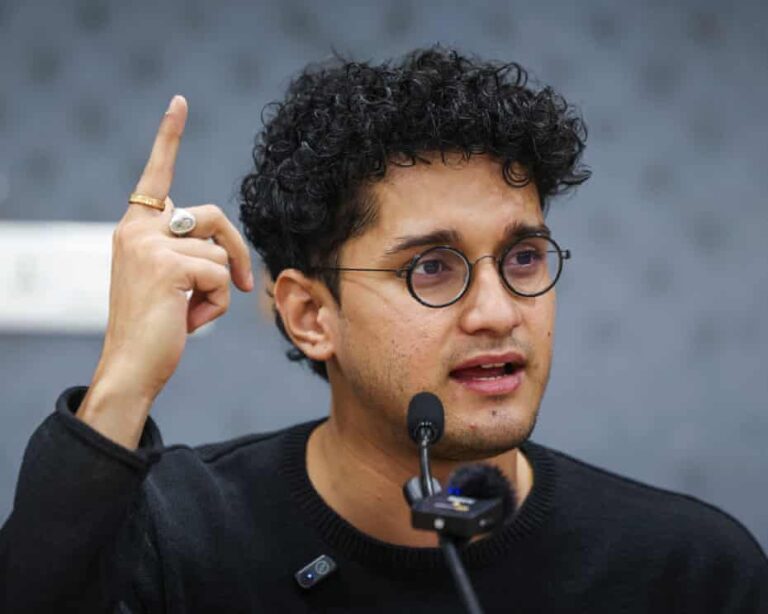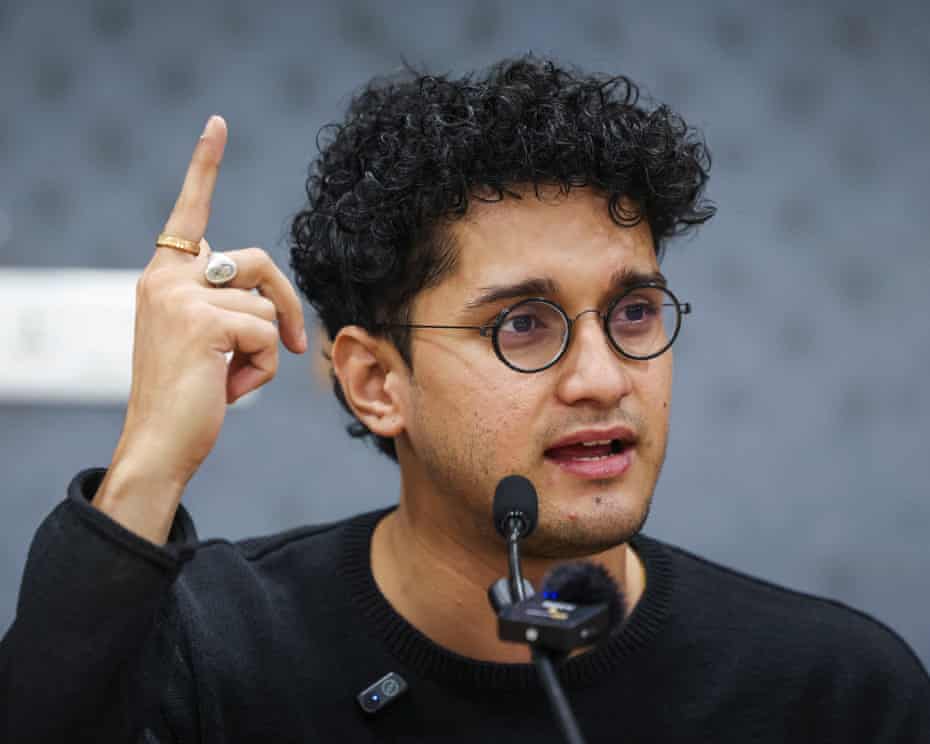
The leader of India’s youth-led Cockroach movement, Saurav Das, has approached the Delhi high court for permission to travel to Britain after immigration officials stopped him from boarding his flight, raising concerns about restrictions on his international engagements.
Das, 27, was prevented from leaving Delhi early on Tuesday morning, despite having invitations to speak at several British universities about the movement and its campaign against the government of Prime Minister Narendra Modi.
The court is scheduled to hear his application on Thursday morning. His lawyer requested an urgent hearing because the activist has already missed some scheduled appearances and could lose the remaining engagements if permission to travel is delayed.
The case has attracted attention because the Indian Cockroach movement has become a prominent youth-led pressure group in India, emerging through street protests and successfully forcing a government minister to resign over allegations involving examination leaks.
Das challenges travel restriction at Delhi airport
Das said he received an email shortly before his scheduled departure instructing him not to use his passport for international travel.
He disputed media reports suggesting that he had been warned in advance about discrepancies in his travel document, insisting that the communication provided no explanation for the restriction.
“None of these reports is true,” Das said.
He explained that the message arrived five hours before his flight but that he did not see it until he reached Delhi airport.
“I received an email five hours before my flight saying that I should not use my passport for travel. It gave no reason. And I did not see the email until I arrived at Delhi airport,” he said.
Das also questioned why his passport had suddenly become problematic, given that he had previously travelled internationally using the same document.
“What’s more, I’ve travelled abroad before on this passport since it was issued in 2019 so what’s the problem with it now?” he asked.
His account directly contradicts reports in sections of the Indian media that suggested passport discrepancies had been brought to his attention before the journey.
The court proceedings are expected to address his request to leave India and attend the engagements that remain on his itinerary.
Cockroach movement gains prominence after protests against Modi government
Das is one of the leading figures of the Cockroach movement, a youth-led campaign that emerged unexpectedly in May and challenged the Narendra Modi government through street demonstrations.
The movement attracted national attention by mobilising young people around concerns about governance and the handling of examination-related controversies.
Its campaign eventually contributed to the resignation of India’s education minister in July following the controversy over examination leaks.
Although the protests brought about a major political consequence, the movement has since operated largely as a pressure group, continuing to draw attention to issues it considers important.
Das said the invitations from British universities reflected growing international interest in how the campaign emerged and achieved its objectives without resorting to violence.
The Oxford Union Society invited him to participate in a fireside chat, while Indian student groups at the universities of Edinburgh and Cambridge, as well as the London School of Economics, also invited him to speak.
“Students want to know how we succeeded without any violence, how we began and where we are going. There is a great curiosity about the movement,” Das told The Guardian.
The proposed discussions were expected to provide students with an opportunity to hear directly from one of the movement’s prominent representatives about its origins, methods and future direction.
However, the airport restriction has disrupted those plans, leaving his ability to attend the remaining events dependent on the outcome of his court application.
Activist suspects government pressure over movement’s activities
Das believes the restriction may be connected to a case filed against him in Chennai, which he suspects is being used as a justification to prevent him from travelling.
According to him, the case was initiated by someone hostile to the Cockroach movement and involves a dispute over his citizenship.
He described the legal action as frivolous and suggested that the authorities were using it as a pretext to restrict his freedom of movement.
Das further alleged that the government was uncomfortable with the prospect of him speaking internationally about the principles associated with Mahatma Gandhi and Jawaharlal Nehru, independent India’s first prime minister.
He believes the authorities were attempting to discourage young activists by making an example of a prominent movement leader.
“It’s a chilling signal to young Indians that we can do what we like, that if we can do this to a leader of a movement, we can do this to you too,” Das said.
His comments suggest that he views the airport incident as more than an isolated passport issue, although the allegations about government involvement remain his own interpretation of the events.
The Indian authorities’ reasons for stopping him were not established in the account, and the court is yet to hear his application.
Previous cases raise questions over restrictions on foreign academics
Das’s case comes amid other incidents in which foreign academics and speakers have been prevented from entering India or have faced deportation.
Several individuals, including academics from the United Kingdom, have encountered restrictions in recent years, with authorities citing alleged violations or activities considered contrary to India’s interests.
Last year, Francesca Orsini, a professor at the School of Oriental and African Studies at the University of London, was stopped at Delhi airport and deported despite holding a valid visa.
The Indian government said she had been blacklisted over allegations that she conducted research and participated in events while visiting the country on a tourist visa in 2024.
Another British-based academic, Nitasha Kaul, a professor at the University of Westminster, was detained at Bangalore airport last year before being deported over what authorities described as “anti-India activities”.
The cases have drawn attention to the use of immigration and travel restrictions against individuals whose work or public statements have attracted official scrutiny.
Amrit Wilson wins legal challenge over OCI cancellation
Another prominent case involved Amrit Wilson, a UK-based journalist whose overseas citizen of India card was cancelled in 2023 over alleged “anti-India activities”.
The card allows eligible individuals of Indian origin to travel to and remain in India under special arrangements.
Wilson challenged the decision through legal action, arguing against the government’s grounds for cancelling her status.
Earlier this week, the Delhi high court ruled that the authorities had failed to provide concrete details explaining what they meant by “anti-India activities”.
The court directed the government to issue a fresh notice within a week, requiring it to provide specific reasons for its action.
The ruling is significant because it places emphasis on the need for authorities to clearly explain the allegations used to justify restrictions against individuals.
It also provides a recent example of a legal challenge succeeding in forcing the government to offer greater clarity over decisions affecting international movement.
Court decision could determine Das’s UK engagements
Das’s immediate priority is obtaining permission to travel before the remaining university events on his schedule pass.
His lawyer has pushed for an expedited hearing because the delay has already affected his planned appearances in Britain.
Read also: Metropolitan Police still institutionally racist, misogynistic and homophobic, damning review finds
https://swiftreportnow.com/metropolitan-police-still-institutionally-racis/
The Oxford Union invitation and the engagements involving Indian student groups at Edinburgh, Cambridge and the London School of Economics represent opportunities for the movement to explain its emergence to an international audience.
For Das, the court’s decision will determine whether he can complete those engagements after being stopped at the airport.
The case also adds to wider scrutiny of restrictions imposed on activists, academics and other individuals seeking to travel across India’s borders.
As reported by The Guardian, the Delhi high court is expected to consider Das’s request on Thursday, with the activist maintaining that he was given no adequate explanation for the travel restriction.
About The Author