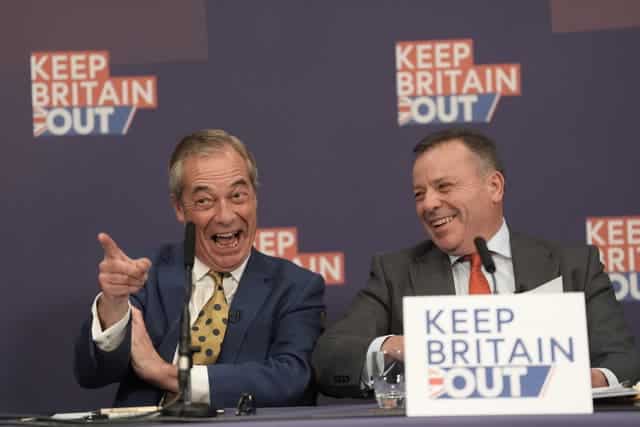
The Brexit election debate is gathering momentum in Britain after Reform UK leader Nigel Farage and businessman Arron Banks launched a new anti-EU campaign, warning that the country’s next general election could become a decisive contest over its future relationship with Europe.
The campaign, named Keep Britain Out, was unveiled as former Labour minister Andy Burnham prepares to reopen the national debate on Brexit through a proposed 10-year plan outlining different options for Britain’s relationship with the European Union.
Banks argued that the next general election, which he expects to take place in May, could effectively become another referendum on Britain’s EU membership, with the issue appearing directly on the ballot.
The launch also signals renewed competition among groups seeking to shape public opinion on Brexit, as pro-EU campaigners and supporters of maintaining Britain’s departure from the bloc organise ahead of the next national vote.
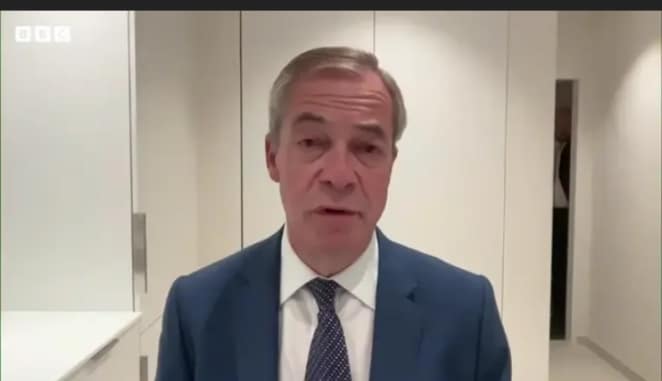
Farage and Banks revive anti-EU campaign
Farage was joined by Banks, his longtime political ally and a major financial supporter of the Leave.EU campaign during the 2016 referendum, to introduce Keep Britain Out.
The new organisation is intended to mobilise opposition to Britain rejoining the European Union and challenge campaigns advocating a closer relationship with the bloc.
Its emergence follows the launch of Stay Out, a separate campaign associated with former Conservative minister Lord Michael Gove.
The competing anti-EU initiatives have revived comparisons with the rival organisations that operated during the 2016 referendum campaign.
Gove’s Vote Leave campaign was closely associated with the Conservative side of the Brexit movement, while Farage and Banks backed Leave.EU, which developed a strong relationship with the political movement that eventually produced Reform UK.
The latest campaign rivalry therefore reflects continuing divisions among politicians and activists who supported Britain’s departure from the EU.
Banks said he believed Brexit would become a central issue at the next general election, suggesting that voters would have to consider whether Britain should maintain its current position or move towards renewed EU membership.
“I don’t know about the date of the next EU referendum. I’m pretty sure it’s going to be on the ballot for the general election, which I think will be May,” he said.
“We’ve got a slightly different view on that, but I think it’s going to be a Brexit election, and that’s going to be on the ballot.”
Farage claims opponents face stronger economic arguments
At the campaign launch in Westminster, Farage expressed confidence that supporters of remaining outside the European Union would prevail in any future referendum.
He argued that the political circumstances had changed since the 2016 vote, when campaigners advocating continued EU membership largely defended the existing relationship.
According to Farage, the argument over maintaining the status quo now favours those opposed to rejoining the bloc.
He said the Leave side had effectively taken ownership of the status quo, adding that it now had “every single economic argument in our favour”.
Farage also rejected suggestions that Keep Britain Out would repeat the negative campaigning associated with warnings made by Remain supporters before the 2016 referendum.
Instead, he described the new campaign as an optimistic effort focused on Britain’s ability to develop economically outside the European Union.
“Prior to 2016, the establishment owned the status quo and people naturally have a fear of change,” he said.
“Very often human beings will accept modest decline rather than taking a risk. Well, the risk now very clearly is on rejoining.”
Concerns over membership costs and the euro
Farage identified the possibility of Britain being required to adopt the euro and the financial obligations associated with EU membership as central arguments against rejoining.
He claimed that returning to the bloc could expose Britain to membership payments exceeding £40 billion annually.
“The risk is on being forced to join the euro. The risk is on being forced to pay £40 billion-plus a year in membership fees to the union,” he said.
He also argued that renewed EU membership could undermine Britain’s development in emerging industries, particularly artificial intelligence and agricultural technology.
Read also: Burnham refuses to apologize over controversial Max Balegde video filmed outside No 10
https://swiftreportnow.com/burnham-refuses-to-apologize-max-balegde-video/
“The risk is overnight destroying AI, destroying agri-tech, destroying all the areas in which we’ve shown through innovation and brilliance we can actually be world leaders,” Farage added.
His comments form part of the campaign’s effort to present remaining outside the EU as an opportunity for Britain to strengthen its economic independence.
However, the claims represent Farage’s political arguments against rejoining rather than an assessment established by the campaign launch itself.
He insisted that the organisation would promote what he called “Project Optimism”, contrasting it with “Project Fear”, the term frequently used by Leave campaigners to describe warnings about the economic consequences of Brexit.
“This isn’t Project Fear, this is project hope. This is project we can do better,” he said.
Banks takes leadership of Keep Britain Out
Farage confirmed that Banks would lead the new campaign, bringing together supporters who backed the Leave.EU organisation during the 2016 referendum.
Banks said the group had already received approaches from people who supported its previous campaign and suggested that backing from the artificial intelligence industry could provide substantial financial resources.
He described the proposed campaign as potentially becoming “the best-funded political campaign of all time”.
Banks also dismissed the rival Stay Out initiative, directing criticism towards the Conservatives associated with Gove’s campaign.
Asked about the organisation, he said he would “leave that with the dripping wet Tories where it belongs”.
The remarks exposed the political competition between different groups within Britain’s anti-EU movement, despite their shared opposition to rejoining the European Union.
Keep Britain Out intends to encourage members of parliament and prospective candidates to sign a 10-point pledge committing them to its political objectives.
The commitments include keeping Britain outside the EU, opposing what the campaign describes as “mass immigration” and supporting the country’s farming and fishing industries.
Farage became the first politician to sign the pledge card when it was unveiled on Wednesday.
He also indicated that he expected other Reform UK MPs to follow his example.
Burnham’s Brexit proposals trigger political confrontation
The campaign launch comes amid renewed debate over Burnham’s proposals for Britain’s future relationship with the European Union.
The Greater Manchester mayor is preparing to present a national discussion on Brexit as part of a 10-year plan that sets out four possible approaches.
These include maintaining the existing arrangements, rejoining the European Union, entering the single market or pursuing membership of the customs union.
The proposals have reopened political disagreements about the economic and constitutional consequences of Brexit, particularly over how closely Britain should cooperate with European institutions.
Burnham’s position has attracted criticism from opponents who believe that reopening the question of EU membership could turn the next general election into a direct contest over Brexit.
The warning directed at him suggests that his proposals could give anti-EU campaigners an opportunity to mobilise voters around the prospect of reversing Britain’s departure.
Banks argued that the issue would feature prominently in the next election, while Farage is positioning his campaign to oppose any move towards renewed membership.
Farage attacks Burnham’s proposed EU approach
Economist Catherine McBride joined Farage and Banks at the Keep Britain Out launch, where she criticised an agreement Burnham reached with the European Union the previous week.
McBride described the arrangement as “a disaster” for Britain.
The criticism reflects broader disagreements over the extent to which the country should pursue closer economic cooperation with the EU following its departure.
Earlier on Wednesday, Burnham and Conservative leader Kemi Badenoch clashed in parliament over Brexit-related questions.
Burnham faced repeated questions about whether his proposed agreement with the European Union could remain in place unless he made concessions concerning tuition fees for European students studying in Britain.
The dispute illustrates how negotiations over practical arrangements with the EU are becoming intertwined with the wider political argument about Britain’s long-term relationship with the bloc.
Pro-EU campaigners also organise ahead of election
While Farage and Banks are seeking to consolidate opposition to EU membership, supporters of closer relations with Europe are also developing their own political strategy.
Prosper UK, a group associated with Conservatives on the left of the party, launched a pro-EU campaign on the same day.
Its supporters include senior former government ministers, among them Sir David Lidington and Amber Rudd.
The organisation’s emergence comes alongside the creation of Get In!, a campaign advocating Britain’s return to the European Union.
The development of these competing organisations suggests that the Brexit debate is moving beyond disagreements among individual politicians towards a broader contest involving campaign groups, former ministers, business figures and political parties.
The different initiatives are seeking to influence public discussion before the next general election, particularly as questions about trade, immigration, economic cooperation and national sovereignty remain politically significant.
The competing campaigns also indicate that Britain’s relationship with the EU has not disappeared from the political agenda despite the country’s formal departure from the bloc.
Brexit returns to the centre of Britain’s political debate
The launch of Keep Britain Out marks another attempt by Farage and Banks to shape the national conversation about Britain’s future outside the European Union.
Their campaign is focused on persuading politicians and voters that rejoining would expose the country to economic and political risks.
Burnham’s proposed options, meanwhile, have reopened discussion about whether Britain should maintain its current arrangements or pursue closer integration through the single market, customs union or full EU membership.
With Stay Out, Keep Britain Out, Get In! and Prosper UK now seeking to establish their positions, the political debate is becoming increasingly organised on both sides.
The next general election has not formally been established as a referendum on EU membership. However, Banks has argued that Brexit will be a major issue on the ballot, while Farage is preparing his campaign around opposition to rejoining.
The competing initiatives are therefore setting the stage for another intense national argument over Britain’s relationship with Europe.
About The Author