Andy Burnham‘s EU reset plan is set to reopen debate about Britain’s relationship with Europe after the prime minister acknowledged that Brexit had weakened the country’s international standing and indicated that Labour could reconsider its restrictions on closer integration with the European Union.
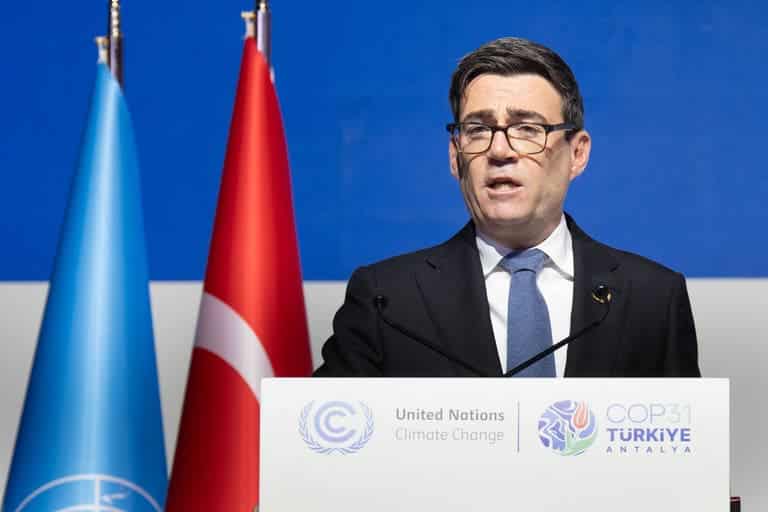
In a major foreign policy speech at the Lord Mayor’s Banquet in the City of London, Burnham said Britain had lost influence during the decade since leaving the bloc. He blamed previous governments for neglecting relationships with allies and international institutions, arguing that the consequences extended beyond Europe.
The prime minister also announced plans to begin discussions with EU partners after this week’s Brussels summit to explore possible arrangements for Britain’s long-term relationship with the bloc.
Although the options could include a customs union, participation in the single market or full EU membership, Burnham insisted that no immediate decision had been made. He said the government would assess the possibilities and present them to the public before decisions were taken in the next parliament.
Burnham admits Britain’s international influence has weakened
Burnham’s address offered a critical assessment of Britain’s foreign policy over the past decade, particularly the way successive governments handled international partnerships after the Brexit referendum.
He argued that the country had failed to show sufficient care towards its allies and international institutions, damaging its reputation in the process.
The prime minister said Britain’s international standing had declined since Brexit and that the consequences were not confined to its relationship with European countries.
He also criticised the UK’s failure to invest adequately in modernising the Commonwealth and described its dealings with China as inconsistent.
His assessment suggested that Britain’s departure from the EU had contributed to wider diplomatic difficulties, leaving uncertainty about the country’s position and reliability among international partners.
Burnham also addressed Britain’s response to the conflict in Gaza. While maintaining that the UK was right to condemn Hamas over the October 7 attacks, he said the subsequent response to events in Gaza had raised questions about Britain’s moral position.
He argued that political turbulence had created an impression internationally that the country had changed its values.
However, he insisted that the British people remained as decent as ever and that it was the political decisions of successive governments that had created confusion about the country’s identity.
Labour considers options beyond its Brexit restrictions
The prime minister’s proposed discussions with Brussels could mark a significant development in Labour’s approach to European relations.
Burnham said the government would examine different possibilities for a long-term arrangement, recognising that both Britain and the European Union had changed since the UK voted to leave.
A customs union would offer closer cooperation on trade, while participation in the single market would involve deeper economic integration and greater alignment with European rules.
Full membership would represent the most significant change, reversing the decision to leave the bloc.
However, Burnham stressed that Labour would not abandon its existing Brexit red lines before the next general election.
Some cabinet ministers are reportedly concerned that reopening the issue could revive political divisions and distract the government from other priorities. They have urged caution over the pace of any move towards reversing Brexit.
Downing Street sources said Burnham wanted to establish the terms of the debate rather than automatically commit the government to a particular destination.
His personal preference for Britain to rejoin the European Union, however, could complicate efforts to keep all available options open.
The Guardian reported that Brexit supporters had recently established two separate campaign groups to oppose any attempt to return Britain to the EU.
Former prime ministers Boris Johnson and David Cameron, who held opposing positions during the original referendum campaign, have also cautioned against the move.
Brussels summit offers potential £17bn economic boost
Before the broader discussions about Britain’s future relationship with Europe begin, Burnham is expected to meet European leaders at a Brussels summit on Friday.
His immediate objective is to secure agreements covering food and farming, emissions trading and a youth mobility scheme.
The prime minister believes the proposed arrangements could increase Britain’s gross domestic product by 0.4%, representing approximately £17bn.
He has described the existing post-Brexit agreement as inadequate, comparing it to the emperor’s new clothes because, in his view, its weaknesses had not been openly acknowledged.
The proposed agreements are intended to improve cooperation and remove some of the practical difficulties that have affected relations between Britain and the EU since Brexit.
However, the negotiations also highlight the limitations of Britain’s current position. While the UK wants closer cooperation and some influence over European rules, it no longer participates in the institutions that make those decisions.
European politician rejects British demand for decision-making role
Sandro Gozi, chair of the European Parliament’s delegation for relations with the UK, has warned that Britain cannot expect to help write European legislation under its current arrangements.
The UK is seeking some involvement in shaping legislation covering food, agriculture and drink as part of the agreement expected at Friday’s summit.
Gozi said Britain had chosen to leave the European Union and, in doing so, had surrendered its place in the decision-making process.
He argued that the UK could not expect to participate in developing European standards in the same way as member states.
Although Britain might receive a consultative role similar to Switzerland’s, Gozi said it would remain outside the formal decision-making structure.
He acknowledged that Burnham was right to explore the possibilities available under the existing relationship but warned that significant restrictions would remain.
The European politician suggested that the proposed food and drink agreement could demonstrate the limitations of the current arrangement sooner rather than later.
He argued that overcoming those constraints would require Britain to move beyond its existing red lines and reconsider deeper integration with the European Union.
Brexit supporters prepare to resist a possible return
Burnham’s remarks have already added fresh energy to Britain’s political debate over Europe.
Supporters of Brexit are preparing to oppose any attempt by the government to reverse the country’s departure, while some former political leaders have questioned whether returning to the bloc would be the right decision.
For Labour, the challenge is to pursue closer economic and diplomatic cooperation without immediately reigniting the divisions that shaped the referendum and subsequent political years.
Read also: New 007 era begins as Robert Pattinson takes over the James Bond franchise
https://swiftreportnow.com/new-007-era-begins-as-robert-pattinson-takes/
The government must also consider whether the benefits of greater access to European markets would justify accepting closer alignment with EU regulations.
Burnham’s proposed approach leaves several possibilities open, but the eventual decision will depend on negotiations with European leaders and the political choices presented to British voters.
The coming Brussels summit is therefore an important early test of whether the government can secure meaningful improvements within the existing framework before considering more fundamental changes.
About The Author