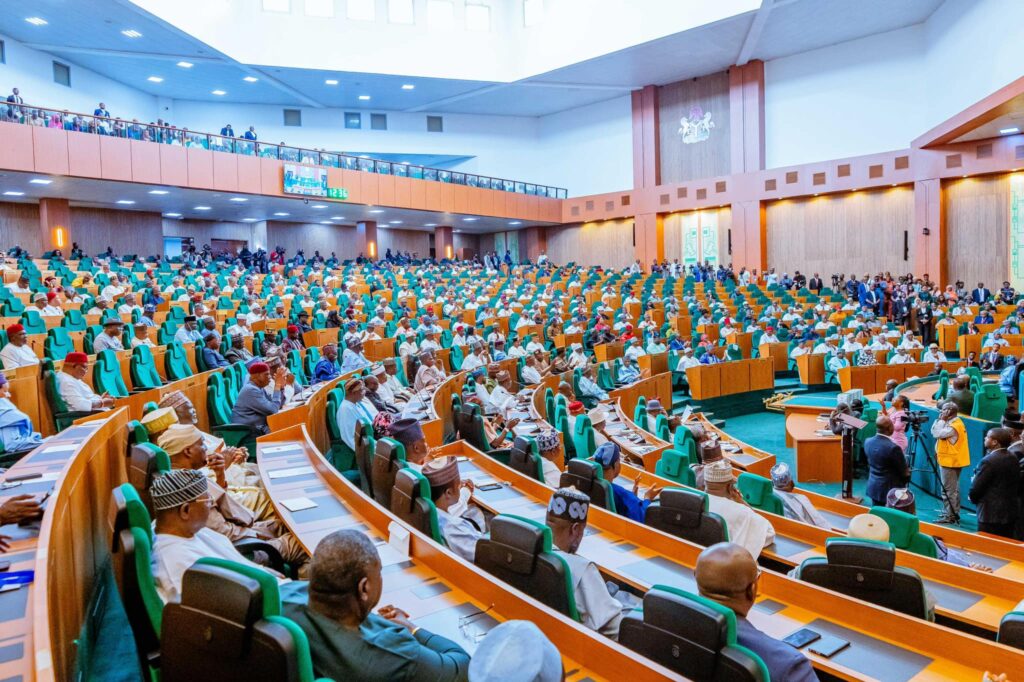
The House of Representatives has called on governors of states owing retired public servants to take immediate steps towards clearing their outstanding pension obligations, warning that thousands of elderly Nigerians should not be left to suffer after dedicating several decades to government service.
The appeal followed growing concerns over the welfare of pensioners across the country, with lawmakers expressing dissatisfaction over reports that only 14 of Nigeria’s 36 states currently maintain regular pension payments.
According to the figures presented during Tuesday’s plenary, retirees in the remaining 22 states are reportedly experiencing delays, with some waiting several months and others struggling with accumulated entitlements that have remained unpaid for years.
The lawmakers subsequently adopted a motion urging the House Committee on Pensions to investigate the situation in collaboration with the National Pension Commission (PenCom) and the affected state governments.
The committee is expected to establish the actual amount owed to pensioners, examine the reasons behind persistent payment failures and recommend practical measures to prevent further accumulation of pension liabilities.
The debate was initiated by Adesola Adebayo, who represents Apapa Federal Constituency of Lagos State. His motion of urgent public importance drew attention to the financial difficulties confronting former government employees, particularly elderly retirees who have little or no alternative sources of income.
Adebayo argued that retirement benefits should be regarded as an obligation arising from years of dedicated service rather than a favour that governments could choose to grant or withhold.
He noted that many Nigerians spent between 30 and 35 years working in public institutions, only to encounter severe economic difficulties after leaving active service.
According to the lawmaker, some retirees, particularly those between 70 and 90 years old, are finding it increasingly difficult to afford food, medication, rent and other basic necessities because of irregular pension payments.
He described the situation as particularly disturbing, considering that most of the affected individuals had already completed their working careers and depended largely on their retirement benefits for survival.
The lawmaker also criticised the treatment of pensioners during verification exercises, saying some elderly citizens were subjected to exhausting procedures that required them to remain in long queues for extended periods.
He raised concerns about reports of pensioners collapsing and dying during such exercises, arguing that the process of confirming retirees’ identities should not expose vulnerable citizens to unnecessary physical hardship.
Adebayo called for a more humane approach to pension administration, stressing that government institutions should introduce measures that make verification easier and protect the dignity of elderly beneficiaries.
Constitutional debate emerges during plenary
Despite the concerns raised, the proposal generated disagreements among lawmakers over the extent of the National Assembly’s authority to intervene in pension matters administered by state governments.
Patrick Umoh opposed aspects of the motion, arguing that pension administration at the state level falls under the responsibilities of state governments and their respective Houses of Assembly.
He cautioned against proposals that could involve the Federal Government deducting money from states’ allocations to settle outstanding pension liabilities.
According to him, such an arrangement could raise constitutional questions, particularly regarding the financial independence and responsibilities of state governments.
Umoh also urged his colleagues to give greater consideration to the welfare of retired military personnel, whom he said had repeatedly protested over difficulties associated with their retirement benefits.
Dominic Okafor, representing Anambra State under the All Progressives Grand Alliance (APGA), also advised against treating all state governments as though they had failed to fulfil their pension obligations.
He maintained that some governors had continued to meet their responsibilities to retired workers and should not be grouped with administrations facing payment challenges.
Citing Anambra as an example, Okafor argued that the motion should clearly identify states with outstanding pension liabilities rather than making general accusations against the entire country.
Lawmaker warns against abandoning retired workers
Billy Osawaru, an APC lawmaker from Edo State, called for a balanced approach, suggesting that any part of the motion considered inconsistent with the constitutional responsibilities of the National Assembly should be amended rather than allowing the entire proposal to collapse.
He maintained that concerns over legislative jurisdiction should not prevent lawmakers from addressing the suffering of people who had spent most of their lives working for the government.
Osawaru said the experiences of elderly pensioners should remind public office holders of the importance of providing adequate protection for retired workers.
He recalled how individuals who had served for approximately 35 years were still being required to stand under intense sunlight during repeated verification exercises.
“We know what our fathers are going through. We know what it means for a man to work for 35 years only to be called to stand in the sun, under the sun, to review, to keep reviewing until he can’t stand it no more,” he said.
He urged members to preserve the portions of the proposal that fell within the authority of the National Assembly.
Deputy speaker clarifies pension committee’s mandate
As members continued debating the issue, the Deputy Speaker, who presided over the sitting, directed lawmakers to consult the House Standing Orders to establish the specific responsibilities of the Committee on Pensions.
Following a review of the committee’s mandate, the presiding officer explained that its responsibilities extended to examining pension-related matters across the public service.
The committee is authorised to consider issues affecting retirement benefits, propose measures for ensuring timely payments and investigate instances where employers fail to honour their pension obligations.
Its oversight responsibilities also cover the National Pension Commission, the Military Pension Board and other relevant institutions responsible for pension administration.
The clarification provided further grounds for lawmakers to consider the motion without necessarily assuming the direct responsibilities of state governments.
Tersee Ugbo, an APC representative from Benue State, subsequently urged members to allow the proposal to proceed, insisting that the difficulties confronting pensioners required urgent attention.
He maintained that the welfare of retired workers was an important national concern that deserved consideration beyond disagreements over jurisdiction.
Gimba references constitutional safeguards
Zainab Gimba, an APC lawmaker representing Borno State, also supported the motion, drawing attention to constitutional provisions protecting the retirement benefits of public servants.
She cited Section 210 of the 1999 Constitution, as amended, which provides for pension rights for individuals who have served in the public service of a state.
Gimba specifically referred to subsection two, which protects pension benefits due to an individual from being withheld or altered to the person’s disadvantage, except as permitted by law.
She explained that although pension administration remained an important responsibility of state governments, the National Assembly could still discuss the challenges, make recommendations and encourage state legislatures to exercise their oversight functions.
The lawmaker warned that continued failure to honour pension obligations could deepen the hardship experienced by elderly Nigerians and place additional financial responsibilities on their relatives.
House leader insists lawmakers must speak out
The House Leader, Julius Ihonvbere, also defended the decision to consider the motion, arguing that members should not abandon their responsibility to Nigerians simply because an issue involves matters administered by state authorities.
He maintained that the National Assembly could use legislative debates, investigations and recommendations to address problems affecting citizens without taking over the constitutional powers of state institutions.
Recalling interventions made by the Ninth Assembly on issues involving state governments, Ihonvbere said lawmakers should not unnecessarily restrict their responsibilities by relying on jurisdictional arguments.
He stressed that members of the House represented Nigerians across the country and had a duty to raise concerns affecting citizens at every level of government.
Ihonvbere urged governors with outstanding pension liabilities to make the welfare of retired workers a priority, insisting that public financial challenges should not become an excuse for abandoning people who had completed their years of service.
With the motion adopted, the House Committee on Pensions is expected to engage PenCom and relevant state authorities to obtain further information about the affected states, determine the extent of their liabilities and identify measures that could improve pension administration.
The lawmakers’ intervention has placed renewed attention on the responsibilities of governments towards retired employees and the need for a system that guarantees workers access to their earned benefits after leaving public service.
About The Author