Xi Jinping’s anti-corruption crackdown is coming under renewed scrutiny as China’s Communist Party gathers for a major leadership meeting, with more than one million people investigated last year and questions mounting over whether the campaign targets corruption or political disloyalty.
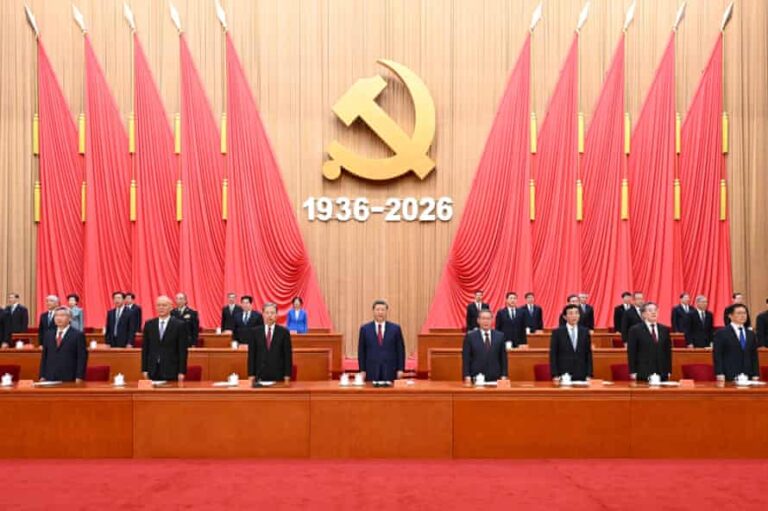
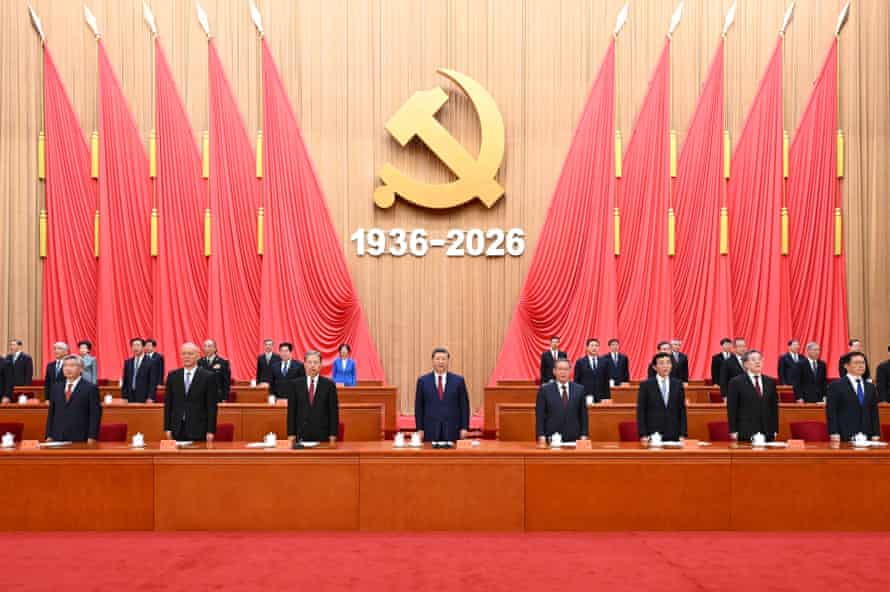
The fifth plenum, which began on Monday, October 26, is expected to focus on strengthening party discipline and enforcing what Chinese state media describes as full and rigorous self-governance. The meeting comes amid continuing investigations involving senior political and military figures.
Since taking power in 2012, Xi has made eliminating corruption a central objective of his leadership. However, the persistence of investigations, including cases involving powerful officials, has raised questions among analysts about the campaign’s wider political purpose.
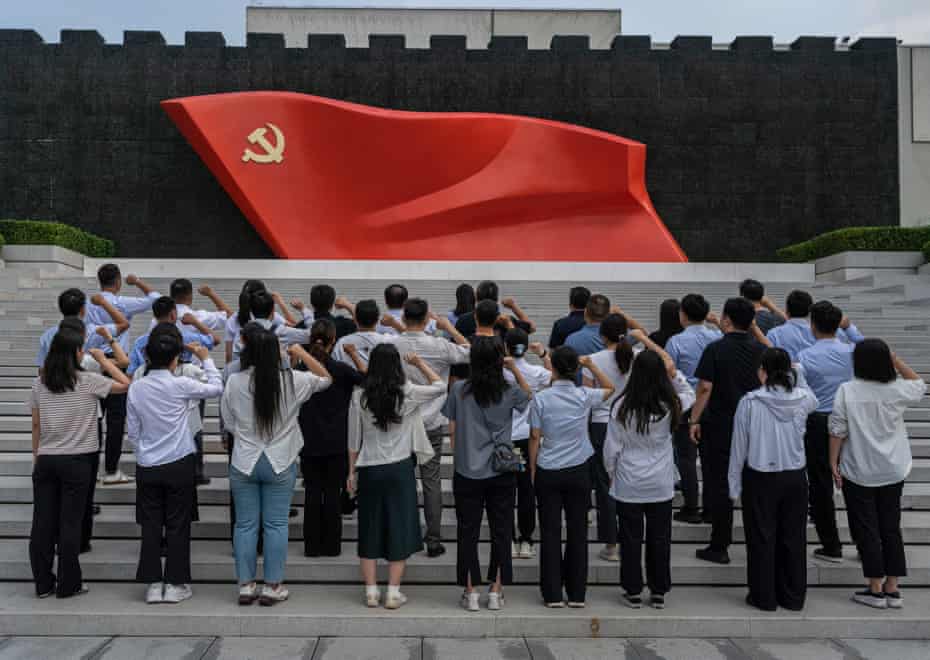
Xi Jinping’s Anti-Corruption Crackdown Extends Across China’s Leadership
China’s disciplinary authorities opened investigations into more than one million people last year, according to figures cited in the report. Those investigated included more than 100 officials holding ministerial-level or provincial-level positions and above.
The scale of the investigations illustrates how deeply the campaign has penetrated the Chinese Communist Party (CCP), which governs a country of approximately 1.4 billion people through an extensive political and administrative system.
Xi launched his campaign against corruption after becoming China’s leader in 2012, promising to address misconduct throughout the party hierarchy. More than a decade later, investigations remain a prominent feature of his administration.
The current fifth plenum places discipline and political loyalty at the centre of discussions among senior party officials. For analysts following Chinese elite politics, the emphasis raises questions about the leadership’s concerns over internal unity and obedience.
According to the report, the meeting will address “major issues on advancing the party’s full and rigorous self-governance”. Within the CCP’s political language, that phrase encompasses discipline, loyalty and the enforcement of anti-corruption rules.
Corruption and Political Loyalty Become Intertwined
Kerry Brown, director of the Lau China Institute at King’s College London, said Xi’s political outlook treats corruption and disloyalty as closely connected.
“If you’re corrupt, you’re not politically loyal. If you’re politically loyal, you’re not corrupt,” Brown said.
His explanation highlights a central question surrounding the campaign: whether investigations are primarily intended to eliminate financial wrongdoing or also serve as a means of enforcing political conformity.
Brown also argued that the concept of corruption within the CCP extends beyond financial misconduct.
In the party’s understanding, he said, corruption is not limited to “material things” but can also involve “spiritual corruption”, including political disloyalty.
This broad interpretation potentially places officials under scrutiny for conduct extending beyond the misuse of public resources. It also illustrates why political loyalty has become an important part of the party’s disciplinary agenda.
However, the existence of investigations does not, by itself, establish that every official targeted is a political rival or that every case lacks evidence of wrongdoing.
Analysts Question Whether the Purges Can End Corruption
Despite years of investigations and punishments, corruption remains a persistent concern within China’s political system. Some analysts argue that the problem is connected to the structure of an authoritarian government with a vast bureaucracy and concentrated decision-making powers.
Neil Thomas, a senior fellow at the Asia Society thinktank, said Xi had achieved two objectives through the campaign: reducing corruption and strengthening his personal control over the party.
“Xi has made the party less corrupt and strengthened his control, but he knows that tougher punishment cannot fully resolve the problem of officials putting their own interests ahead of the party’s,” Thomas said.
His assessment suggests that disciplinary action alone may not eliminate the incentives that encourage officials to pursue personal interests rather than the party’s objectives.
Thomas said Xi’s response has been to continue tightening controls rather than treat the campaign as a temporary initiative.
“Xi’s answer is to keep tightening discipline, making anti-corruption a permanent method of governing with no obvious point at which he can declare the job done,” he said.
The argument raises a broader question about whether a continuing cycle of investigations and punishments can permanently resolve corruption within a large political organisation.
For Xi, however, maintaining discipline appears to remain a central priority, particularly as the party prepares for its next major leadership transition.
Why the Fifth Plenum Matters
The fifth plenum is the fifth of seven gatherings that normally take place during a five-year cycle between Communist Party congresses.
These meetings bring together more than 300 members of the CCP’s Central Committee, which consists of some of the most senior officials in China’s political hierarchy.
The current gathering is particularly significant because it is expected to be the last substantive meeting before next year’s 21st Party Congress.
At that congress, a new Central Committee will be selected. Xi is expected to be endorsed for a fourth term as the head of the Communist Party, according to the report.
Against that background, the leadership has an opportunity to reinforce expectations about discipline, loyalty and the conduct required of party officials.
The meeting also comes as investigations have reached senior figures in both the political establishment and the military, demonstrating that high rank has not guaranteed protection from disciplinary action.
China’s Military Leadership Hit by High-Level Purges
One of the most prominent cases involves Zhang Youxia, China’s top-ranking general and a figure described in the report as second only to Xi in the military hierarchy.
Zhang was placed under investigation in January 2026. He was subsequently removed from the Communist Party in September, having already lost his position on the Central Military Commission, the body responsible for the country’s military leadership.
The developments represent a major intervention in China’s military command structure.
The Central Military Commission would normally have seven members. Following the series of purges described in the report, it has been reduced to just two: Xi and Zhang Shengmin, who heads the commission’s disciplinary apparatus.
The concentration of authority in such a small group has attracted attention from observers examining the implications of the investigations for military governance and political stability.
Other senior figures have also been affected, including Ma Xingrui, the former party secretary of Xinjiang, and Huang Qifan, the former mayor of Chongqing.
Their cases add to a wider series of investigations that have reached influential officials across the party and state administration.
Former Political Survivor Huang Qifan Also Targeted
Huang Qifan had long been regarded as a durable figure in Chinese politics because he survived scandals that shook Chongqing during the early 2010s.
Those controversies involved Bo Xilai, the city’s former Communist Party chief and a political rival of Xi. Bo was ultimately convicted of bribery and embezzlement and sentenced to life imprisonment following a scandal that also involved the death of British businessman Neil Heywood.
Huang remained in political life through that period, but he has now become another prominent figure affected by the recent investigations.
The case illustrates how individuals who survived earlier political controversies can still come under scrutiny as the leadership’s disciplinary campaign continues.
The report does not establish that all the recent cases are politically motivated. However, the number and seniority of those affected have fuelled discussion about the relationship between anti-corruption enforcement and the consolidation of political authority.
Xi Jinping Sees Discipline as Essential to Communist Party Survival
Xi has repeatedly warned that corruption could threaten the Communist Party’s continued hold on power.
In earlier remarks, he cautioned that the party could “lose its ruling status and inevitably be eliminated by history” if it failed to address its internal problems.
“This is by no means an exaggeration,” Xi said.
His statements reflect the leadership’s belief that corruption can undermine the party’s legitimacy, weaken public confidence and create divisions within its ranks.
Brown said the issue is deeply embedded in Xi’s political worldview.
“It is a deeply ingrained part of [Xi’s] worldview,” Brown said, adding: “Everyone else is corrupt”.
From this perspective, disciplinary investigations serve more than one purpose. They are intended to address misconduct while demonstrating the leadership’s authority and reminding officials that their positions depend on adherence to party expectations.
Brown also described corruption investigations as a particularly straightforward mechanism for enforcing internal unity and discipline.
Some analysts, meanwhile, have questioned whether the growing number of senior-level purges indicates instability within the political system. The investigations have reached powerful figures whose positions would ordinarily place them close to the centre of decision-making.
Yet Xi may view the same developments as evidence that the leadership retains the authority to remove officials considered a threat to party discipline or credibility.
What the Leadership Meeting Could Mean for China
The fifth plenum places China’s anti-corruption campaign at the centre of discussions about governance, loyalty and the future composition of the country’s political leadership.
With the 21st Party Congress approaching, the meeting offers Xi and other senior officials an opportunity to reinforce disciplinary priorities before the next leadership selection.
The investigations also highlight the limits of treating corruption as a problem that can be permanently eliminated through punishment alone. As Thomas observed, officials may continue to put personal interests ahead of the party even when the penalties become more severe.
For critics and analysts, the central question remains whether the campaign can distinguish effectively between genuine corruption and political disloyalty, particularly when investigations frequently involve senior figures within the ruling establishment.
The available evidence does not establish that all those investigated are innocent or that the campaign is exclusively political. It does, however, show that anti-corruption enforcement has become inseparable from the Communist Party’s broader emphasis on discipline and loyalty.
As Xi prepares for the next stage of his leadership, the fifth plenum underscores how the campaign continues to shape China’s political system, military hierarchy and expectations for those serving within the ruling party.
About The Author