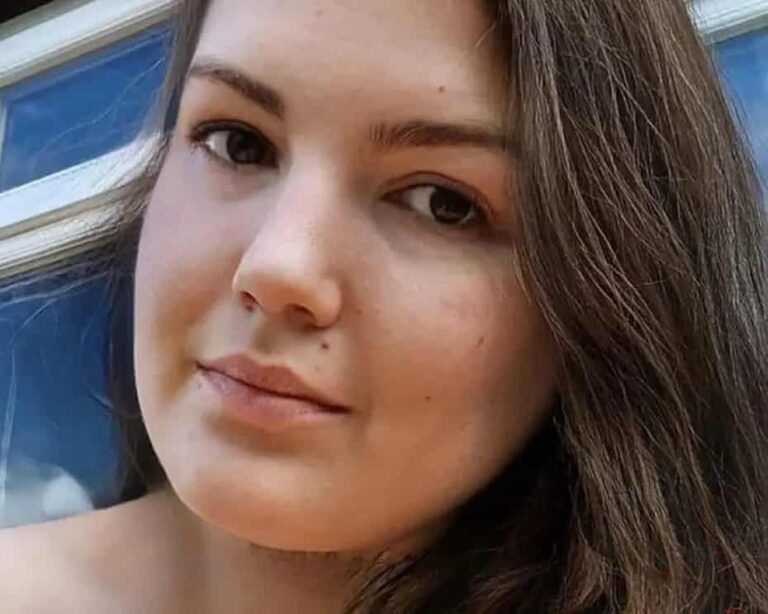
The Sonia Exelby murder trial has ended with a Florida jury finding mechanic Dwain Hall guilty of stabbing the 32-year-old British music teacher to death after luring her from Portsmouth, England, to the United States.
Hall, an auto repair mechanic and tow-truck driver, was convicted after prosecutors presented evidence that he groomed Exelby through a fetish website, exploited her psychological vulnerabilities and persuaded her to travel to Florida in October 2025.
The case attracted international attention after Exelby’s disappearance triggered an investigation involving British and American authorities. Prosecutors argued that Hall deliberately targeted a vulnerable woman and exploited her circumstances to fulfil his violent sexual fantasies.
Hall had pleaded not guilty to kidnapping and first-degree murder. His defence team, however, maintained that Exelby had travelled to the United States intending to end her own life.
How Dwain Hall lured Sonia Exelby to Florida
According to evidence presented during the trial, Hall established contact with Exelby through a fetish website before persuading her to travel from her home in Portsmouth to the United States.
Prosecutors said the British music teacher had struggled with mental illness and had previously expressed suicidal thoughts in online conversations.
Investigators alleged that Hall knew about her emotional difficulties and used that knowledge to manipulate her into travelling to Florida, where he would eventually be accused of murdering her.
The Guardian reported that authorities believed Exelby travelled to the United States with the intention of potentially experiencing sexual abuse, torture and murder at the hands of people she had encountered online.
Her journey took place in October 2025, when she boarded a flight from Britain to Florida.
After arriving at Gainesville airport, Hall allegedly collected her and drove her to an Airbnb accommodation, where investigators subsequently discovered evidence they connected to her disappearance and death.
Investigators trace Hall’s movements
The investigation relied heavily on digital evidence, including emails, telephone records, social media accounts and financial transactions.
Jurors heard testimony from several witnesses, many of whom were law enforcement officials who explained how investigators reconstructed Hall’s movements following Exelby’s arrival in the United States.
Authorities also identified transactions involving Exelby’s bank cards and a video of the British woman stored on Hall’s mobile phone.
These findings formed part of the prosecution’s case as investigators sought to establish what happened after Exelby arrived in Florida and how Hall was connected to her disappearance and death.
The evidence helped prosecutors challenge the defence’s suggestion that Exelby’s death was solely the result of her own actions.
Defence argues Sonia Exelby travelled to die
During closing arguments, Hall’s lawyer, Junior Barrett, maintained that his client should not be held responsible for Exelby’s death.
According to The Times, Barrett argued that Exelby had travelled to America with the intention of ending her life and believed she was worthless and a burden to other people.
“She came here with the intention of dying, she thought she was worthless, useless, a burden on other people,” the defence lawyer told the court.
Barrett also urged jurors not to allow their personal opinions about his client’s sexual interests or lifestyle to influence their decision.
“This isn’t a question about what porn he likes. You can disagree with him about what he likes, but the case can’t be decided on you not liking his lifestyle,” he argued.
He further maintained that Hall’s failure to prevent Exelby from taking her own life did not automatically establish that he had murdered her.
The defence therefore attempted to persuade jurors that the prosecution had not proved the charges against Hall beyond reasonable doubt.
Prosecutors say Hall exploited a vulnerable woman
Prosecutor Amy Beth Berndt rejected the defence’s argument, urging jurors to consider the evidence and apply their common sense.
She argued that Hall deliberately targeted Exelby because of her mental health difficulties and exploited her vulnerability to bring her to Florida.
Berndt portrayed the defendant as someone who had recognised the British woman’s emotional struggles and used them to pursue his own violent interests.
She described Exelby as a woman who was loved by her family and friends despite the difficulties she had experienced throughout her life.
“She was beautiful. She was kind and she was deeply loved by everyone who knew her. And she also suffered from mental illness for most of her life. She should be alive today,” the prosecutor said.
Berndt also directly challenged the suggestion that Hall was merely an observer who failed to intervene when Exelby was in danger.
“No one could save her from the defendant, the ‘Alpha Sadist’. He took advantage of a severely depressed, mentally ill woman who was incapable of making any rational decisions,” she added.
The prosecution’s argument centred on the allegation that Hall had knowingly exploited Exelby’s circumstances and was responsible for her death.
The jury ultimately found him guilty, rejecting the defence’s attempt to attribute the tragedy solely to Exelby’s own intentions.
Sonia Exelby’s family speaks after guilty verdict
Following the verdict, Exelby’s brother, Barry Wilton, delivered an emotional statement describing the devastating effect her death had on their family.
He said the previous year had been among the most difficult periods they had experienced, explaining that losing Sonia had profoundly changed their lives.
“This last year has been one of the hardest of our lives. Losing our dear sister Sonia has had a profound impact on me and my entire family. I’m not sure we will ever be the same again,” Wilton said.
He also addressed Hall directly, accusing him of pretending to care about his sister while exploiting her vulnerabilities.
“You pretended to care for Sonia. You didn’t at all. You used her to fulfil your sick fantasies,” he told the convicted mechanic.
Wilton further accused Hall of having an opportunity to protect Sonia but choosing instead to take advantage of her circumstances.
“You had her life in your hands. You had the opportunity to save her, but instead you preyed on her vulnerabilities and you took her from us,” he said.
His statement reflected the family’s grief and anger following the conclusion of a case that had begun with Exelby’s disappearance from Britain.
The wider implications of the Sonia Exelby murder trial
The Sonia Exelby murder trial has highlighted the potential dangers associated with online relationships, particularly where individuals experiencing psychological distress come into contact with people who may exploit their vulnerabilities.
Read also: Thalasso film rape allegations put Depardieu and Houellebecq under police investigation
https://swiftreportnow.com/thalasso-film-rape-allegations-put-depardieu/
The case also demonstrated how investigators can use digital records, financial transactions, communications and mobile-phone evidence to reconstruct events surrounding an alleged crime.
For Exelby’s family, however, the verdict represents the conclusion of a painful legal process rather than the end of their grief.
Her brother’s statement made clear that the loss has permanently affected those closest to her.
The case has also raised difficult questions about online exploitation, manipulation and the responsibility of individuals who knowingly target people experiencing serious emotional difficulties.
About The Author