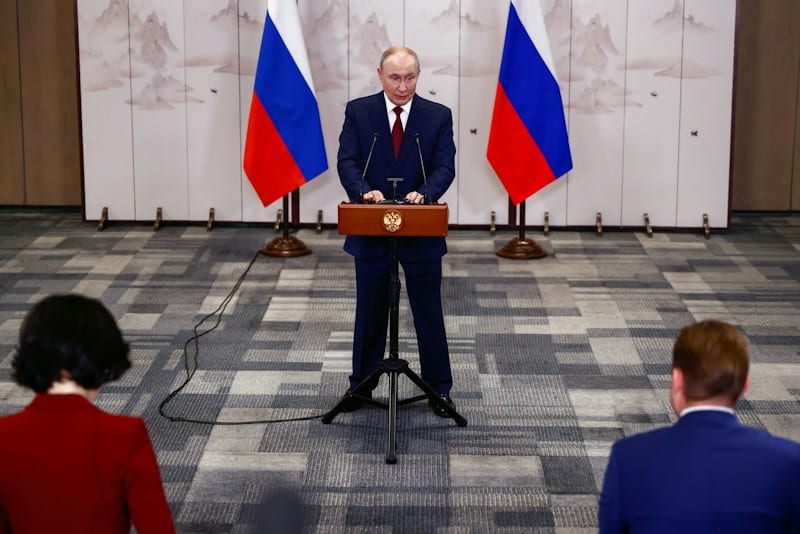
The Shenzhen trilateral summit has brought US President Donald Trump, Chinese President Xi Jinping and Russian President Vladimir Putin together for unprecedented discussions on the Ukraine war, nuclear security, energy cooperation and the future of global diplomacy.
The three leaders met in Shenzhen, southern China, on Thursday, November 19, during the Asia-Pacific Economic Cooperation (APEC) summit. Their gathering marked a significant diplomatic development, bringing together the heads of three powerful countries whose decisions shape international security, economic relations and geopolitical affairs.
The meeting lasted approximately one hour and 20 minutes, with the leaders discussing issues ranging from regional conflicts to the role of international institutions.
Trump described the encounter as a historic moment, saying the three presidents had considerable matters to discuss.
“We are really making history,” he declared. “The three of us have a great deal to discuss.”
He also defended direct engagement between world leaders, arguing that diplomatic opportunities should not be rejected.
“No peace was ever forged by declining opportunities for engagement,” Trump said.
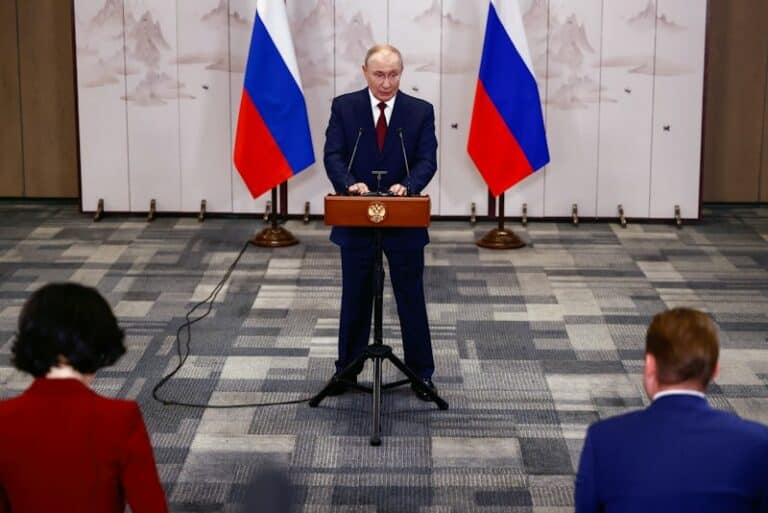
Putin identified the settlement of regional conflicts, including the war in Ukraine, as an area of shared interest among the three countries.
Xi, meanwhile, stressed that cooperation between major powers was essential to international stability.
“When major powers live in harmony, the world is at peace. When they clash, the world falls into turmoil,” the Chinese president said.
Joint declaration outlines areas of cooperation
Following the discussions, Chinese state media and Russian authorities published a joint statement described as a Peace Declaration.
The document identified several areas where Washington, Beijing and Moscow expressed their willingness to cooperate, although it did not establish a detailed timetable or binding mechanism for implementing the commitments.
One of the issues addressed was reform of the United Nations. The three countries called for changes that would enable the organisation to respond more effectively to global challenges and fulfil its responsibilities in maintaining international peace and security.
Energy cooperation also featured prominently. The countries indicated plans to increase the production and supply of refined petroleum products, describing stable energy flows as beneficial to all nations.
The declaration further addressed international institutions, stating that state consent and respect for the legal immunities of government officials should remain fundamental principles. It cautioned against the abuse of jurisdiction by the International Criminal Court and similar bodies.
On nuclear security, the leaders reaffirmed that nuclear war cannot be won and must never be fought. They also expressed support for dialogue aimed at reducing nuclear risks and preventing nuclear proliferation.
However, the declaration did not produce a specific agreement on ending the Ukraine war or establish a permanent arrangement for future meetings involving the three presidents.
Ukraine war dominates diplomatic expectations
The conflict between Russia and Ukraine remained one of the most consequential issues surrounding the summit, particularly during Trump’s separate meeting with Xi before the three-way discussions.
Trump raised the war almost immediately, suggesting that Washington and Beijing could work together to help bring the conflict to an end.
“We’re looking to both help with respect to the war with Russia and Ukraine. I’d like to see it ended. I think I can speak for both of us very much,” he said.
Xi did not mention Ukraine in his opening remarks, reflecting China’s cautious approach to a conflict involving Russia and Western governments.
The war was also absent from the joint declaration, although Chinese state broadcaster CCTV reported that the leaders exchanged views on the Ukraine crisis, nuclear proliferation, the Middle East and the Korean Peninsula.
Putin later described his discussions with Trump as frank and useful. He said the American president appeared genuinely committed to finding a way to end the conflict.
Nevertheless, no ceasefire agreement, peace framework or concrete diplomatic breakthrough was announced.
Putin also cautioned against exaggerated expectations, saying the leaders had not established ambitious objectives and that no country would be forced to comply with decisions reached during their discussions.
Putin sees opportunity for improved US-Russia relations
The Russian president suggested that relations between Moscow and Washington could improve under Trump’s administration.
According to Putin, the American president’s approach offered reasons for optimism, particularly because of his apparent willingness to pursue negotiations over the Ukraine conflict.
The Russian leader also disclosed that he was considering attending the December G20 summit in Miami following his discussion with Trump.
However, he said his final decision would depend on developments in Russia.
There was no announcement that the three presidents would begin holding regular meetings in the same format. The absence of such an arrangement suggests that Thursday’s gathering may remain a one-off diplomatic engagement unless the countries subsequently agree on further consultations.
Trump’s friendship remarks provoke reaction in Europe
Trump’s friendly language towards Putin during the China visit attracted attention in Europe, where several governments have supported efforts to isolate Moscow over its invasion of Ukraine.
Before the trilateral discussions, Trump referred to both Putin and Xi as friends, highlighting his personal approach to relations with the two leaders.
Polish Prime Minister Donald Tusk rejected the description of Putin as a friend, responding: “Mr Putin is not our friend and will never be.”
Poland’s position reflects its geographical and security concerns, as the country shares borders with both Russia and Ukraine.
The exchange illustrates the continuing differences between Trump’s diplomatic approach and the position of some traditional American allies, who regard Putin’s government as a major threat to European security.
Russian military activity raises concerns in East Asia
The diplomatic gathering coincided with renewed Russian military activity around East Asia.
Taiwan’s defence ministry reported that two Russian Tu-95 aircraft had flown past the eastern side of the island, marking the second time such activity had been reported during the week.
The aircraft movements followed an earlier Russian deployment ahead of Putin’s journey to China, which attracted attention from Taiwan and Japan.
The operation was described as one of Russia’s most significant military air deployments in East Asia in possibly more than a decade.
Ian Storey of Singapore’s ISEAS-Yusof Ishak Institute suggested that Moscow’s activity was intended to remind regional governments that Russia retained the ability to project military power despite its prolonged war in Ukraine.
The Tu-95 is a strategic bomber, with some versions capable of carrying nuclear weapons. The aircraft can also be used for intelligence gathering and surveillance.
Russia’s defence ministry had not responded to requests for comment on the reported flights.
Storey also noted that the last known deployment of Russian strategic airpower to Vietnam took place in 2014.
Xi warns Trump over Taiwan
Taiwan remained another sensitive subject during discussions between the American and Chinese presidents.
Xi urged Trump to handle the issue appropriately, warning that Washington’s position could determine whether relations between the two countries continued to improve or suffered major setbacks.
China regards Taiwan as part of its territory and has repeatedly refused to rule out the use of force to achieve reunification.
The United States remains Taiwan’s most important international backer, although Washington’s policy involves maintaining unofficial relations with the island.
Xi described relations between China and the United States as generally stable and called for both governments to expand areas of cooperation while managing their differences.
He urged the two countries to “extend the list of cooperation and shorten the list of problems.”
“I look forward to working with President Trump to continue steering the course of China-US relations and ensure that this big ship always sails along the right course,” Xi added.
Chinese state news agency Xinhua described the bilateral meeting as positive and constructive, reporting that both sides agreed to work towards an action plan for their relationship.
Trump had previously indicated that he was holding back on a new arms sale to Taiwan following his earlier meeting with Xi in Beijing, describing the issue as a potential negotiating chip.
Japan maintains its position on Taiwan
The Taiwan question also featured in comments from Japanese Prime Minister Sanae Takaichi during discussions on the sidelines of the APEC summit.
Takaichi said Japan’s position on Taiwan remained unchanged under the 1972 Japan-China Joint Communique.
Her remarks came amid diplomatic tensions between Tokyo and Beijing following comments she made in 2025 suggesting that a hypothetical Chinese attack on Taiwan could trigger a Japanese military response.
China has demanded that the Japanese leader retract those remarks, reflecting the sensitivity surrounding Taiwan’s security and the possibility of wider regional confrontation.
Trump celebrates diplomatic reception and trade discussions
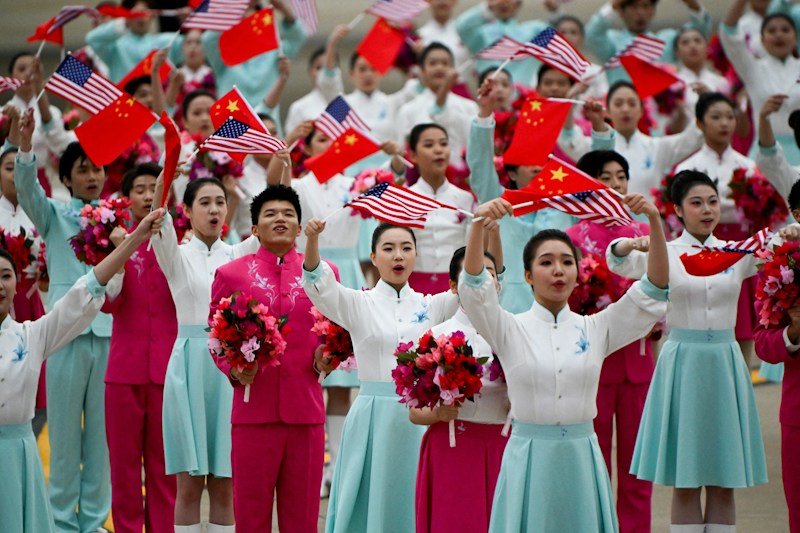
Beyond the geopolitical issues, Trump presented the China visit as a diplomatic success, pointing to the elaborate reception organised for him by Beijing.
He highlighted Xi’s unprecedented welcome at the airport, the military ceremony, the crowds and children lining the route taken by his delegation, and the prominent seating arrangement at the official banquet.
Trump considered the reception evidence of the importance China attached to its relationship with the United States.
“That’s a big win for us. It’s a big win for China too. We get along,” he said.
Trade and access to critical minerals were also part of the discussions between the American and Chinese leaders.
Trump referred to trade announcements involving Thailand and the Philippines, although some details remained uncertain. Formal negotiations surrounding the Thailand arrangement were still ongoing, while Manila had not provided the same specifics as the American president concerning the claimed agreement with the Philippines.
Trump also suggested that the United States, Russia and China could explore nuclear arms reductions but offered few details about how such an arrangement might work.
Trump criticises International Criminal Court
The International Criminal Court emerged as another subject of controversy during the diplomatic discussions.
Trump suggested that the United States, Russia and China should cooperate against the institution, describing it as a rogue globalist organisation that had exceeded its authority.
His criticism reflected the position of his administration, which imposed sanctions on the court last month.
Established in 2002, the ICC prosecutes individuals accused of genocide, war crimes and crimes against humanity.
The court issued an arrest warrant for Putin in 2023 over allegations relating to the unlawful deportation of hundreds of children from Ukraine. Russia has rejected the allegations.
The United States has also opposed ICC actions involving Israeli officials, including Prime Minister Benjamin Netanyahu, as well as the court’s investigation of American soldiers in Afghanistan, which was subsequently deprioritised.
Neither the United States, China nor Russia is a member of the ICC, and none recognises its authority.
The court does not have its own police force and relies on its 125 member states to execute arrest warrants.
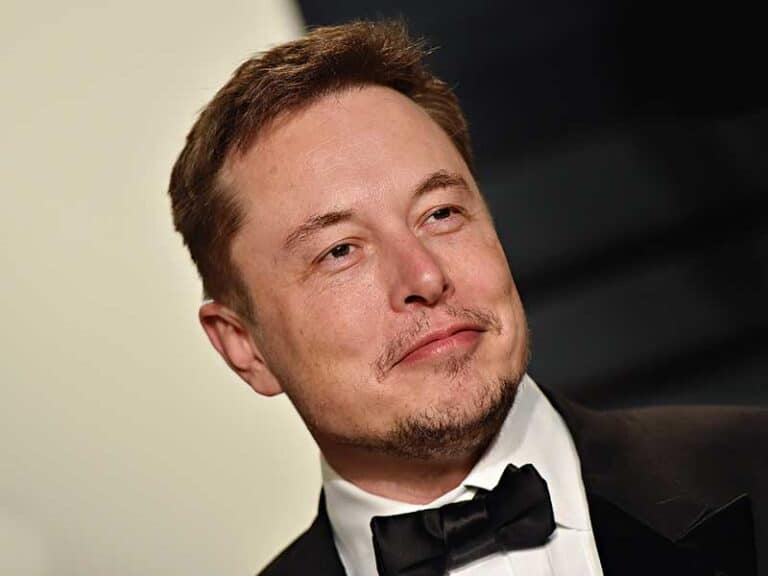
Elon Musk accompanies Trump to China
Billionaire entrepreneur Elon Musk also travelled with Trump’s delegation, although he maintained a relatively low public profile during the visit.
Musk has substantial business interests in China, including in Shenzhen, and was seen travelling in a vehicle with members of the American delegation upon arrival.
During the trip, he appeared virtually at a New York Times DealBook summit, where he reflected on his spending during the 2026 United States midterm elections.
Musk said he felt “pretty foolish” about the amount of money he had invested in the political contests.
Reuters reported that he contributed at least $446 million to Republican campaigns, making him the largest individual political donor in American history.
However, Democrats captured both chambers of Congress, prompting Musk to reconsider the scale of his political spending.
“If I could rewind the clock, I would have spent less money,” he said.
What the meeting means for international relations
The Shenzhen trilateral summit brought together three presidents whose countries hold enormous influence over international security, energy markets, economic relations and the global political order.
Their joint declaration demonstrated areas of possible cooperation, particularly on nuclear risks, energy supplies and United Nations reform.
However, major disagreements remain over Ukraine, Taiwan, international institutions and the future of nuclear arms control.
The absence of a concrete peace agreement for Ukraine means the meeting has not yet produced the breakthrough Trump says he wants.
For European governments, the gathering raises questions about how Washington’s engagement with Moscow and Beijing could affect existing alliances and security arrangements.
Read also: Elon Musk’s republican election spending: Billionaire questions MAGA loyalty after admitting costly midterm election failure
https://swiftreportnow.com/elon-musks-republican-election-spending-loyalty/
For smaller countries, closer cooperation among the three major powers could create opportunities but also concerns about decisions being made without sufficient consideration of their interests.
Ultimately, the significance of the meeting will depend on whether the commitments announced by the leaders translate into practical cooperation and measurable progress on the conflicts and security challenges discussed.
About The Author