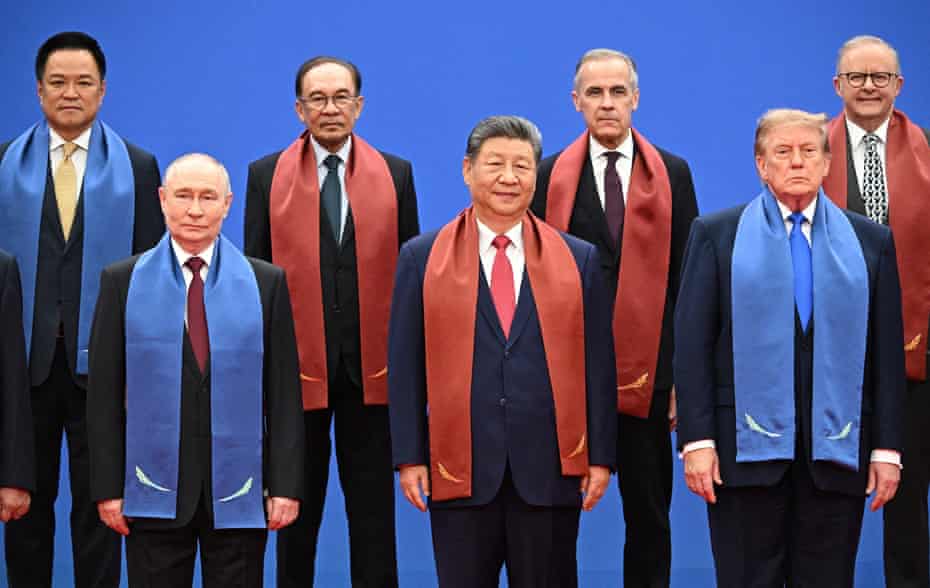
The Trump Putin Xi trilateral meeting has emerged as the biggest diplomatic talking point at the Asia-Pacific Economic Cooperation (Apec) summit in Shenzhen, China, following separate engagements between US President Donald Trump, Russian President Vladimir Putin and Chinese President Xi Jinping.
The anticipated three-way discussions are attracting international attention because of their potential implications for the war in Ukraine, global trade, artificial intelligence and relations among the world’s major powers.
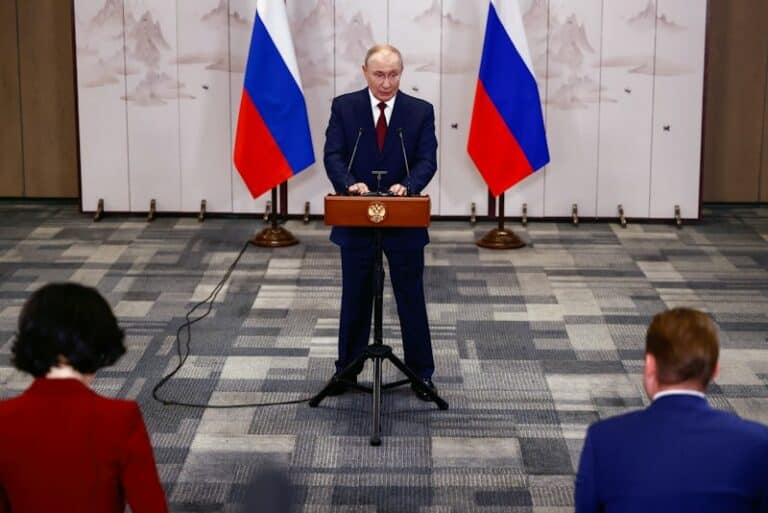
Before the expected trilateral engagement, Trump met Putin on Thursday, November 19, and described their relationship as excellent. He also held bilateral discussions with Xi, who expressed his commitment to maintaining stable and constructive relations with Washington.
The meetings have placed the three leaders at the centre of an important diplomatic gathering, with countries watching closely for possible agreements or signals about the future direction of international relations.
Trump praises longstanding relationship with Putin
Trump expressed optimism about his meeting with Putin, describing the Russian president as a friend and suggesting that their discussions could produce positive developments.
Speaking before the encounter in Shenzhen, the US president recalled their longstanding relationship and said he believed the meeting could create opportunities for cooperation.
“We’ve had a great relationship for many years. We know each other for a long time, and I think a lot of wonderful things can come out of this, or at least start,” Trump said.
The remarks signalled Trump’s willingness to maintain direct diplomatic engagement with Moscow despite continuing international opposition to Russia’s invasion of Ukraine.
The Kremlin later described Putin as being in an “excellent mood” after the meeting, according to information reported by Reuters and included in The Guardian’s live coverage of the summit.
Ukraine was identified as the main subject discussed by the two presidents. However, the available updates did not disclose the details of their conversation or indicate whether they had reached any specific agreement concerning the conflict.
The meeting is significant because the war in Ukraine remains one of the most consequential international security issues confronting the United States, Russia and their allies.
Xi and Trump discuss the future of US-China relations
Trump also met Xi in a separate bilateral engagement on the sidelines of the summit.
The discussions began after the US president’s meeting with Putin, with Chinese state media confirming that the two leaders had commenced their talks.
Xi said he remained committed to working with Trump to ensure that relations between China and the United States continued along what he described as the “correct course”.
He characterised the relationship as stable and improving, while emphasising the importance of respect, fairness and reciprocity.
“We have established a new definition of a constructive China-US relationship of strategic stability, giving it new substance based on respect, fairness and reciprocity,” Xi said.
The Chinese president’s comments reflected Beijing’s desire to maintain communication with Washington despite persistent disagreements over trade, tariffs and strategic competition.
Trump also described Xi as a friend and expressed confidence that their discussions would be productive.
Before the meeting, he said the two countries had divided tariffs in a “fair way”, adding that the Board of Trade established following their May summit in Beijing had helped bring greater balance to their economic relationship.
The latest engagement represents another attempt by the two governments to manage their differences through direct presidential diplomacy.
Ukraine remains central to discussions with Russia
The war in Ukraine is expected to remain a major issue in discussions involving Washington and Moscow.
Russia’s invasion of Ukraine in February 2022 triggered widespread international condemnation and led to severe sanctions and diplomatic tensions between Moscow and several Western governments.
Putin’s participation in the Apec summit therefore carries particular diplomatic significance, as it provides an opportunity for the Russian leader to engage directly with influential international counterparts.
His meeting with Trump, during which Ukraine was reportedly the principal subject, has renewed attention on whether Washington and Moscow could find common ground on the conflict.
However, the available summit updates did not establish that any ceasefire arrangement, peace agreement or new diplomatic framework had been reached.
The anticipated three-way discussions also raise questions about the extent to which China could influence conversations involving the United States and Russia.
Beijing has maintained diplomatic and economic relations with Moscow while also seeking stable commercial relations with Washington. Its position could make Xi an important participant in any wider conversation about international security and economic stability.
Xi urges Apec members to resist protectionism
Away from the high-profile presidential engagements, Xi used his address to Apec leaders to call for greater regional economic cooperation and fewer barriers to trade and investment.
He reiterated China’s support for openness, innovation and closer integration among Asia-Pacific economies.
The Chinese president announced that his country would provide US$20 million to support practical cooperation within Apec. He also disclosed plans to establish an Apec-focused research centre in Shenzhen.
Xi urged member economies to align their regional trade agreements, improve investment facilitation and accelerate digitalisation.
He identified green energy, energy security, food security and digital infrastructure as important areas requiring greater coordination.
The Chinese leader also used a maritime metaphor to describe the need for unity among participating economies.
“Members of Apec are like passengers riding the same ship. To navigate the waves of the Pacific, we must unite as one and look out for each other,” he said.
His remarks reinforced the argument that countries in the Asia-Pacific region should pursue shared economic opportunities rather than allow protectionist policies to undermine cooperation.
Putin seeks stronger economic links with Asia-Pacific countries
Putin also addressed Apec leaders, insisting that Russia remained an integral part of the Asia-Pacific region.
He described cooperation with Apec economies as a strategic priority for Moscow and encouraged countries in the region to make greater use of Russian logistics infrastructure.
“I would like to emphasise that constructive partnership with Apec economies is Russia’s strategic course. We are an integral part of the region and make a significant contribution to its economic prosperity,” Putin said.
He further called for a constructive atmosphere among member economies and expressed support for the draft of the summit’s final communiqué.
Putin’s remarks reflect Russia’s continuing efforts to strengthen its economic relationships with Asian countries, particularly as its relations with several Western governments remain strained over the Ukraine war.
The Russian president’s presence at the gathering also demonstrates the importance Moscow attaches to maintaining access to regional markets, transport networks and diplomatic partnerships.
Albanese faces criticism over photograph with Putin
The summit has also generated controversy in Australia following Prime Minister Anthony Albanese’s participation in official group photographs alongside Putin.
Leaders of the Ukrainian community in Australia expressed disappointment over Albanese’s decision to appear in the photographs.
Before arriving in Shenzhen, the Australian prime minister had indicated that he would respect China’s wishes as the host country by participating in the traditional gathering of leaders.
However, the Australian Federation of Ukrainian Organisations criticised the decision, arguing that it placed diplomatic courtesy above Australia’s moral responsibility over Russia’s actions in Ukraine.
The organisation’s chair, Kateryna Argyrou, accused Albanese of giving the Kremlin a propaganda opportunity.
She argued that standing alongside Putin in a celebratory photograph risked normalising the Russian president while the war in Ukraine continued.
The criticism illustrates the diplomatic difficulties facing countries that must participate in international gatherings while maintaining their opposition to Russia’s military campaign.
Trump applauds China’s reception in Shenzhen
Trump also praised the elaborate reception organised for his arrival in China, describing the ceremony as a demonstration of respect between the two countries.
Xi personally welcomed the American president at the airport, a gesture Trump highlighted in his comments.
The Chinese president’s airport appearance was described in the coverage as an unusual diplomatic gesture, reportedly the first time he had personally welcomed a visiting leader at the airport since becoming president.
Read also: 11 groups qualify for free US green card application under USCIS rules
https://swiftreportnow.com/11-groups-qualify-for-free-us-green-card-appl/
Trump praised the crowds, children, soldiers and ceremonial arrangements that accompanied his arrival.
He described the reception as a major achievement for both China and the United States and thanked Xi for the hospitality.
The American president also referred to Xi as an incredible leader and praised China’s development.
World awaits outcome of historic three-way engagement
The anticipated Trump Putin Xi trilateral meeting has generated comparisons with previous high-level conferences that shaped international relations.
Some observers have drawn parallels with the 1945 Yalta Conference, where Soviet leader Joseph Stalin, British Prime Minister Winston Churchill and US President Franklin D. Roosevelt discussed the post-war political arrangement in Europe.
The comparison has raised questions about whether the three contemporary leaders could reach understandings with far-reaching consequences for countries beyond their immediate diplomatic interests.
Nevertheless, the circumstances surrounding the two gatherings are different, and the comparison does not establish that the Shenzhen discussions will produce a similar political settlement.
The outcome of the anticipated meeting will be closely watched for possible developments concerning Ukraine, international trade, artificial intelligence and the broader balance of global power.
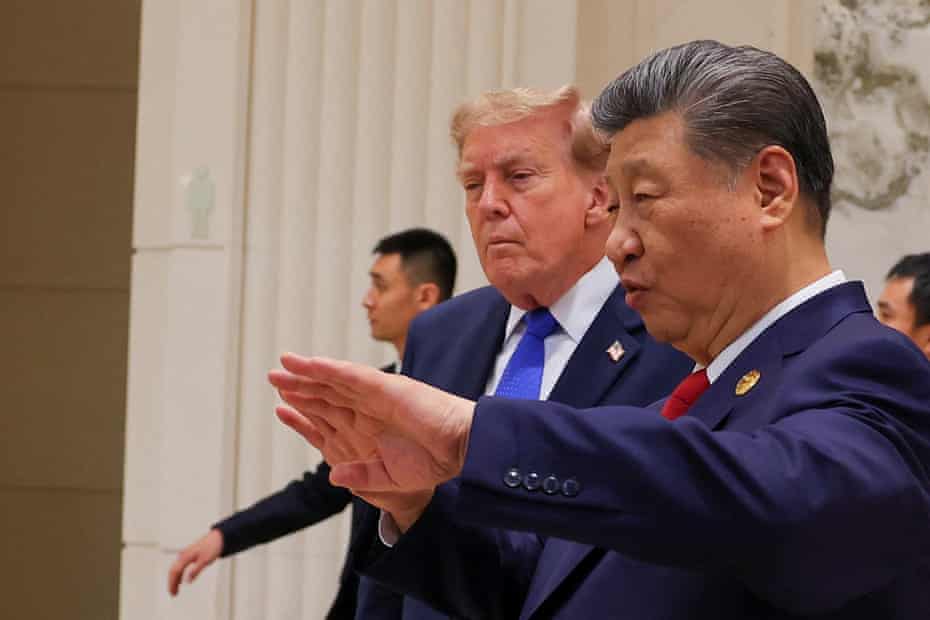
As reported in The Guardian’s live coverage on Thursday, Trump’s meeting with Putin had concluded, while his bilateral discussions with Xi were under way. The three-way engagement remained the major diplomatic event expected to follow.
Whether the discussions produce concrete agreements or simply provide an opportunity for the leaders to exchange positions, their meeting represents a significant moment in international diplomacy.
About The Author