Task Force Iron Gate marks a new phase in Washington’s pressure campaign against Iran, as the United States moves beyond its naval blockade to target weapons supplies, sanctioned materials and commercial networks operating through land borders.
Announced on Saturday, November 7, the initiative is designed to make it harder for Tehran to obtain military equipment and access international trade channels that could support its defence capabilities.
The task force will be headquartered in Tampa, Florida, and work alongside other American government institutions. Expected partners include the Treasury, State and Justice Departments, as well as the intelligence community.
A US military official, speaking anonymously, said the arrangement would bring different government agencies together to identify and disrupt commercial activities considered beneficial to Iran’s military operations.
The announcement comes more than eight months after the United States and Israel launched their war against Iran. Washington is now seeking additional ways to weaken Tehran’s military capacity and economic resources.
Task Force Iron Gate shifts US strategy towards Iran’s land borders
The creation of Task Force Iron Gate expands the American campaign beyond maritime restrictions, directing greater attention towards the movement of advanced weapons and restricted materials across Iran’s land borders.
The initiative will focus on military equipment, dual-use technology and financial activities that Washington regards as illegal sources of revenue for the Iranian government.
Dual-use technology refers to equipment, materials and products developed for civilian purposes but capable of being adapted for military applications. Such items can include components with potential uses in weapons production.
By bringing military officials together with financial regulators, diplomats, law enforcement authorities and intelligence agencies, Washington hopes to identify supply networks that have continued operating despite existing restrictions.
US Central Command commander Admiral Brad Cooper said closer cooperation across government institutions would strengthen efforts to limit Iran’s ability to finance military activities and rebuild its weapons infrastructure.
“Strengthening CENTCOM’s collaboration with US interagency partners will further constrain Iran’s ability to finance terrorism, rebuild weapons factories, and replenish their military,” Cooper said in a statement.
The strategy reflects Washington’s concern that restricting sea transportation alone may not be sufficient to prevent Tehran from obtaining equipment and materials through alternative commercial channels.
Under the expanded approach, American authorities will seek to identify the companies, transportation arrangements and financial transactions that facilitate the movement of restricted goods into Iran.
US naval blockade has deprived Iran of billions in oil exports
The new task force follows the American naval blockade, which Washington says has substantially restricted Iran’s ability to export crude oil and generate revenue through maritime commerce.
US Central Command estimates that the blockade has prevented Iran from exporting more than $25 billion worth of crude oil, representing a major financial setback for Tehran.
The restrictions have placed particular pressure on Iran’s maritime trading activities, including shipments moving through strategically important waterways such as the Strait of Hormuz and the Arabian Sea.
However, the restrictions have not completely stopped Iran from acquiring military-related equipment and other materials through alternative routes.
A Reuters investigation published on October 29 found that Iran had imported at least $2 billion worth of hardware, explosives and heavy-duty trucks since January 2025.
Those imports reportedly continued despite Western sanctions and the American naval blockade, highlighting the difficulties involved in enforcing restrictions across international supply chains.
The investigation also revealed that Iran’s procurement activities were not entirely dependent on conventional maritime routes. Alternative transportation networks enabled materials to reach the country despite the restrictions.
Russia, China and Central Asia feature in Iran’s supply channels
The investigation identified several routes through which equipment and materials entered Iran, including transportation links involving Russia, China and countries in Central Asia.
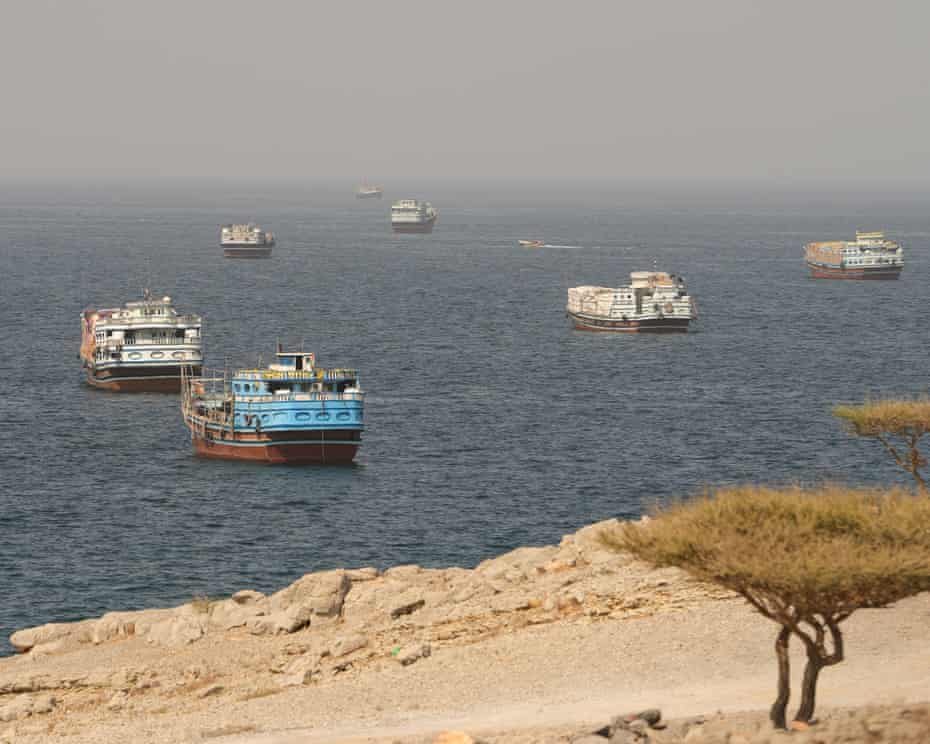
Cargo ships reportedly carried supplies from Russia across the Caspian Sea, providing an alternative maritime connection outside the routes most directly affected by the American blockade.
Trucks also transported materials through Central Asian countries, while freight aircraft from China featured among the channels identified by the investigation.
These transportation links demonstrate how commercial networks can continue supplying a country even when major trading routes are subjected to sanctions or military restrictions.
For Washington, the findings underline the limitations of relying exclusively on naval operations to prevent Iran from acquiring equipment that could support its military infrastructure.
The expansion of Task Force Iron Gate is therefore intended to address the gaps created by alternative transportation arrangements and commercial relationships.
American authorities will seek to combine intelligence gathering, financial enforcement and military coordination to identify the organisations involved in moving restricted materials.
The wider objective is to make procurement more difficult by targeting not only the goods entering Iran but also the financial and logistical arrangements supporting their transportation.
Iran remains a regional threat despite military and economic pressure
The expanded American campaign comes against the background of continuing uncertainty over Iran’s military strength and its ability to influence security developments across the Middle East.
Although US and Israeli military operations have inflicted damage on Iran’s conventional military capabilities, Washington continues to regard Tehran as a significant regional security concern.
The naval blockade has also placed pressure on the country’s oil exports, while sanctions and restrictions have further complicated its access to international markets.
Nevertheless, Iran’s leadership has retained control of the country despite the military confrontation and growing economic difficulties.
The political consequences of the war have also become increasingly important in Washington, particularly following the November midterm elections.
President Donald Trump’s Republican Party suffered an electoral setback, while opposition Democrats secured control of Congress, creating additional political pressure on the administration.
Iranian officials reportedly welcomed the results, viewing the Republican losses as a setback for Trump amid the continuing conflict.
Vice President JD Vance also attributed the Republican electoral defeat partly to the war and questioned whether the military confrontation had been worth its consequences.
The developments have raised questions about the political sustainability of Washington’s strategy and the administration’s ability to maintain public and congressional support for continued pressure on Tehran.
Trump’s threats raise fears of another military escalation
Despite diplomatic efforts to end the conflict, Trump has continued threatening another military offensive against Iran, increasing concerns about a possible resumption of large-scale fighting.
Tehran, meanwhile, has warned that another attack could trigger retaliation against infrastructure across the Gulf region, placing neighbouring countries at risk of becoming involved.
The possibility of renewed hostilities has complicated negotiations being pursued by mediators seeking an agreement between Washington and Tehran.
Diplomatic efforts have intensified as governments attempt to prevent another escalation following the American midterm elections and reduce the risk of a wider regional confrontation.
However, intelligence assessments cited by Reuters indicate that renewed military strikes would not fundamentally change Iran’s negotiating position or necessarily bring about the collapse of its government.
The assessments suggest that additional attacks might not deliver the political concessions Washington is seeking, raising questions about the likely effectiveness of another military offensive.
This uncertainty provides further context for the establishment of Task Force Iron Gate, which introduces additional economic, financial and logistical pressure alongside existing military operations.
Washington targets Iran’s commercial networks beyond the battlefield
The initiative demonstrates the growing importance of international supply chains in the confrontation between the United States and Iran.
While the naval blockade focuses on maritime commerce and oil exports, the new task force is intended to address military supplies and restricted technologies moving through alternative transportation networks.
Its effectiveness will depend on how successfully American military authorities coordinate with intelligence agencies, financial regulators and departments responsible for diplomatic and legal enforcement.
Read also: Gadi Eisenkot government mandate: Herzog tasks opposition leader with forming Israel’s next administration
https://swiftreportnow.com/gadi-eisenkot-government-mandate-herzog-tasks/
Iran’s reported ability to obtain equipment through Russia, China and Central Asian routes illustrates the challenge of enforcing international restrictions across several countries and jurisdictions.
Disrupting those channels could make it more difficult for Tehran to replenish military supplies, acquire sensitive technology and maintain parts of its defence industrial infrastructure.
However, the continuing diplomatic negotiations and threats of renewed military action show that the confrontation remains far from resolved.
With Task Force Iron Gate, Washington is widening its strategy against Iran by combining maritime restrictions with efforts to disrupt land-based trade, military procurement and the financial networks supporting Tehran’s operations.
About The Author