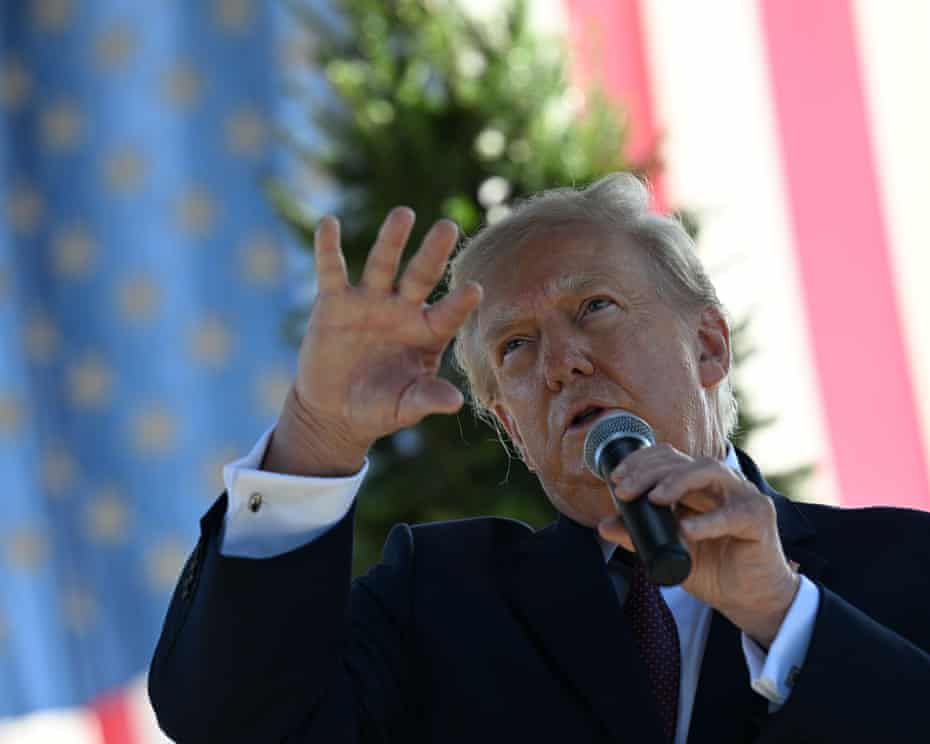
Trump’s Iran strike threat appears to be losing some of its immediacy after US President Donald Trump declared that fresh military action against Iran was highly unlikely if negotiations between Washington and Tehran continued to make progress.
Trump made the assessment during a telephone interview with CNN on Sunday, November 8, as tensions persisted over attacks on commercial vessels in and around the Strait of Hormuz.
His remarks offered a possible diplomatic opening in a conflict that has threatened international shipping, disrupted energy supplies and heightened security concerns across the Middle East.
However, the American president stopped short of ruling out another military offensive, insisting that any decision would depend on whether Iran accepted an agreement strong enough to satisfy Washington.
“It depends on whether or not they sign a very strong agreement,” Trump told CNN. “The answer is, highly unlikely it’s going to be necessary.”
CNN did not disclose the specific question that prompted the response. Nevertheless, Trump used the interview to reveal that the United States had already identified potential infrastructure targets inside Iran.
He singled out 38 bridges, claiming that American forces could destroy them “in literally one hour” if military operations resumed.
The remarks suggest that Washington is simultaneously exploring a negotiated settlement and retaining the military capability to intensify its campaign should diplomatic efforts fail.
Diplomacy offers an opening, but Washington retains its military options
Trump’s latest position represents a softer tone compared with his earlier indications that major attacks could resume after the American midterm elections.
Although no large-scale US military operation had been reported following the elections, the possibility of renewed strikes continued to hang over the confrontation.
Iran had warned that another American offensive would provoke retaliation against US and Israeli targets, raising the prospect of a wider regional escalation.
Consequently, Trump’s comments have not eliminated the danger of further fighting. Instead, they suggest that the administration is prepared to give negotiations an opportunity before considering another round of attacks.
The president’s reference to the proposed destruction of bridges also sends a warning that critical infrastructure could become a target if the conflict intensifies.
For Tehran, the challenge is to determine whether Washington’s diplomatic signals represent a genuine willingness to compromise or an attempt to secure concessions while maintaining military pressure.
Task Force Iron Gate expands the American campaign
Even as Trump discussed the possibility of avoiding further attacks, his administration continued to pursue measures aimed at restricting Iran’s military and commercial supply networks.
On Sunday afternoon, the president announced on Truth Social that “Task Force Iron Gate is in full force and effect” on Iran.
The campaign, first reported by Reuters on Saturday, targets Tehran’s movement of advanced weapons and other sanctioned materials across its land borders and through the Caspian Sea.
It broadens the American pressure campaign beyond the naval blockade of Iranian ports, introducing additional restrictions on the routes through which Tehran could receive or transport sensitive supplies.
The initiative is particularly significant because it seeks to disrupt logistical networks that could support Iran’s military activities without necessarily requiring an immediate expansion of direct attacks.
Washington is therefore pursuing diplomatic engagement alongside economic, logistical and military pressure.
Strait of Hormuz becomes another flashpoint
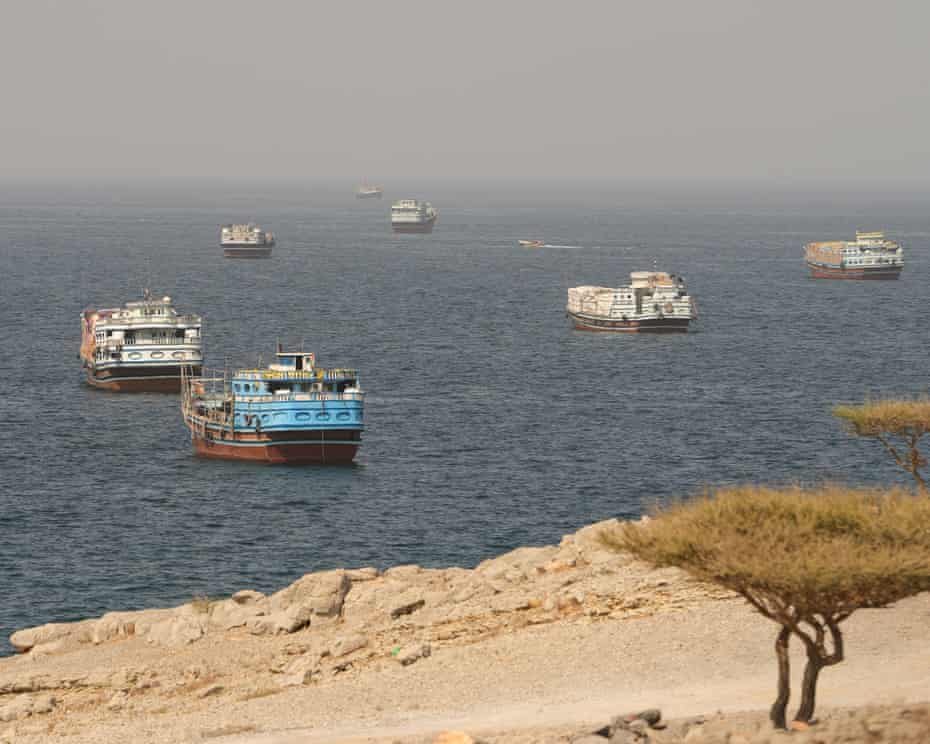
While Trump was discussing negotiations, reports of explosions in southern Iran and attacks involving commercial vessels highlighted the continuing dangers around the Strait of Hormuz.
Iranian state television reported that officials had not confirmed missile strikes on Iranian territory following explosions heard in several locations, including Qeshm Island.
The broadcaster subsequently suggested that the blasts could have been associated with Iranian military activities in the waterway.
However, Tasnim news agency reported that two missiles had struck Qeshm Island, without providing official information about possible damage.
Neither the United States nor Iran had commented on that particular report, according to Reuters.
Washington had previously announced that it struck the island on November 2 in what it described as a limited defensive operation against Iranian personnel using surface-to-air missiles against American assets.
The conflicting accounts surrounding the latest explosions have added another layer of uncertainty to the already volatile security situation.
Oil tankers and commercial shipping caught in the confrontation
The Strait of Hormuz remains a critical international shipping corridor, making attacks on vessels particularly concerning for energy markets and the wider global economy.
Iran’s Revolutionary Guards Navy said two oil tankers caught fire after hitting mines while attempting to pass through what it described as an unauthorised route in the strait.
The semi-official Fars news agency subsequently reported that a third tanker had suffered an explosion and caught fire.
Separately, the US military announced that its air force had fired at the stern of a commercial vessel in the Gulf of Oman on Saturday evening.
American officials said the operation disabled the ship because it was attempting to break the blockade of Iranian shipping.
Footage released by US Central Command showed smoke rising from the stern of the St Kitts-flagged cargo vessel after the reported American strike.
The United Kingdom Maritime Trade Operations monitoring agency also reported an incident involving a bulk carrier and military forces approximately 18 nautical miles east of Khor Fakkan in the United Arab Emirates.
The agency said the extent of the damage was unknown, and it remained unclear whether the incident was connected to the reported US operation.
Reuters said it could not independently confirm the reported attacks involving the vessels.
Iran war creates political pressure for Trump
The conflict is also becoming an increasingly significant issue in American domestic politics following the Republican Party’s disappointing performance in last week’s midterm elections.
Trump acknowledged that the Iran war had contributed to the party’s defeat, while Vice President JD Vance offered an even more direct explanation.
In a social media post, Vance declared: “The reason we lost is the war.”
The vice president is widely regarded as a potential successor to Trump when the president’s current term ends in two years.
His assessment has drawn attention because it directly links the administration’s military policy to the Republicans’ electoral difficulties.
Trump told reporters on Sunday that “a lot of people did not like Vance’s comments on Iran.”
Secretary of State Marco Rubio, another politician frequently mentioned as a possible presidential successor, declined to comment directly on whether the conflict had influenced the election results.
Instead, Rubio defended Trump’s decision to confront what he described as a longstanding threat to American security.
“All I can tell you is that the president of the United States identified a very real threat to this country that existed for a very long period of time, and he addressed it,” Rubio told reporters.
The differing public responses from senior administration figures illustrate the political difficulties surrounding a war that is now attracting scrutiny beyond its military and diplomatic consequences.
Rubio questions Iran’s negotiating demands
Rubio also provided an assessment of the diplomatic process, saying he did not believe an immediate breakthrough was imminent.
He maintained that Trump preferred resolving international disputes through negotiations but argued that Tehran’s demands had made progress difficult.
“The president would always prefer to solve this and every problem diplomatically. Sometimes that’s not possible, unfortunately. But if there’s a chance to do it. We’ll explore it.”
Rubio then criticised the Iranian position, saying: “Right now, it hasn’t been very productive because the Iranian demands are simply not just unacceptable, but in some cases outrageous and ridiculous and really not realistic,” he said.
His comments suggest that Washington remains dissatisfied with the terms Tehran has presented, despite the president’s indication that another round of attacks may not be necessary.
Qatar keeps diplomatic channels open as Iran submits nuclear proposal
Qatar continues to serve as an important intermediary in efforts to end the conflict, which has shaken regional security and threatened the international economy.
The Qatari government on Saturday rejected reports that Washington and Tehran had failed to reach an agreement.
It said the country’s prime minister had confirmed that both sides were continuing to work towards a settlement.
A senior Iranian official previously told Reuters that Tehran had submitted a nuclear proposal to Washington through Qatar.
According to the official, the United States was reviewing the proposal, although further discussions would depend on Washington first addressing seven demands from Iran.
The demands include sanctions relief, access to frozen Iranian assets and war reparations.
Washington, however, insists that nuclear issues must feature in the initial negotiations, creating a significant disagreement over the framework for any settlement.
The competing positions demonstrate why diplomatic progress remains difficult, even as both governments continue to explore the possibility of ending the confrontation.
Wider Middle East tensions threaten international stability
The confrontation has developed alongside other security incidents across the Middle East, raising concerns that the crisis could spread further.
Since the United States and Israel began attacks on Iran in February, Tehran has sought to disrupt shipping through the Strait of Hormuz and restrict Gulf energy exports.
American forces began blockading movements to and from Iranian ports in April, further intensifying pressure on commercial shipping.
The resulting disruption has placed international energy supplies and other essential commodities at risk, with consequences extending far beyond the immediate conflict.
Saudi Arabia’s energy ministry also reported on Sunday that falling debris from an attempted attack had damaged an administrative building belonging to state oil company Saudi Aramco in Riyadh.
No injuries or fatalities were reported.
Meanwhile, the conflict involving Iran-aligned Houthis in Yemen and Saudi Arabia has escalated during November, adding another dangerous dimension to the regional crisis.
For Trump, the immediate challenge is to secure diplomatic progress without abandoning the pressure Washington has placed on Tehran.
Ultimately, Trump’s Iran strike threat will depend on whether negotiations can produce an agreement acceptable to both governments, particularly over nuclear restrictions, sanctions, frozen assets and war reparations.
Until those differences are resolved, the possibility of renewed military action will remain part of the confrontation, even as the American president expresses hope that further attacks will prove unnecessary.
About The Author