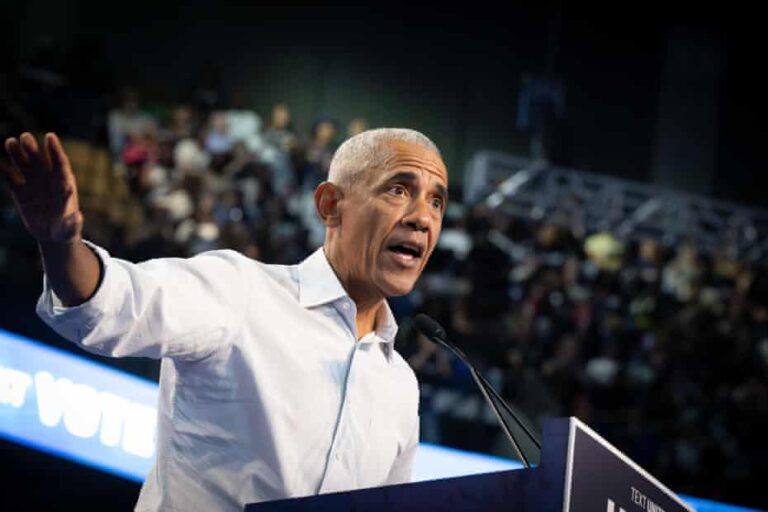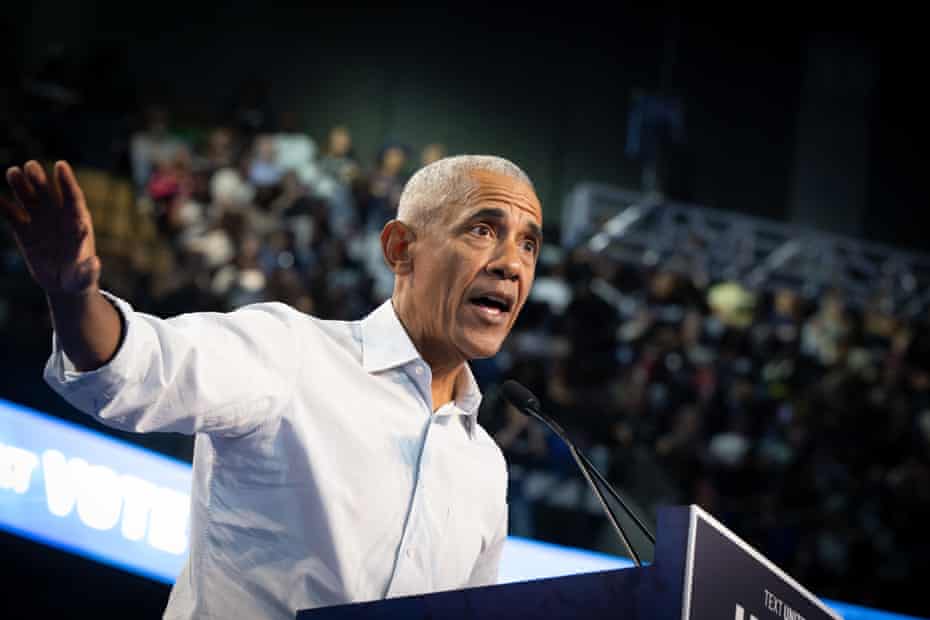
Obama backs Democrats in the final stretch of the 2026 midterm elections, using campaign appearances across the United States to mobilise voters, challenge President Donald Trump’s policies and help his party regain control of Congress.
The former president has returned to the campaign trail as Democrats seek to turn public dissatisfaction with the administration into electoral gains. His appearances are intended to energise supporters and strengthen the party’s chances in a closely watched political contest.
Obama has been speaking at rallies in Georgia, Detroit and Cleveland, drawing attention to the importance of the upcoming elections. He has also campaigned alongside prominent Democratic candidates, including Senator Jon Ossoff.
During his appearances, Obama described the midterm elections as a crucial opportunity to limit Trump’s influence over the federal government.
He told supporters: “It’s our last, best chance of at least reining him in.”
Obama also emphasised the importance of congressional control, describing the election as a mechanism for checking presidential power.
“It’s the circuit-breaker in the system, and we need to flip it,” he said.
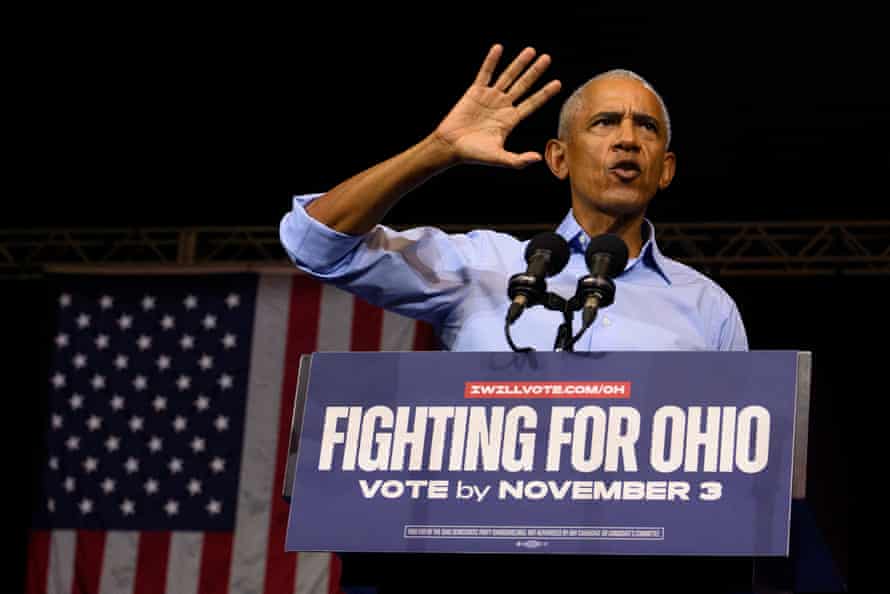
Obama targets Trump with White House joke
Obama has also attracted attention through his criticism of Trump’s reported gold-themed renovations at the White House, using humour to question the president’s priorities.
At one point, he joked about the extravagant decorations by referring to Saddam Hussein and a Cheesecake Factory. The remark prompted a response from Trump, who turned the criticism into a joke about Obama’s eating habits.
“Every piece of lettuce he eats has to be perfect, and I’m not that choosy,” Trump said.
Treasury Secretary Scott Bessent also responded by staging a Cheesecake Factory photo opportunity, bringing further attention to the exchange.
Obama subsequently criticised the administration for devoting so much attention to his joke rather than addressing economic concerns affecting Americans.
“They mobilised a whole-of-government response to a joke, not to inflation, but to a joke,” Obama said.
“They don’t have solutions to actual problems, so they’d rather have the media and you talking about the Cheesecake Factory.”
The exchange has become part of the wider political contest, with both sides using public appearances and media attention to advance their messages.
For Democrats, Obama’s intervention offers an opportunity to focus attention on economic pressures, presidential accountability and the role of Congress.
Democrats seek Obama’s campaign influence
Obama remains one of the Democratic Party’s most recognisable figures, and his involvement could help attract voters who might otherwise be less engaged in the midterm elections.
Former Obama speechwriter David Litt believes the former president retains credibility and an ability to encourage participation, particularly among younger and Black voters.
That influence could be important in competitive races where turnout may determine the outcome.
By appearing alongside candidates and addressing supporters directly, Obama is attempting to turn his personal popularity into practical electoral support.
His campaign appearances also provide Democrats with a prominent spokesperson who can challenge Trump without being a candidate in the current election.
The strategy reflects the party’s need to appeal to its established supporters while persuading undecided voters that a change in congressional control would make a meaningful difference.
Obama backs Democrats at a time when the party faces pressure to demonstrate that it can offer a credible alternative to the Trump administration.
However, his return to the campaign trail has not been universally welcomed by progressives, some of whom remain critical of his presidential record.
Progressive critics question Obama’s legacy
Norman Solomon, a progressive activist, has criticised aspects of Obama’s foreign policy, including his approach to Palestine and Afghanistan, as well as concerns about economic inequality and the concentration of wealth.
Nevertheless, Solomon has acknowledged the former president’s potential tactical value in helping Democrats during the campaign.
Joseph Geevarghese of Our Revolution has also supported Obama’s involvement, viewing his participation as an opportunity to strengthen progressive organising and broaden the party’s appeal.
Ashik Siddique, a co-chair of the Democratic Socialists of America, has pointed to changes within the political landscape surrounding the Democratic Party and its relationship with progressive movements.
Nina Turner, another prominent progressive voice, has described Obama as a positive political figure for many Americans, while also questioning how much lasting change his presidency delivered.
Turner’s position reflects a broader debate among Democrats about whether the party should rely on familiar leaders or embrace a more substantial political transformation.
Despite those disagreements, Obama’s participation offers the party a high-profile figure capable of attracting attention and encouraging supporters to vote.
Midterm elections could reshape Washington
The 2026 midterm elections will determine the balance of power in Congress and influence how effectively Trump can advance his legislative agenda.
Democrats hope that dissatisfaction with the administration will translate into victories that give them greater influence over federal policy, investigations and congressional oversight.
Obama’s appearances are part of a wider effort to mobilise voters before election day. Other prominent Democrats, including Kamala Harris and Bill Clinton, have also been involved in campaign activities.
Clinton has campaigned alongside David Jolly, a candidate seeking the Florida governorship, while Harris continues to be associated with the party’s efforts to rebuild following the 2024 presidential election.
Obama supported Harris during that election, but Trump ultimately won the presidency.
The outcome remains an important backdrop to the current campaign, as Democrats consider how to reconnect with voters and rebuild support in competitive states.
Obama’s message is that congressional elections provide an opportunity for voters to place limits on presidential power, even when they cannot change who occupies the White House.
Whether his intervention produces significant electoral gains will depend on voter participation, local campaign strength and the issues that dominate public debate in the final days.
For now, the former president is using his reputation, political experience and communication skills to help Democrats make their case to the American electorate.
About The Author