The Panama earthquake measuring magnitude 7.7 struck southern Panama on Friday, October 9, 2026, damaging buildings and sending thousands of people into the streets, but the country appeared to have avoided widespread destruction and loss of life.
The powerful tremor prompted evacuations across the Central American nation, while more than 40 aftershocks rattled the country in the hours following the main earthquake. Authorities reported no immediate deaths or injuries.
According to the United States Geological Survey (USGS), the earthquake occurred at a depth of approximately 12.6 kilometres, with its epicentre located in a sparsely populated area about 200 kilometres from Panama City.
Despite the strength of the earthquake, essential infrastructure continued operating. The Panama Canal and Cobre Panama copper mine reported normal operations, while Tocumen International Airport lifted its temporary suspension of flights.
Panama Earthquake Causes Damage and Mass Evacuations
The Panama earthquake sent thousands of residents and office workers into the streets as buildings shook across the country. In downtown Panama City, workers faced heavy traffic and uncertainty over how they would return home after evacuations disrupted normal activities.

Juan Sanchez, a 37-year-old employee of the economy ministry, waited for a bus after leaving his workplace. He expressed concern about the difficulties people faced getting home following the emergency.
“They evacuated all of these buildings. Everyone is outside. Now the problem is, how do we get home?”
The earthquake was felt across Panama, with residents reporting prolonged vibrations and damage to buildings. In Penonome, a city located between the epicentre and the capital, some buildings collapsed and a church sustained damage.
President Raul Mulino travelled to Penonome to assess the situation as authorities monitored the impact of the earthquake and responded to reports of structural damage in affected communities.
Buildings Damaged as Residents Flee Their Homes
Although no deaths or injuries were immediately reported, residents in several areas described frightening experiences during the tremor. Some elderly people were reportedly in tears as they evacuated their homes and gathered outside.
In Herrera province in southern Panama, 74-year-old Ricardo Brown said his house had developed cracks, raising fears that it might collapse.
“We’re scared. It’s just the two of us old folks here. The house has cracked, and we’re afraid it could fall on us,” Brown said.
He also reported seeing several damaged homes in the area, highlighting the concerns facing residents whose properties may have been weakened by the earthquake.
Omar Smith, head of Panama’s civil protection agency, told Telemetro Reporta that earthquake impacts had also been reported in Chitre, the capital of Herrera province, and along the coast in Los Santos province.
Authorities continued assessing the extent of the damage as aftershocks followed the main tremor.
Panama Canal and Airport Resume Normal Operations
Despite the disruption caused by the Panama earthquake, major transport and industrial facilities reported that operations were continuing or had resumed.
The Panama Canal, a crucial international shipping route connecting the Atlantic and Pacific oceans, reported normal operations after the earthquake. The Cobre Panama copper mine also said its activities were proceeding normally.
Tocumen International Airport, the country’s main international aviation hub, lifted a suspension on flights, allowing air travel to resume after the temporary disruption.
The continued operation of these facilities offered some reassurance that the earthquake had not caused widespread damage to Panama’s critical infrastructure.
However, electricity provider Naturgy reported power outages in six provinces, indicating that some communities continued to experience disruptions following the tremor.
More Than 40 Aftershocks Recorded
Panama’s geosciences institute director, Nestor Luque, attributed the earthquake to the Azuero Sona Fault System, which he said had accumulated substantial pressure that was occasionally released.
“The seismic signals have traveled throughout the national territory and that is why it could be felt everywhere,” Luque said.
He estimated that vibrations in Panama City lasted approximately 40 seconds, although residents in other locations may have experienced even longer shaking.
Sabina Rios, who was on the sixth floor of an old building dating from the era of the United States military presence in Panama, described the earthquake as unusually intense.
“The quake felt strong and lasted a long time, the longest I’ve felt in years,” Rios said.
Victor Pinzon, a 48-year-old maintenance worker, said he watched high-rise window cleaners experience the shaking while working above the ground.
“It’s a miracle they didn’t get killed,” he said. “They looked like they were swinging in a hammock.”
His account illustrated the dangers faced by people working at height when a powerful earthquake strikes without warning.
USGS Warns of Potential Economic Losses
Although Panama appeared to have escaped widespread casualties, the USGS warned that the earthquake could have significant economic consequences.
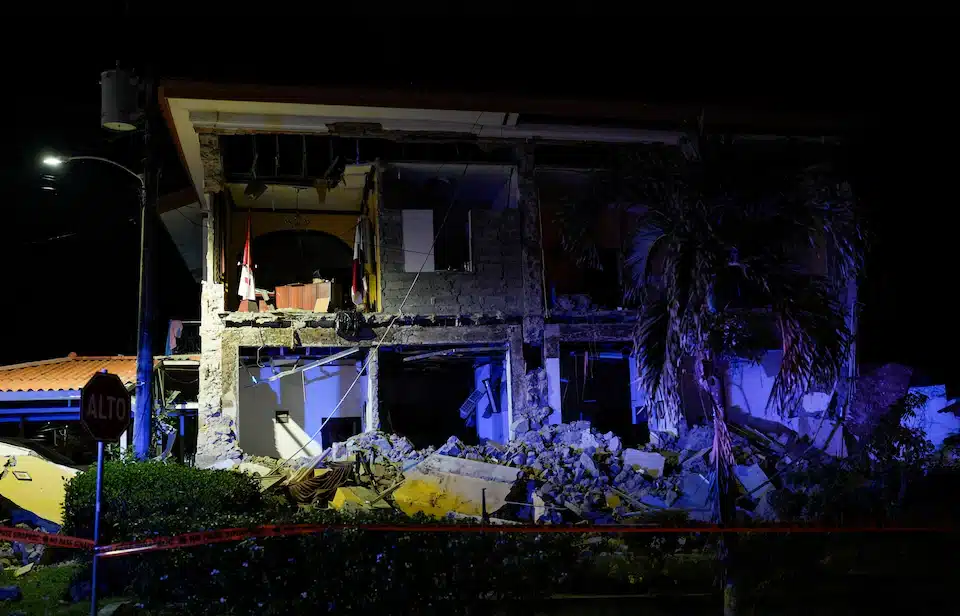
The agency estimated that economic losses could range from 1% to 10% of Panama’s gross domestic product, reflecting the potential cost of structural damage, infrastructure repairs and disruption to economic activity.
An exposure assessment estimated that approximately 43,000 Panamanians lived in areas experiencing at least severe exposure to the earthquake.
That figure was considerably lower than the estimated populations exposed to recent powerful earthquakes in neighbouring countries. Nearly 1.4 million people were reportedly in the affected area during twin earthquakes in Venezuela in June, while more than 1.6 million lived in the earthquake-hit zone of western Colombia in August.
The earthquakes in Venezuela killed several thousand people, while the August tremor in Colombia claimed more than 300 lives, according to the report.
The comparison highlighted how population exposure and the location of an earthquake can influence the scale of a disaster, even when powerful tremors strike different parts of the same region.
Why Panama’s Earthquake Was Significant
Strong earthquakes are relatively uncommon in Panama, making Friday’s tremor particularly alarming for residents who had limited recent experience of an event of comparable intensity.
The earthquake’s magnitude, prolonged shaking and widespread impact demonstrated the importance of emergency preparedness, building safety and effective public communication.
Although the epicentre was in a sparsely populated area, the tremor travelled across the country, forcing evacuations in urban centres and damaging properties in several provinces.
The absence of immediately reported deaths or injuries offered relief, but authorities still faced the task of evaluating buildings, restoring disrupted services and determining the full extent of the damage.
Panama Prepares for National Evacuation Drill
The earthquake struck just days before Panama was scheduled to conduct a national evacuation drill on Monday, October 12, 2026.
The exercise is intended to test the country’s emergency response arrangements and preparedness for disasters.
Friday’s experience provided a timely reminder of the need for residents to understand evacuation procedures, identify safe locations and follow instructions from civil protection authorities during emergencies.
With aftershocks continuing and damage assessments underway, officials faced the challenge of ensuring that weakened buildings did not pose additional risks to residents.
Read also: Nidal Malik Hasan livestream execution plan sparks global outrage as UN warns of human rights violation
https://swiftreportnow.com/nidal-malik-hasan-livestream-execution-plan/
The government and relevant agencies were also expected to monitor electricity disruptions and assess damage in Penonome, Herrera, Los Santos and other affected areas.
While the earthquake did not immediately produce the catastrophic consequences associated with some recent regional disasters, its impact showed how quickly a powerful natural event can disrupt daily life.
For Panama, the immediate priority remained protecting residents, evaluating damaged structures and ensuring that essential services continued operating as authorities established the full consequences of the tremor.
The country appeared to have avoided widespread destruction, but the extent of the damage and the potential economic cost remained important questions as emergency assessments continued.