French police under fire over student protest injuries as a growing number of young demonstrators suffer serious harm during nationwide unrest, prompting investigations, calls to ban controversial weapons, and renewed scrutiny of law enforcement tactics.
The controversy intensified after a 14-year-old student, identified only as Eden, suffered a broken jaw and multiple shattered teeth during a confrontation with police in Saint-Ouen-l’Aumône. His family has filed a complaint alleging attempted murder, according to his lawyer.
The incident is among dozens of reported injuries associated with police operations during more than two weeks of student unrest. France’s internal police watchdog, the IGPN, is investigating 24 cases connected to the demonstrations, while authorities face mounting pressure to review the use of rubber bullets, stun grenades and other potentially dangerous crowd-control weapons.
French Police Under Fire Over Student Protest Injuries
Eden’s case has become a major focus of the debate over police conduct and the use of force against young demonstrators. According to his family lawyer, Elsa Marcel, the teenager was sitting on a wall looking at his phone, metres away from a protest, when the confrontation occurred.
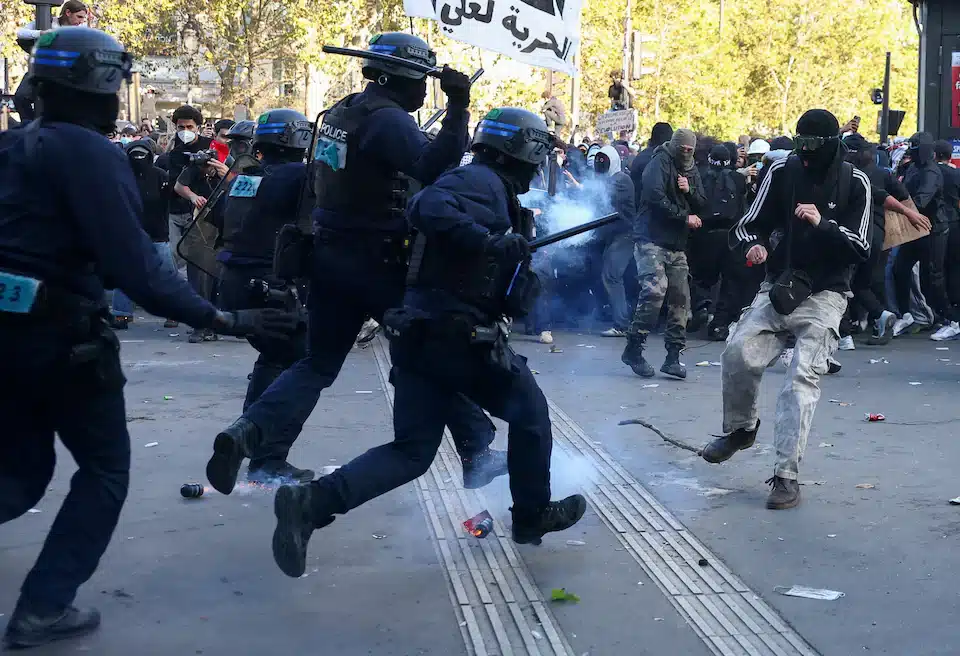
The local prosecutor’s account indicates that an officer approached Eden and struck him with a baton after he was confronted by the teenager. Eden allegedly responded by kicking the officer, after which a second officer fired a tear gas grenade from a Cougar launcher, striking the boy in the face.
Marcel described the alleged aftermath in stark terms, raising questions about the treatment the injured teenager received after the confrontation.
“(The officer) shot him in the mouth and left him lying on the ground, without even calling the emergency services,” the lawyer said.
Eden’s family has requested that his second name remain undisclosed to protect his privacy. Marcel confirmed that a complaint for attempted murder had been filed, while the police officer involved was subsequently placed under formal investigation.
The officer faces allegations of assault by a public official resulting in permanent disability or disfigurement. According to the prosecutor’s office, he maintained that his actions were intended to protect himself and his colleagues following the confrontation.
A police spokesperson declined to comment on an ongoing investigation. However, the case has intensified public scrutiny of the methods used by French officers to manage student demonstrations.
Police Watchdog Investigates 24 Cases
Eden’s injuries are part of a broader pattern of reported harm during the protests. The IGPN, France’s internal police watchdog, is investigating 24 cases linked to the handling of the unrest, as concerns grow over the proportionality of police responses.
An examination of legal documents and interviews conducted by Reuters identified 28 cases involving injuries allegedly caused by police force. Fifteen of those cases are among the matters under investigation by the watchdog.
The reported injuries involved several policing methods, including rubber bullets, stun grenades, tear gas, batons and mounted police charges. The range of incidents has fuelled questions about whether existing crowd-control tactics are appropriate when demonstrations involve large numbers of schoolchildren.
French Prime Minister Sébastien Lecornu has described the demonstrations as the most violent in decades. Nevertheless, the seriousness of the injuries has intensified calls for accountability and a reassessment of the weapons available to officers.
Student Protest Injuries Raise Alarm Across France
The controversy extends beyond Eden’s case, with other young people suffering severe injuries during the demonstrations. One of the most alarming incidents involved a 15-year-old student in Lens who lost a hand, with a stun grenade suspected to have caused the injury.
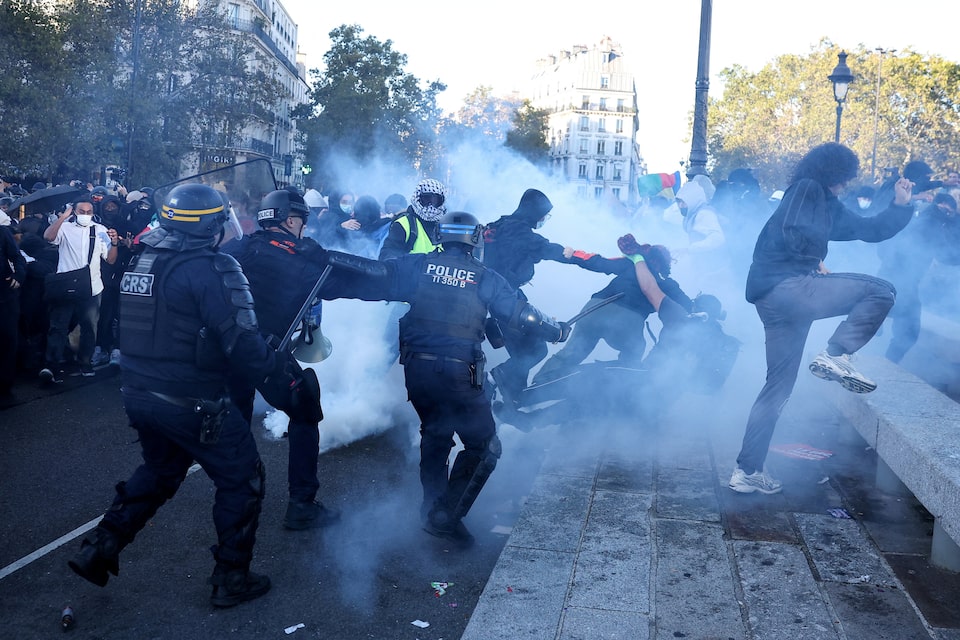
Interior Minister Laurent Nuñez acknowledged the seriousness of the incident and announced a temporary suspension of stun grenade use while an investigation examines the circumstances surrounding the teenager’s injury.
The decision represents a significant response to mounting public concern about the risks associated with weapons used during crowd-control operations. It also raises broader questions about whether suspending individual weapons is sufficient to address the problems identified during the protests.
Another disturbing case involved a 16-year-old student in Argenteuil, a suburb of Paris, who was injured in his left eye while returning home after discovering that his school was closed.
His lawyer, Sophia Kerbaa, told Reuters that the teenager’s eye could suffer permanent damage. However, she said it remained unclear whether he had been struck by a rubber bullet or another object.
A video reviewed by Reuters showed the boy bleeding from his injured eye, adding to concerns about the consequences of confrontations between officers and young people.
Kerbaa described the circumstances surrounding her client’s injury, saying: “He was in the wrong place at the wrong time … he is injured and in shock.”
According to the prosecutor investigating the incident, the police account suggested that the injured teenager appeared to match one of two young people who had directed fireworks at officers. Police reportedly responded by firing rubber bullets.
The circumstances remain subject to investigation, and the available accounts do not independently establish the precise cause of the teenager’s injury.
Interior Minister Reports Hundreds of Injured Students
The scale of the unrest has placed additional pressure on the French government to explain how police operations are being conducted and whether current tactics are protecting students adequately.
Nuñez said during a radio interview on Wednesday that approximately 200 students had been injured. He maintained, however, that police action was responsible for only a small proportion of those injuries.
“Our primary role is, of course, to protect high school students,” the interior minister said.
His remarks underline the government’s stated responsibility to safeguard young people while maintaining public order during increasingly volatile demonstrations.
Authorities have also reported that approximately 700 police officers have been injured. In addition, some schools have been burned or ransacked, while teachers and members of the public have reportedly faced attacks.
Police have arrested 6,877 people during the unrest, most of them minors, highlighting the scale of the confrontations and the challenge facing law enforcement agencies.
These figures illustrate the competing concerns at the heart of the crisis: protecting students from excessive force, preventing violence against officers and civilians, and ensuring that schools and surrounding communities remain safe.
France Faces Calls to Ban Rubber Bullets and Stun Grenades
The mounting number of serious injuries has renewed demands for France to reconsider its use of so-called less-lethal weapons during public-order operations.
These weapons include rubber bullets and stun grenades, which can cause severe or permanent injuries despite being designed as alternatives to conventional firearms. Human rights organisations have repeatedly criticised their use, arguing that the risks can outweigh their benefits when deployed against crowds.
Amnesty International and United Nations human rights experts have previously raised concerns about the dangers and proportionality of such weapons. The latest incidents have brought those concerns back into the centre of France’s national debate.
Sébastien Roché, a researcher specialising in policing at the French National Centre for Scientific Research, said France stood out because of the number of serious injuries recorded over a short period.
“France is an anomaly in terms of its use of arms and the number of victims — we have four irreversible injuries in the space of 12 days, and they are minors,” Roché said.
He added: “It is a level that is unknown in (France’s) contemporary history.”
Roché also highlighted differences between France and several other European countries in the use of these weapons for public-order policing.
According to the researcher, rubber bullets and stun grenades are generally not used for this purpose in Britain, Italy and Germany, apart from Hamburg. Although such weapons are permitted in Spain, he said they have caused fewer injuries there than in France.
The comparisons have strengthened arguments that France should examine alternative methods of controlling demonstrations, particularly when schoolchildren are involved.
Politicians Demand an End to Rubber Bullet Use
Calls for reform have attracted support from human rights advocates and politicians who argue that avoiding permanent injuries should be a central objective of public-order policing.
Bally Bagayoko, mayor of Saint-Denis and a member of the left-wing France Unbowed party, joined the protests in his town, saying he wanted to protect young people from police violence.
He called for the withdrawal of rubber bullets and a change in the approach used to manage student demonstrations.
“We must withdraw the use of rubber bullets and … aim for zero injured students. That will allow us to de-escalate,” Bagayoko told Reuters.
His position reflects a wider argument that removing particularly dangerous weapons could reduce the likelihood of serious injuries and help ease tensions between demonstrators and officers.
Supporters of a ban contend that public safety should not depend on weapons that can permanently damage a young person’s eyesight, destroy limbs or cause other life-changing injuries.
They also argue that police forces should prioritise de-escalation, communication and other methods that reduce the risk of physical confrontation.
However, police representatives reject the suggestion that the latest injuries automatically justify abandoning existing policing methods.
Police Unions Defend Crowd-Control Tactics
While calls to ban rubber bullets and stun grenades continue to grow, police unions maintain that officers need intermediate options when confrontations become violent.
Thierry Clair, a police union representative, described the injuries suffered by Eden and the teenager who lost his hand as tragedies. Nevertheless, he argued that such incidents should not automatically undermine the policing techniques used to manage violent situations.
Clair placed responsibility on the intensity of the violence committed by some demonstrators, saying their actions had contributed to escalating tensions during the protests.
He also questioned what officers would be expected to do if intermediate-force options were removed while confrontations continued.
“How do we respond when people are moving towards confrontation? If we remove intermediate force options, all we are left with is lethal force,” Clair told Reuters.
He added: “That is simply inconceivable.”
The argument highlights the difficult balance confronting French authorities as they attempt to maintain order while preventing injuries. Police representatives say officers require tools that allow them to respond to dangerous situations without immediately resorting to lethal weapons.
Critics, however, argue that the serious injuries already documented demonstrate the need to reassess how those tools are selected, deployed and monitored.
The debate is likely to remain contentious as investigations continue and more details emerge about the circumstances surrounding individual incidents.
Student Unrest Adds Pressure on Macron’s Government
The controversy surrounding French policing is unfolding amid wider dissatisfaction with President Emmanuel Macron’s government ahead of the 2027 election.
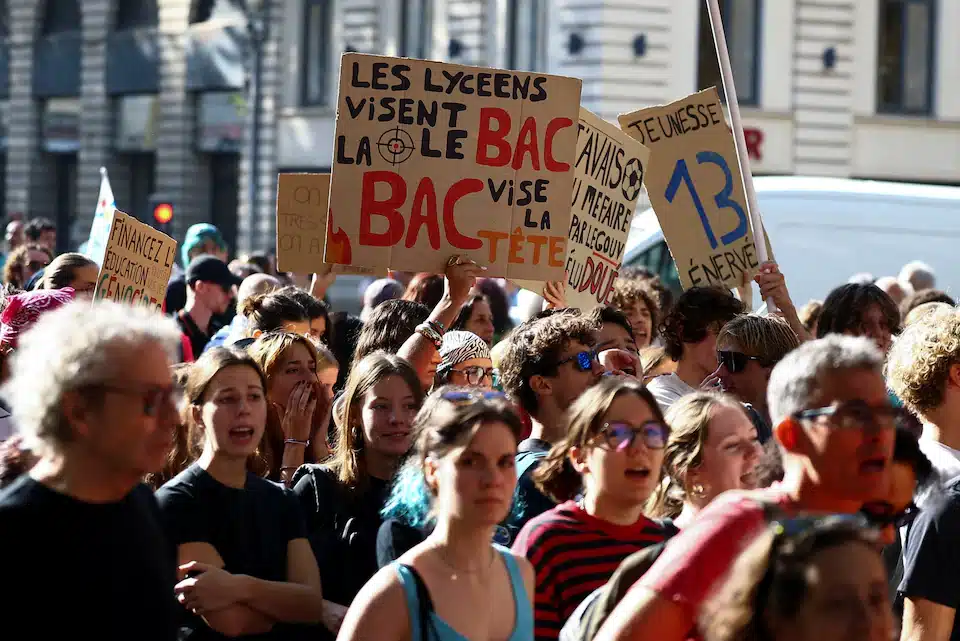
The student demonstrations began over school conditions but have developed into a broader expression of public frustration. The police response, particularly the injuries suffered by young demonstrators, has intensified anger and attracted additional support for the protest movement.
The situation presents a political challenge for the government, which must respond to demands for better school conditions while addressing concerns about violence, public safety and police accountability.
For families whose children have suffered serious injuries, the immediate priority is establishing what happened and determining whether officers acted lawfully. The investigations may help clarify individual cases and identify whether particular policing practices require changes.
The wider issue, however, extends beyond the actions of individual officers. It concerns the weapons authorised for crowd control, the safeguards governing their use and the responsibility of authorities to minimise foreseeable harm.
As the IGPN investigates the reported incidents, pressure is likely to continue from human rights advocates, politicians and families seeking answers.
The government must also contend with reports of injured officers, attacks on public institutions and disruption to schools, all of which complicate efforts to restore calm.
Ultimately, the unfolding crisis has placed France’s approach to public-order policing under intense scrutiny. The challenge will be to protect students, officers and the wider public without allowing demonstrations to become occasions for preventable, life-changing injuries.
With several investigations ongoing, the cases involving Eden and other injured teenagers have become central to a national debate over accountability, proportionality and the future of crowd-control policing in France.