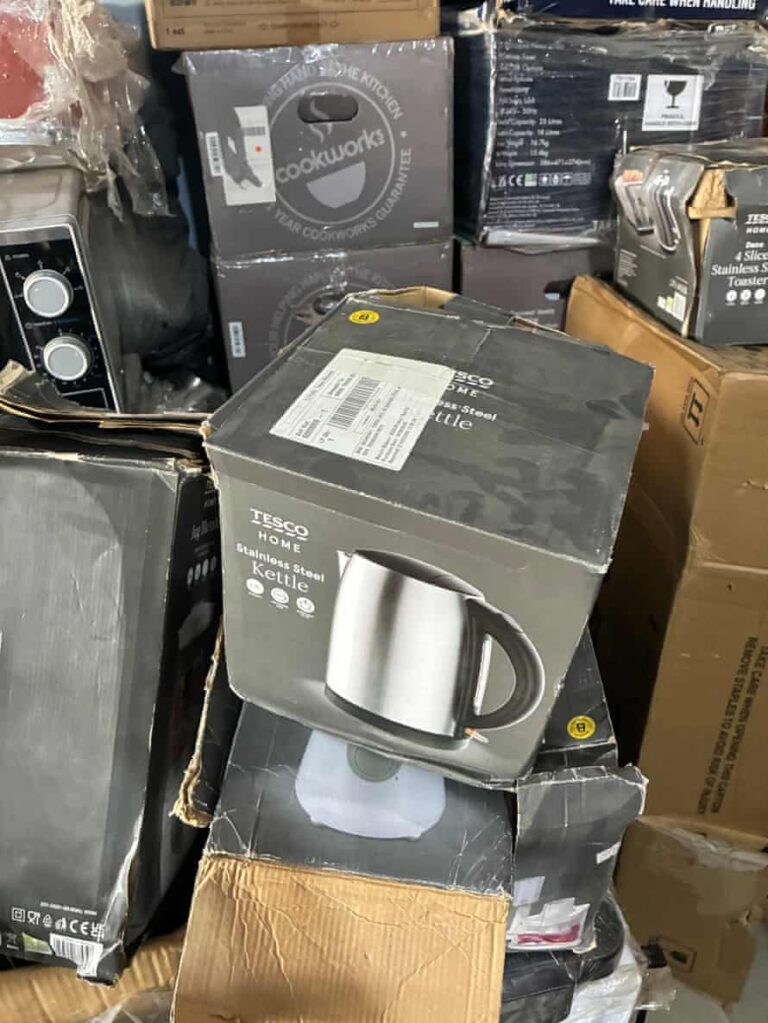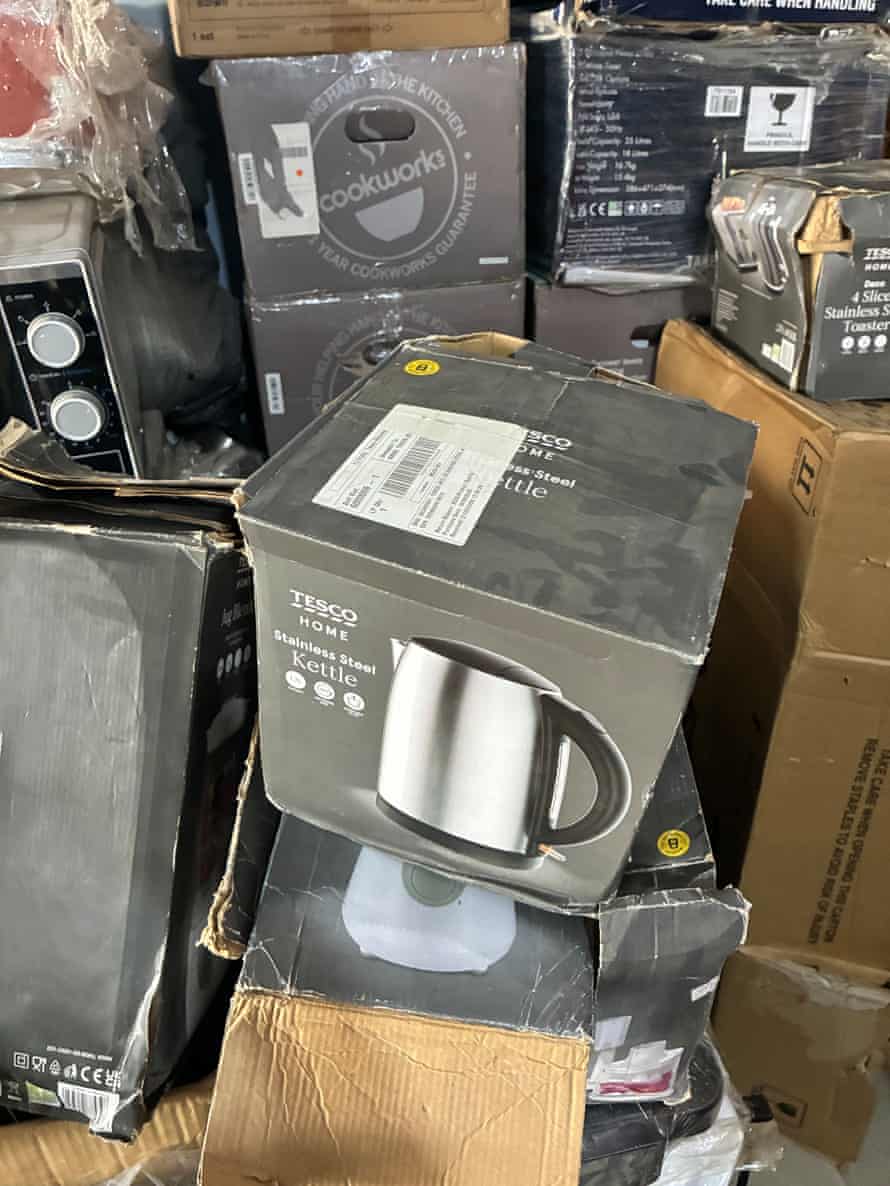
Faulty UK supermarket electrical goods returned to major British retailers, including Tesco, Argos and Asda, have been discovered at a notorious electronic waste dumping ground in Ghana, raising serious questions about the handling of returned products and the illegal export of hazardous waste.
An investigation by Unearthed and Greenpeace Africa found discarded household appliances bearing British retailers’ labels and customer-return stickers at Agbogbloshie, a major electronic waste site in Accra.
The products included kettles, toasters, slow cookers and food slicers that had been returned to British shops, with some apparently entering international trading channels before eventually reaching Ghana.
The discovery has raised concerns about the movement of unwanted electrical equipment from wealthy countries to developing nations, where workers frequently dismantle or burn discarded appliances without adequate protective equipment.
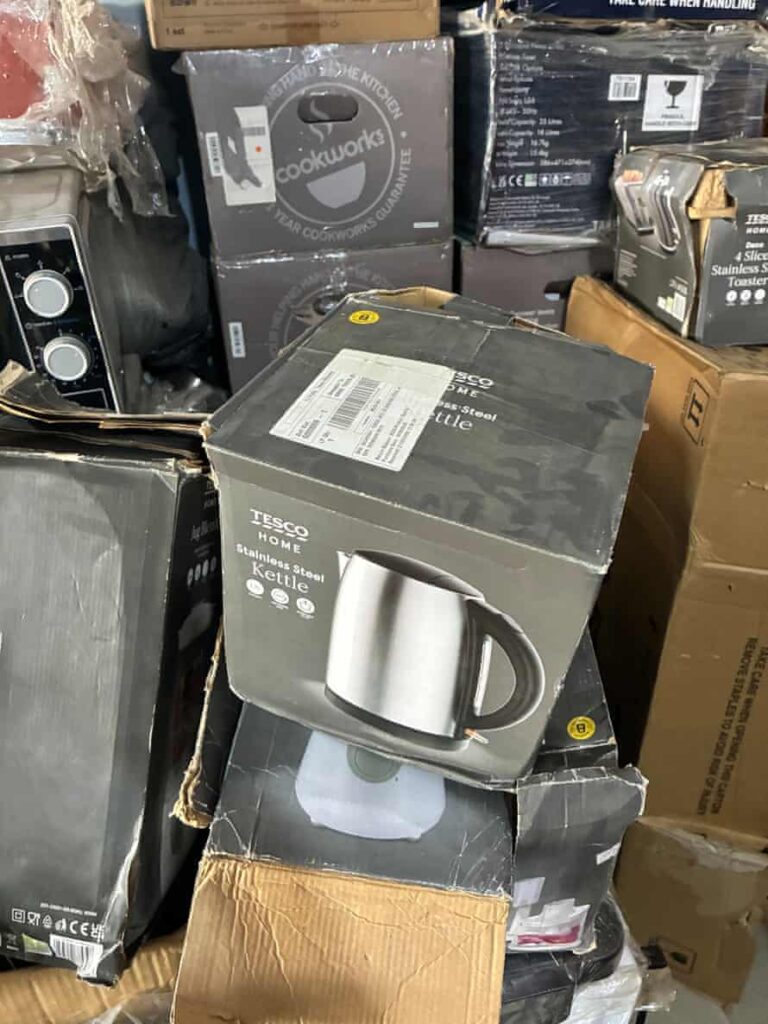
Faulty UK supermarket electrical goods discovered in Ghana
The investigation identified several products associated with leading British retailers among the appliances found at Agbogbloshie.
Tesco-branded kettles, slow cookers and toasters were discovered at the site, alongside Crockpot-branded slow cookers, including at least one carrying a Tesco label.
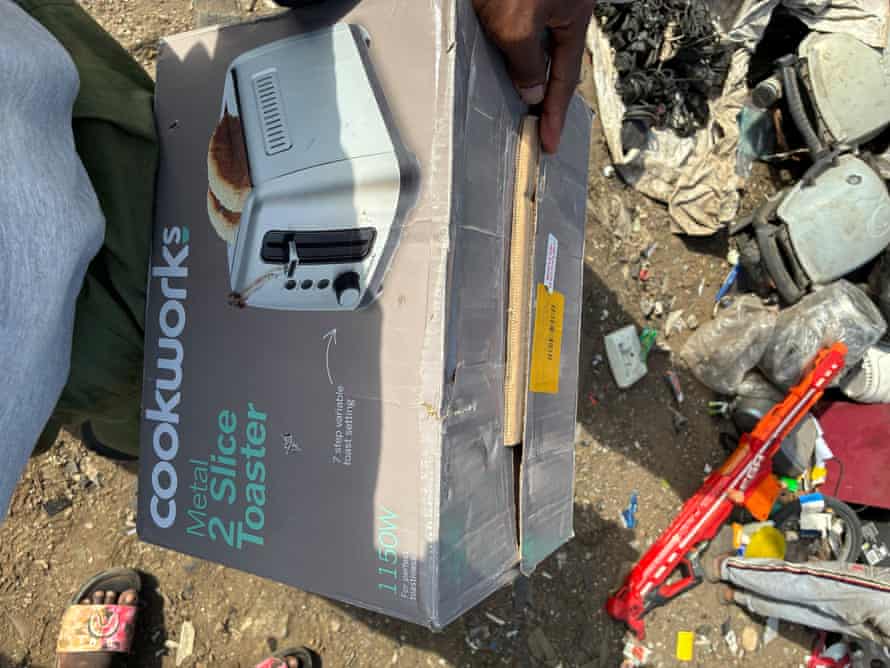
Investigators also found products from Argos, particularly its Cookworks range, including slow cookers, toasters and food slicers.
The presence of these products raises questions about how appliances returned to British retailers are classified, processed and eventually disposed of.
At Agbogbloshie, discarded household equipment is reportedly burned and dismantled by workers seeking to recover valuable materials.
The investigation alleged that many workers carry out these activities without basic protective equipment such as gloves and face masks, potentially exposing themselves to dangerous substances released during the processing of electronic waste.
Tesco suspends third-party waste providers
Tesco responded to the findings by immediately suspending its third-party electronic waste management providers while conducting a comprehensive audit of their operations.
The supermarket said it was extremely concerned about the allegations and remained committed to reducing waste across its business.
“We’re extremely concerned about these claims,” Tesco said.
The retailer added that it worked closely with experts to ensure materials were handled responsibly and in accordance with legal requirements and its own standards.
The suspension is intended to allow the company to examine the practices of the contractors responsible for managing its electronic waste and determine whether its requirements were properly followed.
Argos also announced an investigation into how its products ended up at the Ghanaian dumping ground.
The retailer said it had procedures for handling returned products and was reviewing the information supplied by investigators to establish what further action might be necessary.
“As a responsible retailer, we have processes in place for products returned to Argos. We take these findings seriously,” the company stated.
British returned appliances entering Ghana’s second-hand market
The investigation extended beyond the appliances found at Agbogbloshie, with dozens of other British electrical products bearing returns labels discovered in second-hand shops around the area.
Many of the items carried markings indicating that they had been returned by customers, including products identified as faulty.
Shopkeepers told investigators that they purchased the goods from brokers in Britain, who supplied mixed shipments containing different types of household electrical equipment.
One vendor explained that the proportion of unusable appliances varied between shipments but could sometimes reach approximately 10%.
The trader also described what happened to products that could not be sold or used.
“What do I do with the broken ones? I put them in this box and the Agbogbloshie boys come to collect it,” the vendor said.
The account illustrates how faulty appliances can move from commercial resale channels into informal waste collection systems.
Although some imported second-hand products may remain functional, appliances that cannot be repaired or safely reused require proper waste management.
Without appropriate arrangements, they can become part of the growing electronic waste problem facing communities in importing countries.
How returned products leave British retailers
Investigators traced a possible route through which faulty products returned to British supermarkets could eventually reach Ghana.
When customers return recently purchased appliances, including products that do not work, the goods may enter a separate commercial market known as the liquidation market.
Rather than automatically being classified as waste, some returned products are grouped with other consumer returns and sold in bulk.
E-waste expert Mark Sayers explained that a customer’s complaint about a faulty appliance does not necessarily mean the retailer has formally classified it as waste.
“Just because somebody in the supermarket says it’s not working, doesn’t always mean they’ve technically declared it as waste,” he said.
Investigators found that many of the products carried stickers describing them as “untested return”.
These goods can be sold through retailers’ stock liquidation channels, sometimes in large quantities at prices considerably lower than their original shop prices.
The bulk shipments are purchased by individuals and small businesses known as jobbers, who attempt to recover value from the products through different resale opportunities.
Some items are listed individually on online marketplaces such as eBay and Vinted, while others are sold through discount shops or exported to overseas markets.
However, when shipments contain appliances that are faulty or unsuitable for use, the distinction between legitimate second-hand trade and electronic waste exports becomes critical.
Campaigners warn about a regulatory loophole
Jim Puckett, founder of the Basel Action Network, an organisation campaigning against the export of toxic waste to poorer countries, criticised the practice of treating untested returned products as ordinary merchandise.
He described the situation as a major loophole that could allow waste to move through commercial channels without being properly identified.
“It should be considered waste until proven otherwise,” Puckett said.
He argued that the principle was particularly important when products were purchased at auctions or through bulk liquidation sales before being transported around the world.
The concern is that appliances classified as reusable without adequate checks could eventually become a disposal burden for countries that lack suitable facilities.
UK regulations restrict exports of broken electrical goods
British waste regulations generally prohibit the export of broken electrical goods to Africa, except under very limited circumstances that meet the applicable requirements.
Under the Waste Electrical and Electronic Equipment regulations, retailers must operate take-back arrangements for unwanted electrical products.
These schemes allow customers to return old appliances when purchasing replacements, ensuring that retailers take responsibility for directing unwanted equipment towards appropriate recycling and processing systems.
Products classified as electronic waste should be transferred to approved processors.
They can only be exported when the shipper demonstrates that the goods will be handled in suitable facilities that meet the required environmental standards.
According to the Environment Agency, no facilities in West Africa are approved to receive British WEEE waste.
An agency spokesperson described illegal waste exports as serious crimes and warned that waste leaving England must be sent for legitimate recovery or recycling.
The agency also explained that new controls require exports of waste electrical and electronic equipment to be notified and approved before leaving the country.
It said intelligence was being used to identify suspicious shipments, intervene earlier and disrupt the activities of those involved in illegal waste exports.
Anyone found breaking the law risks having shipments stopped, facing prosecution and receiving financial penalties.
Ghana raises concerns over environmental and health risks
The discovery has attracted criticism from environmental experts who argue that Ghanaian communities should not bear the consequences of Britain’s unwanted electrical products.
Ghanaian environmental consultant Joshua Awuku-Apaw said the country must not be treated as a destination for faulty appliances and failed retail returns from Britain.
He warned that exporting broken equipment under the description of reuse or second-hand trade transfers the financial, environmental and health costs of excessive consumption to communities and workers in Ghana.
“Ghana’s communities should not bear the health burden of UK retail waste,” he said.
His comments reflect concerns about the conditions under which electronic waste is dismantled and the potential consequences for people working and living around the dumping ground.
Greenpeace UK chief scientist Dr Doug Parr also condemned the findings, saying consumers would be appalled to discover that faulty returned products had ended up at a notorious waste site.
He argued that the appliances should have been repaired or recycled rather than transported to a location where toxic run-off could contaminate the surrounding environment.
“This isn’t the circular economy, but long-range fly-tipping, and it’s shameful,” Parr said.
The criticism highlights the difference between legitimate reuse, which extends the useful life of electrical products, and the export of broken appliances that ultimately require safe disposal.
Asda and British retailers’ trade body react
Asda referred questions about the investigation to the British Retail Consortium, which represents retailers across the United Kingdom.
The organisation described reports of faulty electrical products being dumped in Ghana as deeply concerning.
It maintained that used electronics should only be exported for legitimate reuse when they are safe and functional.
The consortium also called for greater investment in Britain’s recycling infrastructure so that more unwanted electrical products could be safely reused and processed within the country.
The investigation has placed renewed attention on the responsibilities of retailers, liquidation companies, exporters and waste management contractors throughout the supply chain.
Although Tesco has suspended its third-party waste management providers and Argos has begun investigating the appearance of its products in Ghana, questions remain about how the appliances passed through the different commercial channels.
The findings underline the need for stronger checks on returned electrical goods before they are resold or exported, particularly when their condition has not been established.
They also raise a wider environmental question about whether wealthy countries are adequately managing their electronic waste or transferring the consequences of poor disposal practices to communities elsewhere.
About The Author