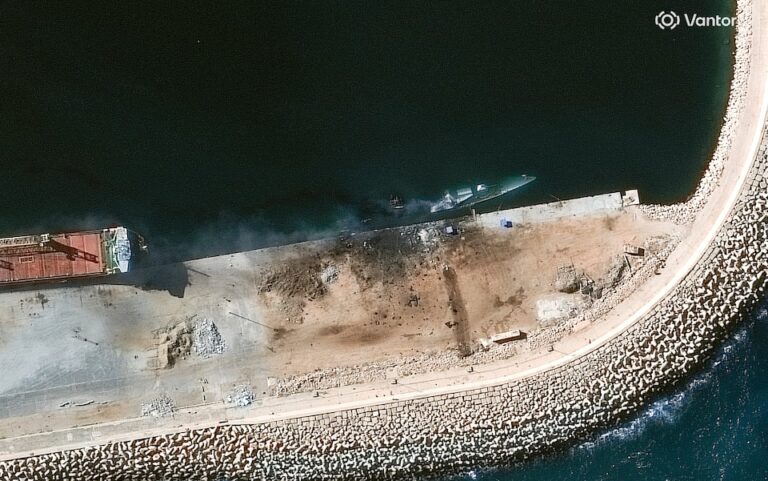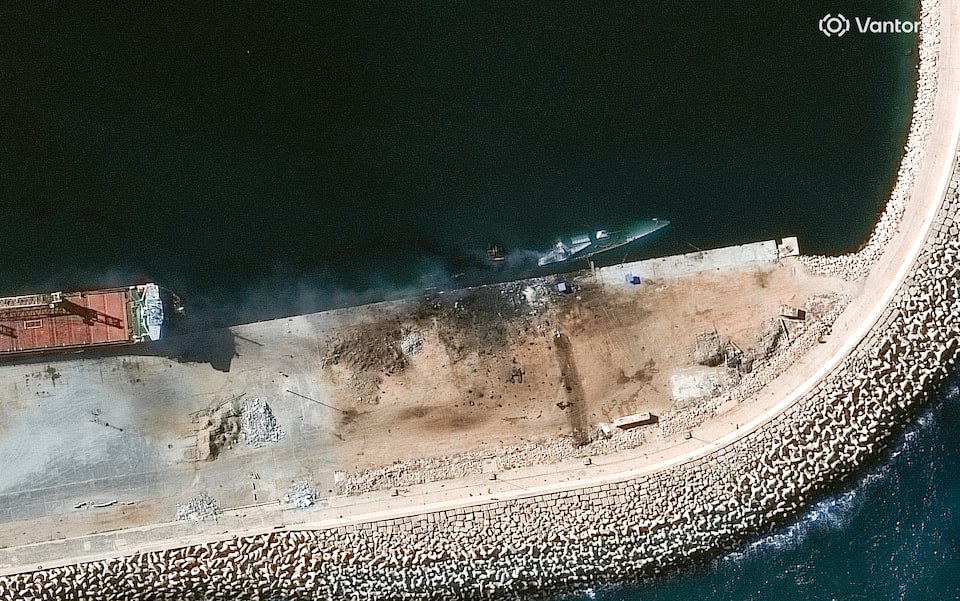
Ukraine sinks Russian warship in Libya using naval drones, President Volodymyr Zelenskyy said, marking Kyiv’s first official acknowledgement of military operations in the North African country as attacks on Russian vessels increasingly extend beyond European waters.
Zelenskyy said on Monday that Ukrainian forces deployed seven naval drones in Sunday’s operation against the Russian corvette docked at Benghazi naval base in eastern Libya.
The attack came a day after another drone strike targeted a Russian military-linked cargo ship in the Gulf of Finland, highlighting the expanding geographical scope of Ukraine’s operations against Moscow’s maritime assets.
According to Reuters, Zelenskyy also confirmed that Ukraine had attacked the Russian dry cargo ship MV Angara, which he said Moscow had used to transport weapons.
“Despite all the enemy’s attempts to counter the attack, the Russian corvette ‘Mercury’ was sunk,” Zelenskyy wrote in a post on Telegram.
He added that a Russian Ka-27 combat helicopter had also been destroyed during the operation, although Russia’s Defence Ministry had not immediately commented on the claims.
Ukraine confirms naval drone attack in Libya
The sinking of the Russian corvette represents a significant development in the conflict, with Kyiv officially acknowledging an operation carried out in Libyan waters for the first time.
Libya has remained divided since years of conflict, with eastern and western authorities operating separately and maintaining different international relationships.
The eastern part of the country is controlled by military commander Khalifa Haftar, whose Libyan National Army maintains ties with Russia.
Meanwhile, western Libya is governed by the internationally recognised Government of National Unity based in Tripoli.
The Russian corvette was reportedly docked at Benghazi naval base when the explosion occurred on Sunday, according to Libya’s eastern-based government.
The incident has raised questions about the security of Russian naval vessels operating in the region, particularly those visiting ports connected to Moscow’s military and logistical interests.
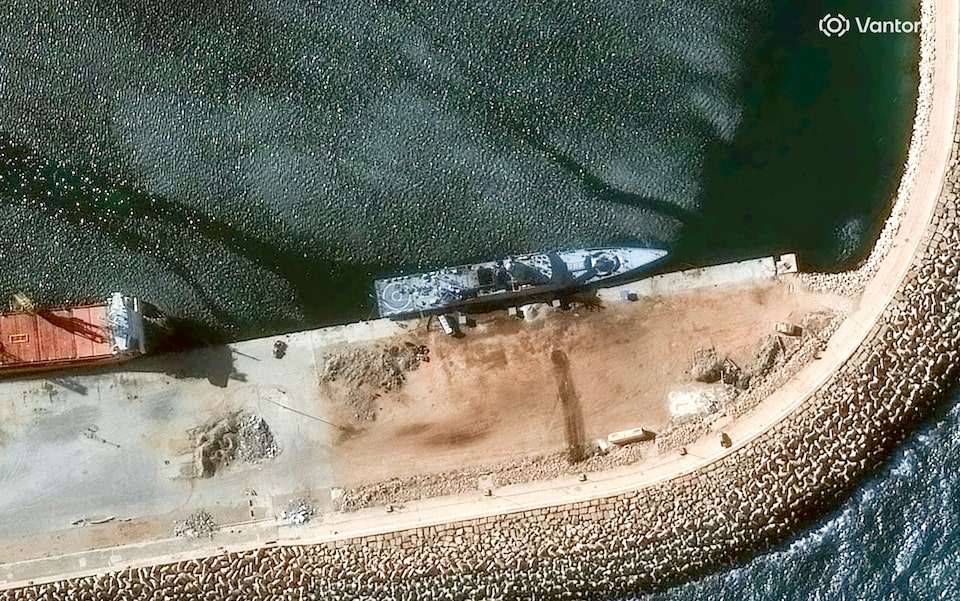
Russian naval presence in eastern Libya
The Institute for the Study of War said the Russian corvette had remained at the port for several days under a cooperation agreement.
The vessel reportedly stopped to refuel and resupply while escorting Russian cargo ships capable of carrying military supplies bound for Russia.
The arrangement underscores Russia’s military and logistical relationship with eastern Libya, where Haftar’s forces have maintained links with Moscow.
The attack could complicate Russian operations in the region, particularly if naval vessels and military supply routes become increasingly vulnerable to Ukrainian drone operations.
However, details surrounding the circumstances of the strike, the extent of the damage and the precise operational involvement of Ukrainian forces have not been independently established in the report.
Libya’s eastern government seeks UN investigation
Osama Hamad, prime minister of Libya’s eastern-based government, said he had requested a United Nations investigation into the incident.
He said the request was intended to examine suspicions that the boats used to launch the drones originated from western Libya and to verify reports about the presence of Ukrainian military experts in the area.
Hamad’s request could further expose the divisions between Libya’s rival authorities, particularly if the investigation examines alleged foreign military activity operating from territory controlled by the Tripoli government.
The western-based government had not immediately commented on the allegations.
The reported attack also brings renewed attention to previous incidents involving suspected Ukrainian drone operations in the Mediterranean region.
Previous suspected attack on Russian LNG vessel
Russia’s Transport Ministry said in March that Ukrainian naval drones launched from Libya had attacked the Arctic Metagaz, a vessel carrying liquefied natural gas from Murmansk.
Libya’s maritime agency subsequently reported that the ship had sunk between Libya and Malta after catching fire.
Ukraine did not claim responsibility for that incident, leaving the attack officially unconfirmed as a Ukrainian operation.
The latest strike on the Russian corvette, however, represents a different development because Zelenskyy publicly acknowledged Ukraine’s involvement.
Read also: Trump meme coin gala draws fewer investors as $TRUMP token crashes to record low
https://swiftreportnow.com/trump-meme-coin-gala-draws-fewer-investors/
The confirmation could provide a clearer indication of Kyiv’s willingness to target Russian military and logistical assets operating far from the main battlefield in Ukraine.
Russian cargo ship attacked in Gulf of Finland
The Libyan operation came shortly after another drone attack targeted a Russian cargo vessel in international waters in the Gulf of Finland.
The Sparta II, operated by Russian defence logistics company Oboronlogistika, caught fire on Saturday following the attack.
Finnish military officials said Ukraine was likely responsible for the strike, although Kyiv had not immediately commented on the incident.
All 16 crew members were evacuated onto a nearby Russian vessel, with one person reportedly sustaining minor injuries.
The damaged ship subsequently drifted into Finnish waters, prompting Russian, Estonian and Finnish vessels to assist in fighting the fire.
A Russian vessel began towing the Sparta II away on Sunday after the emergency response operations.
The incident highlighted the risks surrounding maritime shipping in the Baltic region, where Russian military-linked vessels and cargo operations have increasingly faced security concerns amid the ongoing war.
Kremlin warns of rising attacks in the Baltic Sea
Kremlin spokesman Dmitry Peskov responded to the incident by warning of what he described as a “dangerous trend of increasing terrorist activity” in the Baltic Sea.
He said Moscow hoped countries in the region would warn Kyiv against conducting such operations.
The comments reflected Russia’s concern about attacks targeting vessels connected to its military logistics operations, particularly as the conflict increasingly affects maritime routes outside Ukraine’s immediate territorial waters.
The Gulf of Finland attack also demonstrated how incidents involving Russian ships could draw multiple countries into emergency response operations, even when the vessels are operating in international waters.
Ukraine and Russia seek leverage beyond the battlefield
The latest attacks have occurred as US-backed negotiations between Russia and Ukraine resumed this month following a nine-month pause.
The talks are aimed at finding a possible settlement to Europe’s largest war since World War Two, but progress has remained limited.
Military operations against vessels, logistics networks and assets operating far from the frontline could form part of the wider pressure both sides are attempting to exert while diplomatic efforts continue.
Mykola Bielieskov of the National Institute for Strategic Studies in Kyiv said Ukraine was attempting to strengthen its position through what he described as “horizontal escalation”.
He explained that neither side had been able to force the other to accept settlement terms through battlefield operations alone, prompting both countries to explore additional ways of applying pressure.
“Since neither side is able to compel the other to accept terms of settlement through the battlefield only, both try to find new ways to pressure each other,” Bielieskov said.
His assessment points to the increasing importance of operations targeting military-linked shipping, supply networks and strategic assets beyond conventional frontline engagements.
Maritime attacks expand the geographical scope of the war
The Ukraine sinks Russian warship operation in Libya and the attack on the Sparta II in the Gulf of Finland illustrate how the conflict’s maritime dimension is increasingly extending across different regions.
While Ukraine has concentrated much of its military effort on Russian forces and infrastructure directly connected to the war, the latest incidents indicate growing attention to Russian vessels operating in strategically important waters.
The Libyan operation is particularly notable because it places a publicly acknowledged Ukrainian attack in North Africa, far from the main theatre of fighting in eastern Europe.
Russia’s connections with eastern Libya, alongside its maritime supply operations, could make the region increasingly important in the broader confrontation between Moscow and Kyiv.
Although the immediate military consequences of the attacks remain unclear, the incidents demonstrate how the war continues to evolve beyond traditional battlefields.
With negotiations underway but producing little progress so far, both sides appear to be maintaining military pressure while exploring additional ways to influence the conflict’s eventual outcome.
About The Author