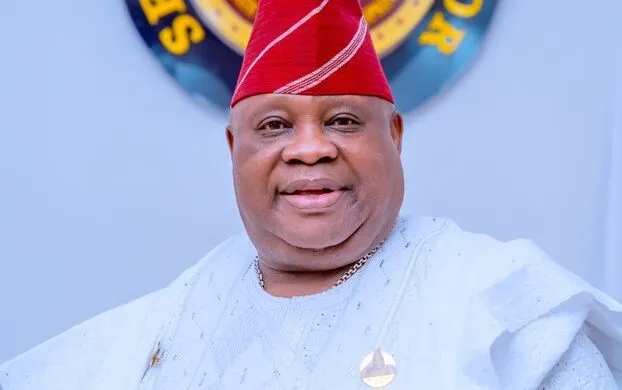
Osun State Governor, Ademola Adeleke
The implementation of a new transport and park administration policy in Osun State has triggered a legal dispute, with the leadership of the National Union of Road Transport Workers (NURTW) asking the judiciary to intervene in its disagreement with the state government.
The union has taken legal action against Governor Ademola Adeleke and other government officials, challenging the proposed changes to the management of motor parks and the legality of certain directives allegedly issued against its leadership.
Rather than allow the disagreement to develop into a confrontation within the state’s transport sector, the NURTW executives say they have chosen to pursue the matter through the courts, insisting that their grievances should be addressed within the framework of the law.
The case was instituted at the Ikire High Court through an originating summons numbered HRE/28/2026. Eight members of the union’s state executive committee, led by Kazeem Oyewale, are behind the legal action.
Apart from Adeleke, the defendants listed in the suit include the Osun State House of Assembly, the Attorney General of the state and the Commissioner for Transportation.
Barrister Idrees Mikaheel, who is representing the union executives, is challenging the legality of the actions and instructions allegedly directed at the organisation in connection with the proposed park management arrangement.
The legal confrontation comes weeks after the state government took steps towards introducing a new framework for regulating transportation activities and managing motor parks across Osun.
On October 5, 2026, the Osun State House of Assembly passed the Osun State Integrated Transport, Traffic and Park Management Bill, 2026, which received Governor Adeleke’s assent on the same day.
The legislation subsequently provided the basis for the government’s planned restructuring of the transport and park management system.
Following its enactment, the Ministry of Transportation reportedly began moves to implement the new arrangement with the assistance of security agencies.
However, the development has now become a subject of litigation, as the NURTW executives seek judicial clarification on the extent of the government’s authority and the legality of measures allegedly taken against the union.
One of the major concerns raised by the union is the possibility that actions taken during the implementation process could interfere with the rights and recognised responsibilities of its members.
In a move to prevent further complications, the union’s legal representative also notified senior security officials in the state and surrounding jurisdiction about the pending court proceedings.
The notices were reportedly forwarded to the Assistant Inspector-General of Police in charge of Zone XI, the Commissioner of Police in Osun, the Director of the Department of State Services (DSS) in the state and the State Commandant of the Nigeria Security and Civil Defence Corps (NSCDC).
The union wants the security authorities to take cognisance of the case and avoid actions that could affect the subject of the litigation before the court reaches a decision.
It has specifically appealed to the security formations to preserve the existing situation and refrain from enforcing any directives that could undermine its members’ rights or prevent them from carrying out their lawful union activities.
The NURTW leadership believes that allowing the judicial process to proceed without interference would help prevent unnecessary tension between transport workers and government authorities.
The organisation also expressed displeasure over what it described as attempts to portray some of its executive members as criminals because of their positions within the union.
According to the position conveyed by its leadership, disagreements involving the organisation and government authorities should not be used as grounds to stigmatise its officials or undermine their legitimate responsibilities.
It maintained that the appropriate way to resolve the dispute was through established legal institutions rather than actions capable of creating hostility within the transport community.
To support its demand for restraint, the union’s counsel reportedly cited the legal principle of status quo ante bellum, which is associated with restoring or preserving an earlier position before a disputed development.
Mikaheel also referred to the Supreme Court’s decision in the landmark case of Military Administrator of Lagos State v. Ojukwu (1986).
The judgment is an important authority on the rule of law and the principle that government institutions and individuals must respect judicial processes instead of resorting to self-help.
By invoking the decision, the union is emphasising the importance of allowing the court to determine the issues before any action capable of affecting the parties’ interests is taken.
Oyewale explained that the decision to seek judicial intervention was deliberate, stressing that the union preferred a constitutional approach to resolving the disagreement rather than engaging in physical confrontation or other actions that could threaten public order.
He said the priority was to protect the interests of NURTW members while ensuring that activities within motor parks and garages across the state continued without unnecessary disruption.
The union further called on its members, commercial drivers, transport operators, passengers and other stakeholders to remain calm as the legal process continues.
It urged its members not to take the law into their hands or engage in activities that could worsen the situation, adding that the court should be allowed to examine the issues and deliver its decision.
The dispute comes at a time when the Osun government is seeking to establish a new framework for transportation regulation and park administration, making the court case an important development in the implementation of the legislation.
While the state government’s position on the specific allegations remains to be established in the proceedings, the NURTW executives are asking that their concerns be addressed through due process.
The outcome of the case could provide further clarity on the competing positions surrounding the new park management arrangement and the rights of stakeholders operating within Osun’s transport industry.
For the union, the immediate priority is to prevent the disagreement from spreading into motor parks and garages, insisting that the matter should be settled through judicial intervention rather than confrontation.
About The Author