At least 12 people have been killed in the Houthi attack on Riyadh airport, with more than 300 others injured, in the deadliest assault on Saudi Arabia in more than a decade, as US President Donald Trump considers joining Saudi military operations against the Iran-backed Yemeni group.
The attack on King Khalid International Airport on Saturday, October 10, was the third strike against the facility within a week. Saudi authorities reported 309 injuries, with several victims in critical condition after emergency services transported casualties to hospitals by ambulance and helicopter.
The assault has intensified security concerns across the kingdom, disrupted international air travel and raised fears of a wider regional conflict linked to the war involving Iran, the United States and Israel.
Trump said Washington was considering whether to participate directly in Saudi strikes against the Houthis, signalling the possibility of further American involvement in a conflict that has increasingly threatened regional stability.
Houthi Attack on Riyadh Airport Leaves 12 Dead
The deadly assault on King Khalid International Airport represents a major escalation in the Houthis’ campaign against Saudi Arabia, which has intensified since the summer.
According to Saudi civil aviation authorities, the victims included four Saudi nationals, two Bangladeshi nationals and one person each from the United States, Jordan, Palestine, Syria, Sudan and Egypt.
Officials reported that 309 people had been injured by the latest count, making the attack one of the most serious security incidents to affect the kingdom in more than a decade.
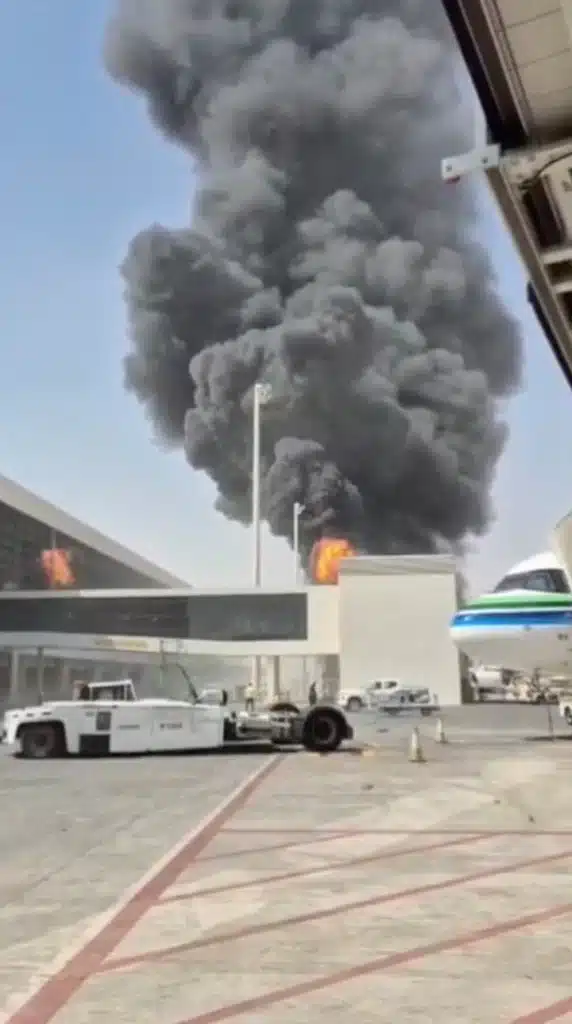
Hospitals were overwhelmed as ambulances and helicopters transported injured travellers and other victims for emergency treatment. Some of those admitted were reportedly in critical condition.
The attack occurred without warning, adding to the shock experienced by passengers, airport workers and others inside the facility.
Saudi Airport Attack Exposes Security Vulnerabilities
The latest strike has raised questions about Saudi Arabia’s ability to protect critical civilian infrastructure from repeated attacks.
The two previous assaults on King Khalid International Airport earlier in the week killed four people and caused significant damage to a Saudi commercial aircraft parked on the tarmac.
The successive attacks have exposed vulnerabilities in the kingdom’s air defences as Saudi forces continue their military campaign against the Houthis.
Saudi Arabia has been supporting a ground offensive by the internationally recognised Yemeni government against the Iran-backed group, which controls substantial territory in Yemen.
The repeated targeting of a major international airport demonstrates the potential consequences of the conflict for civilian travel, commercial activity and regional security.
Although the Houthis have not claimed responsibility for Saturday’s attack, the Saudi-led military coalition has vowed to respond.
Trump Considers Joining Saudi Strikes Against Houthis
US President Donald Trump has indicated that the United States could join Saudi Arabia’s military operations against the Houthis following the latest airport attack.
Asked whether Washington intended to participate in strikes against the group, Trump said the administration was considering its options.
“We may. We’re going to look at it. We just found out about the recent attack, so we’ll make a decision. We move very quickly,” Trump told reporters.
The statement leaves open the possibility of direct American military involvement, although Trump did not confirm that a decision to launch US strikes had been made.
Washington’s response could have significant implications for the conflict, particularly if American forces join Saudi operations against Houthi-controlled territory.
The Houthis’ campaign has also become part of the broader regional confrontation associated with the war involving Iran, the United States and Israel, which began in February, according to the report.
US and UN Condemn Attacks on Civilian Infrastructure
US Secretary of State Marco Rubio condemned the attacks on Riyadh’s airport, emphasising the danger posed to civilians.
Rubio said the assaults “demonstrate a blatant disregard for innocent civilian life”.
United Nations Secretary-General Antonio Guterres also condemned Saturday’s strike and called for attacks against civilians and civilian infrastructure to stop immediately.
Guterres reiterated that such attacks violate international law and must cease.
The condemnation from Washington and the United Nations highlights growing international concern about the repeated targeting of civilian facilities during the escalating conflict.
An international airport serves not only passengers but also commercial operations, diplomatic travel and emergency transportation. Disruptions can therefore have consequences extending well beyond the immediate casualties.
The attack has also placed pressure on regional governments to strengthen protective measures while considering how to prevent further escalation.
Riyadh Airport Closes as Flights Are Cancelled and Diverted
Saudi authorities suspended operations at King Khalid International Airport on Saturday and diverted all flights following the attack.
The airport serves Riyadh, a city of approximately eight million people, and is an important gateway for international travellers, business visitors and residents.
The suspension disrupted air travel as authorities responded to the emergency and assessed the security situation.
The Houthi media office also issued statements asserting that the group had shut down Riyadh’s international airport.
A Houthi representative posted on X that the airport had been closed, while the group warned international airlines against operating flights through Saudi airspace.
Houthis Declare Saudi Airspace a Military Operations Zone
The Houthis have warned international carriers to avoid Saudi airspace, describing it as a theatre of military operations.
The group has identified the airspace above the holy cities of Mecca and Medina as exceptions to its warning.
The declarations have created additional uncertainty for airlines assessing whether flights to or through Saudi Arabia can operate safely.
The United States embassy in Riyadh issued a security warning to American citizens following the latest attack.
It said it “strongly recommends all US citizens avoid this airport and surrounding areas.”
The warning reflects concerns about further attacks and the risks associated with travelling near the affected facility.
Earlier Houthi assaults had already prompted several airlines to suspend or cancel services to the Saudi capital.
The latest disruption could deepen the impact on tourism, business travel and international events scheduled to take place in Riyadh.
Eyewitnesses Describe Explosion and Injured Travellers
People at the airport reported scenes of confusion and emergency activity following the attack.
An eyewitness said they saw an explosion before noticing several injured people lying on the ground inside the facility.
More than a dozen ambulances were reportedly seen rushing towards the airport as emergency responders worked to assist casualties.
A video verified by Reuters showed ambulances at the facility following the attack.
An injured traveller also described seeing an object fly across the sky outside the airport before part of the ceiling near a departure gate collapsed.
The accounts illustrate the disruption experienced inside the airport as passengers and workers faced an unexpected emergency.
Authorities have not publicly established all the circumstances surrounding the latest strike in the report, and the Houthis had not claimed responsibility for Saturday’s attack at the time of publication.
The Saudi-led coalition’s promise of retaliation raises the possibility of further military action as investigations and emergency operations continue.
Yemen Conflict Escalates After Ceasefire Breaks Down
The attacks on Riyadh airport come amid renewed fighting in Yemen following the collapse of a ceasefire agreed between Saudi Arabia and the Houthis in 2022.
Saudi Arabia entered the Yemen war in 2015 at the head of an Arab coalition seeking to drive the Houthis out of the capital, Sanaa.
The conflict developed into a prolonged and devastating stalemate, with fighting and famine contributing to the deaths of hundreds of thousands of Yemenis.
The ceasefire reached in 2022 reduced hostilities for a period, but the arrangement unravelled during the summer of 2026.
The breakdown was followed by a rapid Houthi advance that wrested control of the strategic Bab el-Mandeb Strait from Saudi-backed Yemeni government forces, according to the report.
Government Offensive Seeks to Retake Strategic Territory
The Saudi-backed Yemeni government launched an offensive this week in an attempt to recover territory seized by the Houthis.
However, the government forces have made only slow progress, while the Houthis have placed Taiz, Yemen’s third-largest city, under siege.
The fighting has intensified pressure on the Yemeni government and its regional supporters, while increasing the risks of further cross-border attacks.
The latest assault on Riyadh’s airport illustrates how the conflict is affecting infrastructure outside Yemen and raising the stakes for Saudi Arabia.
Saudi Arabia’s military response could further widen the confrontation, particularly if the United States decides to join its operations against the Houthis.
The possibility of American intervention adds another dimension to the conflict, which is already connected to broader tensions involving Iran and other regional and international powers.
Saudi Arabia Vows Response as Regional Tensions Rise
The Saudi-led military coalition has vowed to respond to the attacks on Riyadh airport, although the report did not specify the timing or scope of any retaliatory operation.
Saudi Arabia and the Yemeni government have reported carrying out hundreds of strikes against targets in Houthi-controlled territory.
The Houthis have said those operations killed civilians, including women and children. Reuters said it could not independently verify those claims.
The competing accounts highlight the difficulties of establishing the full impact of military operations in an active conflict.
The latest airport attack is likely to intensify debate over the effectiveness of Saudi air defences and the risks associated with continuing military operations in Yemen.
It also raises concerns about the security of international air routes as the Houthis warn carriers against using Saudi airspace.
Riyadh Energy and Investment Conferences Face Security Concerns
The attack has also raised concerns about major international events scheduled to take place in Riyadh.
The Saudi capital is due to host significant energy and investment conferences, bringing together international business leaders, investors and other participants.
Organisers had said before Saturday’s latest strike that the conferences would proceed as planned despite the earlier deadly attacks on the airport.
However, flight cancellations, airport closures and security warnings could complicate travel arrangements for attendees.
The conferences are significant to Saudi Arabia’s efforts to attract international investment and strengthen its position as a regional business hub.
Any prolonged disruption to airport operations could affect the movement of delegates and increase concerns among international companies considering travel to the kingdom.
The immediate priority remains responding to the casualties, restoring safe airport operations and assessing the threat of further attacks.