NAFDAC uncovers alleged Chinese syndicates producing and distributing fake products in Nigeria as agency intensifies raids, seizures and prosecutions nationwide.
The National Agency for Food and Drug Administration and Control (NAFDAC) has uncovered what it described as a changing pattern in the production and distribution of counterfeit and potentially harmful consumer goods across Nigeria.
The regulatory agency said some Chinese nationals allegedly involved in counterfeiting are no longer relying solely on products manufactured overseas and shipped into Nigeria.
Instead, investigations have revealed that some operators are establishing production facilities, storage points and distribution networks within the country.
NAFDAC Director of Investigation and Enforcement, Martins Iluyomade, disclosed the development while speaking on the agency’s ongoing crackdown on fake, adulterated and unregistered products.
According to him, the nature of counterfeit trade has evolved considerably. He explained that counterfeiters previously operated largely from outside Nigeria, producing fake versions of popular products abroad before arranging for them to be imported into the country.
The situation, he said, has now become more complicated because some of those allegedly involved have established a presence within Nigeria.
Iluyomade explained that counterfeiters often monitor products that are already popular among Nigerian consumers.
Samples of such products are allegedly obtained and sent to China, where replicas can be developed. The resulting counterfeit goods are then brought into the Nigerian market through distribution and logistics channels allegedly controlled by the same network.
He said this development had made the fight against counterfeit products more challenging for regulators and enforcement agencies.
“Before, to fake a product, you needed to go to China to bring it. Now, they are here with us. They identify moving products, send samples to China, and distribute them locally through logistics companies they own,” Iluyomade stated.
The NAFDAC official added that the agency had started taking action against logistics facilities allegedly being used to support the distribution of counterfeit goods.
He said enforcement teams were systematically closing down illegal logistics operations linked to foreign nationals suspected of participating in the network.
The development comes at a time when concerns over the circulation of unsafe consumer products have continued to generate public attention across Nigeria.
Several categories of everyday goods have been affected by counterfeiting and adulteration, including oral care products, cosmetics, beverages, bottled water and dairy products.
NAFDAC has repeatedly warned that consumers who purchase such products without verifying their authenticity could be exposed to serious health risks.
Adulterated toothpaste, for instance, may contain ingredients that do not meet the required safety standards, while contaminated water and beverages could expose consumers to harmful substances or microorganisms.
The agency has also raised concerns about counterfeit cosmetics and other personal-care products, which may contain inappropriate or undeclared ingredients.
The problem is not limited to the manufacture of fake products. According to NAFDAC, the networks involved often depend on sophisticated supply and logistics arrangements to move the goods from production locations into different markets.
This has made enforcement increasingly dependent on intelligence gathering, surveillance, coordinated raids and cooperation between regulatory and security authorities.
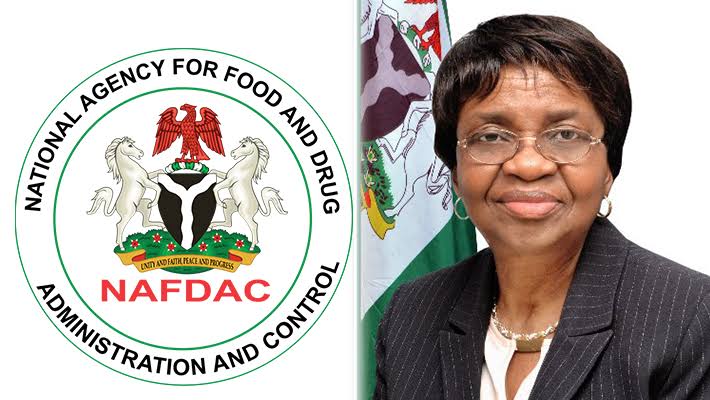
Providing an update on the scale of the agency’s enforcement campaign, NAFDAC Director-General, Prof. Mojisola Adeyeye, disclosed that products worth more than ₦1.5 trillion had been confiscated and destroyed during coordinated operations.
The enforcement exercises were carried out in Lagos and parts of the South-East as the agency intensified its efforts to remove substandard and unapproved regulated products from circulation.
The destruction of seized products is intended to prevent such goods from finding their way back into the market after enforcement operations.
NAFDAC also disclosed that its intensified activities between June 2025 and June 2026 resulted in 64 convictions involving individuals prosecuted for offences connected with counterfeit and substandard regulated products.
The agency described the number as the highest level of convictions recorded in its history, reflecting what it said was a stronger push to ensure that offenders face legal consequences.
One of the cases highlighted by NAFDAC involved an operator of an illegal beverage laboratory who was sentenced to five years in prison in December.
The conviction followed enforcement action against the facility, which was allegedly operating outside the required regulatory framework for the production of beverages.
NAFDAC’s strategy has increasingly involved taking enforcement beyond the seizure of products.
The agency has also been pursuing suspected manufacturers, importers, distributors and other individuals believed to be involved in the counterfeit supply chain.
Several suspects arrested in different parts of the country are currently facing legal proceedings.
NAFDAC confirmed that federal court cases are ongoing against individuals arrested in Kano, Sokoto, Delta and Anambra states over allegations involving the importation and distribution of counterfeit oral-care products.
The cases demonstrate the geographical spread of the challenge, with counterfeit products moving across state boundaries through established commercial and transportation networks.
For NAFDAC, disrupting these networks is considered essential to preventing counterfeit goods from reaching consumers.
The agency’s latest findings also point to the growing importance of local intelligence in combating counterfeit trade.
Rather than concentrating enforcement solely on ports and borders, regulators are increasingly targeting warehouses, production sites, logistics companies and distribution channels within the country.
The agency has therefore continued to urge manufacturers and distributors to comply with regulatory requirements and for members of the public to exercise caution when purchasing regulated products.
Consumers are particularly encouraged to pay attention to product packaging, registration information, expiry dates and other identifying details when purchasing medicines, food, beverages, cosmetics and other regulated items.
The increasing sophistication of counterfeit operations means that consumers may not always be able to identify fake products simply by examining their appearance.
NAFDAC’s enforcement campaign is consequently focused on disrupting the entire chain—from production and importation to storage and distribution.
The agency’s disclosure of the alleged involvement of Chinese syndicates adds another dimension to Nigeria’s long-running battle against counterfeit products.
However, the enforcement drive also underscores the need for stronger collaboration among regulators, security agencies, manufacturers, distributors and consumers.
With dozens of convictions recorded during the period under review and billions of naira worth of suspected substandard products removed from circulation, NAFDAC says it will continue to intensify efforts against those who place consumers at risk for financial gain.
The agency’s latest operations suggest that the battle against fake products is no longer simply about stopping counterfeit goods at Nigeria’s borders.
Authorities are increasingly focusing on the domestic networks that allegedly manufacture, warehouse and distribute such products after they enter the Nigerian market.