The Iran war backlash confronting President Donald Trump’s administration intensified on Tuesday as Defence Secretary Pete Hegseth dismissed an impeachment campaign against him, while growing public opposition to the conflict placed additional pressure on the White House.
Hegseth used his first Pentagon press briefing since May to attack Republican congressman Thomas Massie, who introduced eight articles of impeachment against the defence secretary over the military campaign in Iran and alleged abuses of executive power.
Describing the move as politically motivated, Hegseth accused Massie of attempting to damage the administration during his final days in Congress, following the Kentucky lawmaker’s defeat in a Republican primary against a candidate supported by Trump.
“What one disgruntled and defeated congressman is attempting is not oversight, and it’s not accountability,” Hegseth said.
“It’s a political spectacle, a personal manifesto driven by ego and resentment. Time for one man’s final days in Congress to try to do damage to this president, this country, and most irresponsibly, the warriors who defend it.”
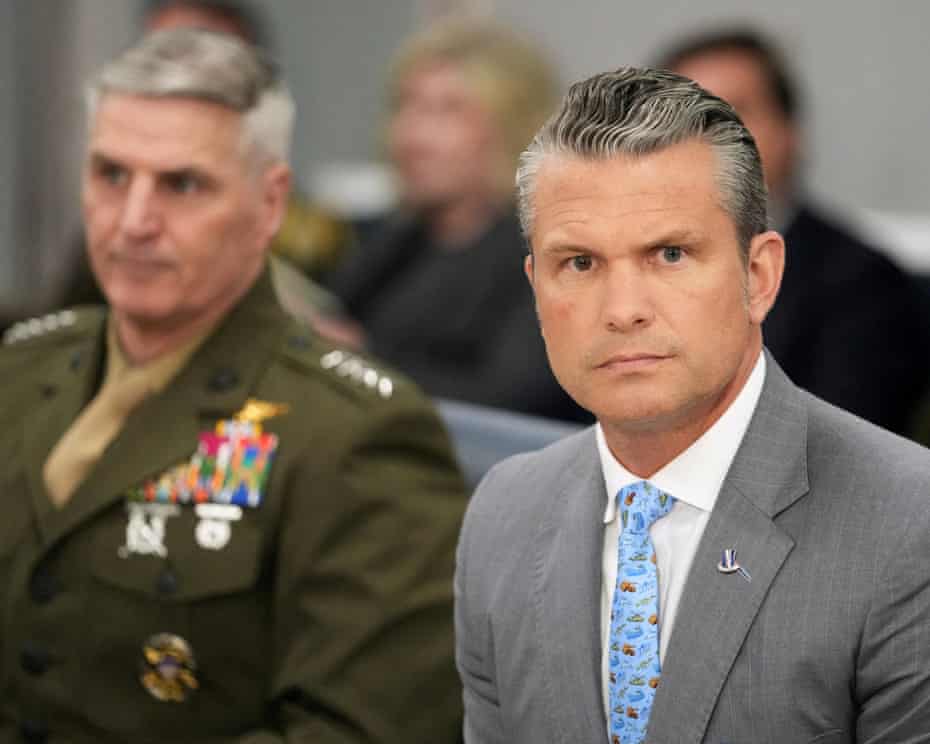
The defence secretary maintained that Massie’s actions represented an attempt to undermine national security decisions rather than provide legitimate congressional oversight.
Hegseth accuses Massie of sabotaging military operations
Hegseth described the impeachment campaign as an act of sabotage, arguing that it could weaken the confidence of American military personnel and interfere with decisions made by the country’s elected leadership.
“It tells them that a single rogue legislator, loaded with personal animus for the president, can attempt to veto national security decisions made by the duly elected commander-in-chief. It puts a target on the backs of American warriors by signaling that Congress will undermine their missions in real time,” Hegseth said.
He also defended Trump’s leadership and compared the effort to remove him from office with the two impeachment proceedings previously faced by the president during his first administration.
“We’ve seen this show before. They impeached President Trump over a perfect phone call. They impeached him again in his final week in office. Both times they failed,” Hegseth said.
He added: “Now they’re trying a third time. This time against a member of his cabinet. They will fail again. And if standing with President Trump puts me in that company, I’ll take that company every day of the week.”
Hegseth further noted that the last US defence secretary to face impeachment was William Belknap, who served under President Ulysses S Grant. Belknap was impeached in 1876 but was eventually acquitted by the Senate.
Massie’s allegations centre on the Iran conflict
Massie’s eight articles accuse Hegseth of illegally conducting military operations without congressional authorisation and abusing the authority attached to his position as head of the Pentagon.
Several allegations concern the War Powers Resolution, which requires consultation with Congress and provides legislative oversight of US military interventions.
The Republican congressman has particularly criticised the administration’s handling of the conflict, accusing Hegseth of deploying American troops to pursue commercial interests rather than legitimate national security objectives.
Speaking to reporters on Monday, Massie accused the defence secretary of using “our troops to go seize oil for large corporations in America”.
He also challenged the administration’s refusal to acknowledge responsibility for the bombing of a school in Iran, arguing that the available evidence pointed towards American involvement.
“I mean, obviously we hit it, and you can determine what kind of missiles from the range and the kind of destruction there was. I don’t think they’re going to get out of that article of impeachment by saying, ‘oh, we don’t know who bombed that school’ – although I think the president tried that for a day or two,” Massie said.
Massie’s campaign has placed the Pentagon chief under increased political scrutiny, particularly as the administration faces questions about the duration, objectives and consequences of the military operation.
Trump stands firmly behind his defence secretary
Trump has rejected the impeachment campaign and publicly defended Hegseth, praising his performance while attacking Massie.
During a White House press conference attended by UFC chief executive Dana White, the president said his defence secretary “won two wars”.
Trump also described Massie as “a stone cold loser” and “sick”, reinforcing the administration’s position that the impeachment initiative was politically motivated.
The president’s support has become important to Hegseth as he faces criticism over the Iran campaign and the growing dispute with members of Congress.
However, the administration’s defence of the military operation is unfolding against a difficult political background following the Republican Party’s heavy losses in the November midterm elections.
Trump and Vice-President JD Vance have both faced questions about the war’s contribution to the electoral setback, while Hegseth has insisted that he remains proud of the president’s decisions and the military’s performance.
Trump says Iran war could end soon
Despite the mounting political controversy, Trump has suggested that the military conflict with Iran could conclude in the near future.
During a White House press conference, the president said the war was “effectively over” and indicated that the United States did not need to escalate its campaign against Tehran after the midterm elections.
He also maintained that Israel and American allies in the Gulf region were adequately protected against Iranian threats.
The comments came as the US military confirmed that it was taking additional security precautions following the withdrawal of at least 12 aircraft from RAF Mildenhall in eastern England.
The aircraft, including refuelling tankers, were reportedly moved from the British airbase on Monday after an Iranian threat.
The Wall Street Journal reported that American officials were still discussing the precise nature of the threat. The US military’s European Command declined to provide details of specific force-protection arrangements.
“In close partnership with our host nation allies, both RAF Mildenhall and RAF Lakenheath remain vigilant,” a spokesperson said.
The development has raised further questions about security arrangements surrounding American military facilities in Europe as the conflict continues.
Americans demand congressional action to end war
The Iran war backlash is also reflected in public opinion, with a new Reuters/Ipsos poll showing that a substantial majority of Americans want Congress to pass legislation ending the conflict.
The four-day survey, completed on Monday, found that 71 per cent of respondents supported congressional action to terminate the war launched by the United States and Israel in February.
Support for ending the conflict crossed party lines, although the figures revealed a significant difference between Democratic and Republican voters.
Among Democrats, 93 per cent supported legislation to end the war, compared with 51 per cent of Republicans.
The findings suggest that opposition to the military campaign extends beyond the president’s political opponents, creating an additional challenge for the administration.
Democrats recorded their largest majorities in both chambers of Congress since at least 2008 in last week’s elections. They are expected to assume control when the new Congress is sworn in on 3 January.
The poll also identified pressure on Trump to address the cost of living and reverse tariffs introduced by his administration.
Republicans confront the scale of their election defeat
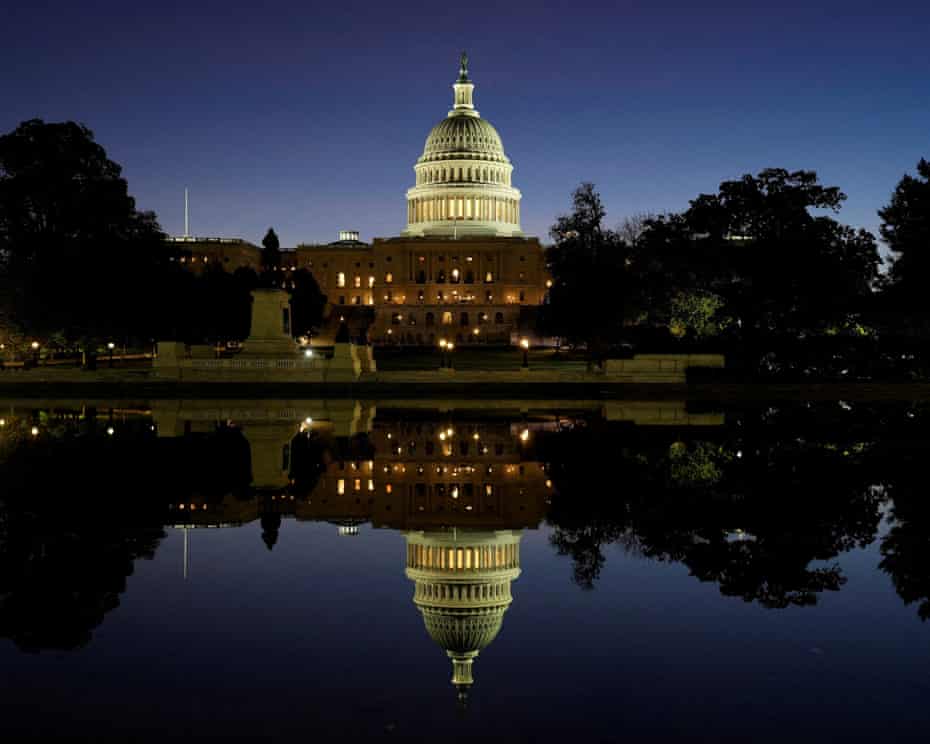
Republican lawmakers returned to the Capitol facing questions about the party’s poor performance in the midterm elections, with some acknowledging that the result reflected widespread dissatisfaction among voters.
West Virginia senator Jim Justice said he had repeatedly warned colleagues about the possibility of a major defeat.
“I told you exactly what was going to happen. Over and over and over, I told you,” Justice said.
He continued: “I said really and truly, if you weren’t concerned and you were a Republican, you were living in a cave. That was my exact words.”
Ohio congressman Warren Davidson, however, said the scale of the losses had surprised many within the party.
“No one anticipated the magnitude,” Davidson said.
Utah senator John Curtis also acknowledged the depth of public frustration with Republican leadership.
“People are mad, and they have a right to be mad. They’re disappointed, and they feel like we haven’t delivered, and we deserve exactly what we got,” Curtis said.
The results reflected wider political difficulties for Republicans, including declining approval ratings for Trump and growing Democratic strength in special and off-year elections.
Senate advances controversial infrastructure legislation
Meanwhile, the Senate has advanced bipartisan legislation designed to accelerate approval processes for major infrastructure developments, including data centres, energy projects, pipelines and electricity transmission lines.
The Bipartisan American Affordability and Jobs Act advanced after senators voted 73-25 in favour of a procedural motion allowing debate to proceed.
The vote did not amount to final passage of the legislation but moved the 417-page proposal further through the Senate process.
The bill has attracted criticism from environmental and tribal advocates who believe its provisions could weaken important protections in exchange for faster construction approvals.
Earthjustice, the Sierra Club and the American Civil Liberties Union have opposed the measure, arguing that it would significantly weaken the National Environmental Policy Act and make it easier to approve projects, including gas pipelines and immigration detention facilities.
The legislation is sponsored by two Republicans and two Democrats, while Trump has urged senators to support it.
Its progress has exposed disagreements among Democrats following their election victories, particularly over whether accelerating infrastructure development should come at the expense of existing environmental safeguards.
Trump faces further controversy over immigration and election claims
Trump has also faced questions over his immigration policy after appearing to soften his position during a 60 Minutes interview broadcast on Sunday.
In that interview, he described his deportation policy as “too tough” and indicated a willingness to pursue an immigration agreement with Democrats.
However, he subsequently insisted that his administration’s approach remained “very strong”.
“Somebody suggested, will there be amnesty? No, but— they came in. They knew the law,” Trump told reporters.
He also said he had not discussed possible policy changes with incoming chief of staff Stephen Miller.
Separately, the president has begun questioning the integrity of the midterm elections despite initially saying he would accept the results.
In a post on Truth Social, Trump wrote: “Does anybody really believe that this ‘Election’ was honest”.
Read also: Auckland bee swarms surge after unusually mild New Zealand winter
https://swiftreportnow.com/auckland-bee-swarms-surge-after-unusualy-new/
Democratic Senate leader Chuck Schumer responded by describing the president’s return to election denialism as inevitable.
The developments underline the political challenges facing the administration as it confronts opposition over the Iran conflict, congressional investigations and the consequences of the midterm elections.
About The Author