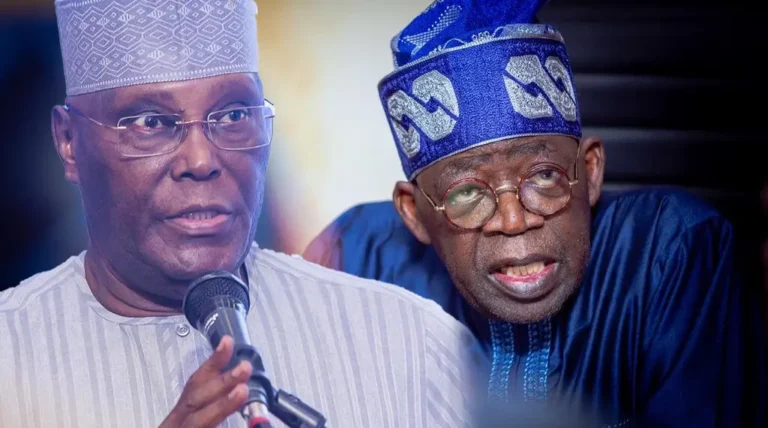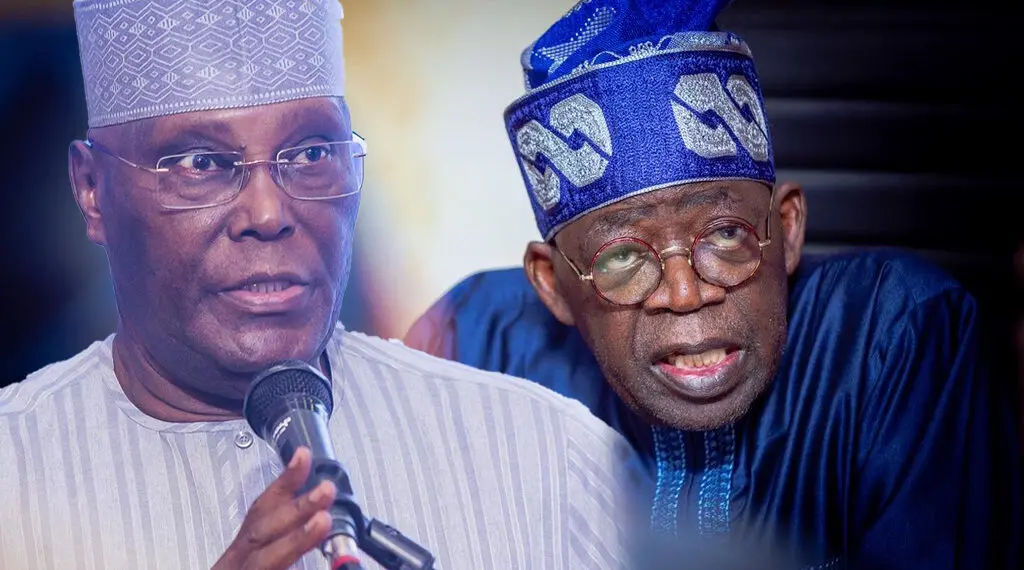
The African Democratic Congress (ADC) has accused the President Bola Tinubu-led administration and the All Progressives Congress (APC) of using political influence to frustrate its activities ahead of the 2027 general elections, following the closure of Arewa House in Kaduna, where former Vice President Atiku Abubakar was expected to meet with Northern stakeholders.
The party alleged that the Kaduna State Government, controlled by the APC, was behind the decision to seal the building, describing the development as another attempt to restrict opposition activities.
The incident comes at a particularly difficult time for the ADC, which is also battling a leadership crisis following a Federal High Court judgment that invalidated Senator David Mark’s emergence as the party’s national chairman and raised questions about its preparations for the next general elections.
Atiku had reportedly planned to use Arewa House for a consultation with influential individuals and groups across Northern Nigeria on Thursday.
Reacting to the closure, the former vice president expressed dissatisfaction with the development, saying his campaign organisation had already made arrangements to use the facility before the authorities moved to shut it.
The ADC subsequently accused the ruling party of interfering with its constitutional right to engage political stakeholders and organise activities without unnecessary restrictions.
In a statement issued on Wednesday, Phrank Shaibu, Director of Strategic Communications of the ADC Presidential Campaign Council, argued that Arewa House was an important historical institution whose significance extended beyond partisan political interests.
He maintained that shutting the facility at a time when the opposition party intended to conduct consultations raised concerns about the treatment of political opponents under the current administration.
Shaibu also recalled the party’s campaign flag-off in Sokoto, which he alleged had faced attempts at disruption by the APC-controlled government.
He said the two developments suggested a pattern of actions capable of limiting the activities of opposition parties, holding Tinubu and the APC politically responsible for what he described as efforts to weaken democratic competition.
The ADC spokesman insisted that those in government should provide an environment where political parties could freely communicate their ideas, consult supporters and prepare for elections.
He added that the party would not abandon its political engagements because of the incident, promising to continue its consultations and explore every available legal option.
ADC questions timing of court judgment release
Beyond the dispute over Arewa House, the opposition party has raised concerns about the handling of the court judgment affecting its leadership structure.
Justice Peter Lifu of the Federal High Court in Abuja, in a ruling delivered on November 5, nullified Senator David Mark’s emergence as ADC National Chairman and actions taken under his leadership, including the nomination of candidates for the 2027 elections.
The decision has created uncertainty within the party, particularly regarding the political future of candidates who emerged through its internal electoral arrangements.
Shaibu expressed concern over the release of the Certified True Copy (CTC) of the judgment, saying the document became available on the seventh day, which he described as the final day allowed under Section 294(1) of the 1999 Constitution.
According to him, the timing left the party with limited room to examine the court’s reasoning and prepare its legal response.
The ADC said it would carefully study the judgment and pursue the remedies available under Nigerian law.
ADC candidates protest in Abuja
The delay in obtaining the court document also prompted members of the Forum of ADC Candidates in Nigeria to take their grievances to the Federal High Court and the United Nations office in Abuja.
Led by Audu Aliyu, the candidates staged a protest, demanding that the certified judgment be released to enable their lawyers to commence the necessary appellate proceedings.
In a petition dated November 10 and addressed to the Chief Judge of the Federal High Court, Justice John Tsoho, the forum explained that its lawyers had submitted an application for the document immediately after the November 5 ruling.
They said the required fees had been paid, but repeated visits to the court registry had not produced the requested document.
The candidates argued that without access to the full judgment, their lawyers would face difficulties preparing an effective appeal within the time available under the electoral timetable.
They consequently asked the Chief Judge to direct the relevant court officials to release the document within 24 hours.
The forum cited Sections 294(1), 241 and 242 of the Constitution, maintaining that the right to challenge a judicial decision should not be frustrated by administrative delays.
Although they disagreed with the outcome of the case, the candidates said they intended to challenge it through the appropriate legal channels.
They also alleged that information available to them suggested that the APC was pressuring the Independent National Electoral Commission (INEC) to implement the judgment immediately.
Candidates take their complaint to United Nations
After visiting the Federal High Court, the ADC candidates proceeded to the United Nations building in Abuja, where they submitted another petition seeking international attention to the situation.
Speaking during the visit, Aliyu said the organisation was being approached to encourage respect for democratic principles, judicial procedures and the right of political parties to participate in elections.
He argued that democracy would lose its meaning if political competition was restricted or opposition groups were prevented from exercising their legal rights.
Aliyu maintained that the candidates were not seeking foreign interference in Nigeria’s judicial system but wanted international institutions to monitor developments and encourage compliance with the rule of law.
He also warned that implementing the judgment before the conclusion of possible appeals could jeopardise the participation of ADC candidates, including Atiku, in the 2027 presidential election.
The petition was received by Suzanne Su, Head of the UN Resident Coordinator’s Office, alongside Ronald Kayanja, Head of the UN Information Centre, and Mahmoud Sinasi, Deputy Head of Security.
The officials acknowledged receipt of the correspondence but did not comment on the allegations.
Other institutions that received copies included the European Union Delegation, British High Commission, United States Embassy, Chief Justice of Nigeria, President of the Court of Appeal, ECOWAS Commission, INEC Chairman and Nigerian Bar Association’s Abuja Branch.
The candidates also called for INEC to maintain neutrality while the dispute remained before the courts and urged security agencies to respect peaceful demonstrations.
They referenced Nigeria’s obligations under the International Covenant on Civil and Political Rights, the ECOWAS Protocol on Democracy and Good Governance and the democratic principles of the African Union.
APC chieftain challenges Atiku over political decisions
Meanwhile, Abdulhakeem Adegoke Alawuje, a member of the APC Presidential Campaign Council, has dismissed suggestions that the ruling party should be held responsible for the political difficulties confronting Atiku and the ADC.
Alawuje argued that the former vice president should explain why he proceeded with his presidential ambition under a party whose leadership structure was already facing legal challenges.
He questioned why a politician with Atiku’s experience, having contested presidential elections several times and served as vice president, did not first ensure that the disagreement surrounding the ADC leadership was resolved.
According to him, the controversy surrounding David Mark’s emergence as national chairman was neither new nor concealed from influential members of the party.
He maintained that Atiku and other stakeholders had opportunities to address the matter before the presidential primary that produced him as the ADC candidate.
Alawuje insisted that disagreements within the opposition party should not automatically be blamed on the APC, adding that those who made the relevant political decisions must also accept responsibility for their consequences.
He challenged Atiku to explain what arrangements were made to protect his nomination and who advised him to proceed despite the unresolved controversy.
The APC chieftain further maintained that allegations of intimidation, political interference and misuse of government institutions should be supported by verifiable evidence rather than political accusations.
He said if Atiku eventually failed to secure a place on INEC’s final presidential ballot, subject to the outcome of appellate proceedings, the former vice president should also examine the decisions that contributed to the situation.
However, Alawuje clarified that he was not celebrating the difficulties facing the ADC or defending the APC against any proven wrongdoing.
He described a strong opposition as necessary for Nigeria’s democratic development, while insisting that political leaders seeking the presidency must demonstrate accountability for their actions.
The unfolding dispute has placed the ADC’s leadership, its presidential ambition and the participation of its candidates in the 2027 elections under considerable uncertainty, with the outcome of the pending legal processes expected to play a major role in determining the party’s next steps.
About The Author