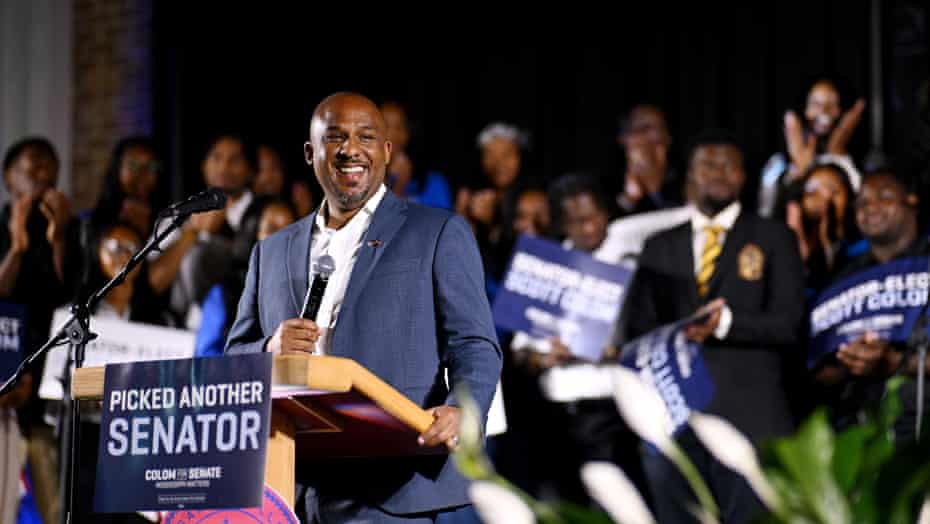
The Scott Colom victory has rewritten Mississippi’s political history, with the 43-year-old Democrat defeating Republican incumbent Cindy Hyde-Smith to become the first Black man popularly elected to represent the state in the US Senate since Reconstruction.
Colom, a district attorney, secured the historic result after more than a week of ballot counting in a contest that attracted national attention. The Associated Press declared him the winner on Wednesday after his narrow advantage increased through the counting of absentee and provisional ballots.
His success also ends a long period of Democratic frustration in Mississippi. The party had not won a US Senate election in the state since 1982, making the result particularly significant for Democrats seeking to expand their influence nationally.
The victory marks another important moment in a state with a complicated history of racial representation. Mississippi was the first state to send Black lawmakers to Congress and has elected more Black senators than any state except Illinois.
However, the last Black man elected to represent Mississippi in the Senate was Blanche K Bruce, who was born into slavery. The last Democrat elected to the seat was John C Stennis, a politician who maintained segregationist positions during much of his career.
Colom celebrates a historic political breakthrough
Colom celebrated the outcome at Tougaloo College, a historically Black institution where supporters gathered to witness the conclusion of the closely contested election.
Reflecting on the achievement, he told the crowd: “All I did was have the courage to imagine a night like this.”
He continued: “I had the courage to believe in Mississippi. I had the courage to understand that we can show the country that Mississippi matters.”
His comments reflected the significance of the result beyond the immediate contest. For Colom, the election represented an opportunity to challenge assumptions about Mississippi’s political possibilities and demonstrate that the state could produce a different electoral outcome.
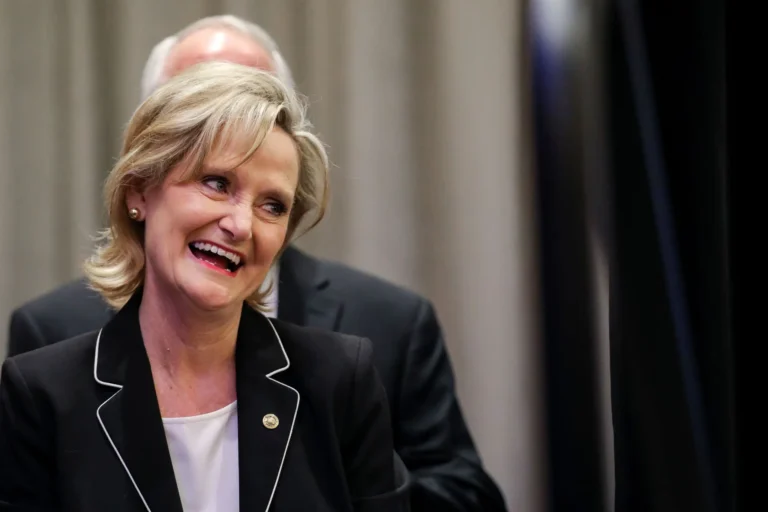
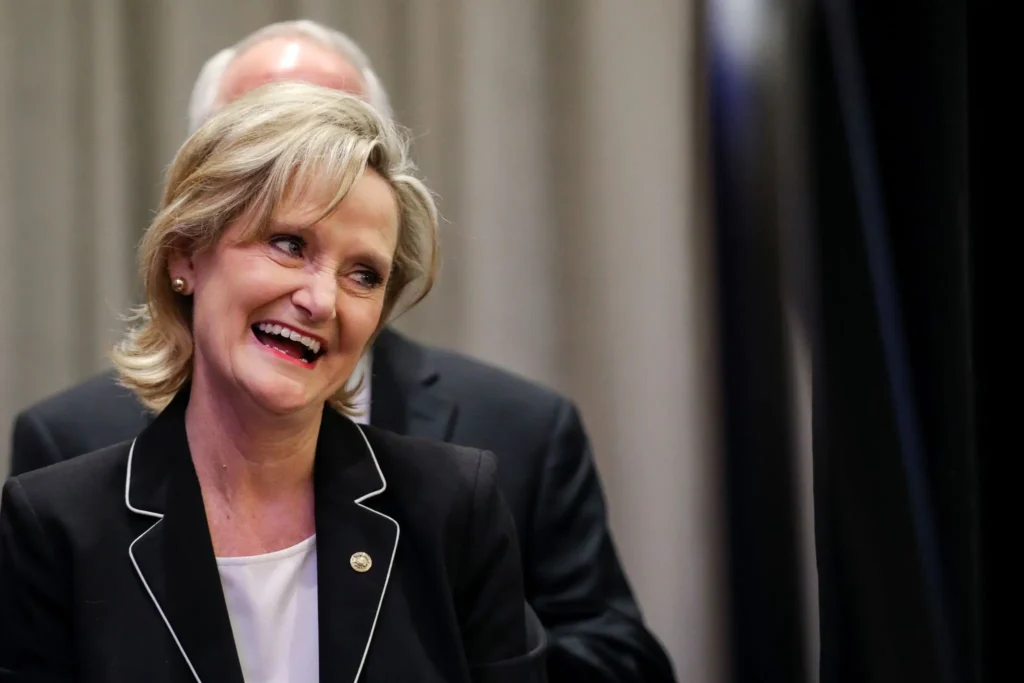
Hyde-Smith eventually acknowledged defeat, congratulating her challenger and wishing him well. In a statement, she said: “While this is not the outcome we worked for or hoped for, I respect the decision of Mississippi voters.”
The Republican senator had initially maintained that she would continue serving after election night. As the counting progressed and Colom’s advantage became clearer, however, the prospect of retaining her seat gradually disappeared.
A former district attorney takes down an established Republican
Before entering the Senate contest, Colom had built his reputation through his work in Mississippi’s criminal justice system.
In 2015, he became the first Black district attorney for Mississippi’s 16th Circuit District after defeating an incumbent who had held the position for almost 30 years.
His professional record included a reported conviction success rate of 94 per cent, helping establish his profile in a state where Republican candidates have traditionally enjoyed considerable electoral strength.
Colom is also a seventh-generation Mississippian. His political background was not straightforwardly Democratic, as his father was a long-time Republican who supported Ronald Reagan and maintained a friendly relationship with former senator Thad Cochran.
Cochran left the Senate in 2018 because of declining health, creating an opening that eventually led to Hyde-Smith’s appointment and subsequent election to the seat.
Colom’s family background and familiarity with Republican politics helped shape his approach to campaigning. Rather than concentrating exclusively on Democratic strongholds, he sought conversations with voters whose political loyalties differed from his own.
Hyde-Smith’s opposition to his judicial nomination
Colom’s political relationship with Hyde-Smith had already become contentious before their Senate election contest.
During Joe Biden’s presidency, Colom was nominated for a federal judgeship in northern Mississippi. His nomination attracted bipartisan support, but Hyde-Smith prevented a confirmation hearing from taking place.
The dispute became part of the political conversation during their Senate campaign, giving Colom an opportunity to highlight the Republican senator’s role in blocking his judicial appointment.
Hyde-Smith later referred to the episode while addressing her supporters, saying: “I blocked Scott Colom from being a federal judge, and you blocked him from being a US senator,”
Her remark acknowledged the reversal of political fortunes. The candidate she had helped prevent from becoming a federal judge had now defeated her in the election for a Senate seat.
Cost-of-living concerns become a campaign weapon
Economic concerns also played an important role in the contest, particularly as voters expressed frustration over the cost of groceries and other everyday necessities.
One campaign moment that attracted widespread attention involved Hyde-Smith’s response to concerns about rising beef prices.
While discussing the increasing cost of meat, she told voters: “You have so many proteins to choose from”.
The comment became a source of ridicule and provided Colom’s campaign with an opportunity to connect the election to household financial pressures.
A campaign advertisement showed a man standing beside a barbecue grill, preparing hamburger patties. The advertisement included the question, “Pick another protein?” before the man responded: “Shiiiit. I’d rather pick another senator instead.”
Colom subsequently took the message directly to voters through a campaign initiative involving a taco truck. The truck offered free tacos while promoting the idea of choosing an alternative to the incumbent senator.
The campaign’s approach helped turn an otherwise ordinary exchange about food prices into a memorable political moment.
Campaign reaches beyond traditional Democratic supporters
Colom’s campaign strategy also involved visiting communities and institutions across Mississippi, including places where Democratic candidates have historically struggled to attract sufficient support.
He visited Millsaps College, his alma mater, as well as Jackson State University and Tougaloo College.
His campaign schedule also included Marshall’s Music and Book Store and OffBeat, both Black-owned businesses, alongside Brent’s Drugs.
The visits formed part of a wider effort to connect with residents through local institutions, businesses and community conversations rather than relying entirely on conventional political rallies.
Colom also attended a Donald Trump rally in Corinth a week before the election. The decision allowed him to listen directly to people supporting the president and Hyde-Smith.
He discussed concerns about the price of petrol, groceries and health insurance, arguing that understanding voters’ everyday difficulties was essential to winning their confidence.
Some of those conversations helped him reach voters who might not ordinarily consider supporting a Democratic candidate.
Following his election, Colom promised to represent all Mississippians, including those who voted for Hyde-Smith and Trump.
National political developments provide additional context
The result came amid a broader wave of anger directed at the Trump administration, which contributed to Democratic gains across the country.
Democrats secured at least 55 Senate seats, representing their largest midterm gains since 1986. Colom’s victory therefore formed part of a wider political shift rather than an isolated upset.
The election also unfolded against arguments over voting rights and the redrawing of congressional districts.
Trump’s efforts to redraw districts with Black majorities had attracted criticism from opponents who argued that the changes could weaken Democratic voting blocs and reduce minority political representation.
Mississippi’s Senate contest consequently carried significance beyond the state’s borders, particularly for groups concerned about Black political participation and the future of Democratic representation.
The Scott Colom victory demonstrated that a Democratic candidate could overcome an established Republican incumbent in a state where the party had gone decades without winning a Senate election.
Election monitoring and the lengthy ballot count
The closeness of the contest meant that the counting process attracted considerable scrutiny.
Voting rights organisations, lawyers and political groups monitored the results across Mississippi’s 82 counties. The Democratic Senatorial Campaign Committee and Elias Law Group deployed hundreds of volunteers and lawyers to observe the process.
Absentee and provisional ballots played an important role as the count continued beyond election night. Colom’s narrow lead increased as additional votes were included, eventually prompting the Associated Press to declare him the winner.
Mississippi does not automatically conduct a recount simply because an election is close. A recount requires a court order following legal action involving a county or its election commission.
The state also has no statewide mechanism for challenging an entire Senate election result through a single ballot challenge. Any legal challenge would therefore have to proceed on a county-by-county basis.
These arrangements made the monitoring process particularly important as both campaigns followed the changing figures.
A defining moment for Mississippi politics
The result represents a remarkable personal achievement for Colom and a major development in Mississippi’s political history.
For Hyde-Smith, the defeat ends her tenure as the Republican incumbent who had sought to retain her position despite growing pressure from her Democratic challenger.
For Colom, the election provides an opportunity to take the concerns raised during his campaign to the national legislature. His promise to represent voters across political divisions will now be tested through his work in the Senate.
His campaign also challenged the assumption that Democratic candidates could not compete successfully in Mississippi’s statewide elections.
The outcome has therefore become more than a change in the state’s Senate representation. It is a historic electoral breakthrough, a significant Democratic gain and a new chapter in Mississippi’s long struggle over political representation.
About The Author