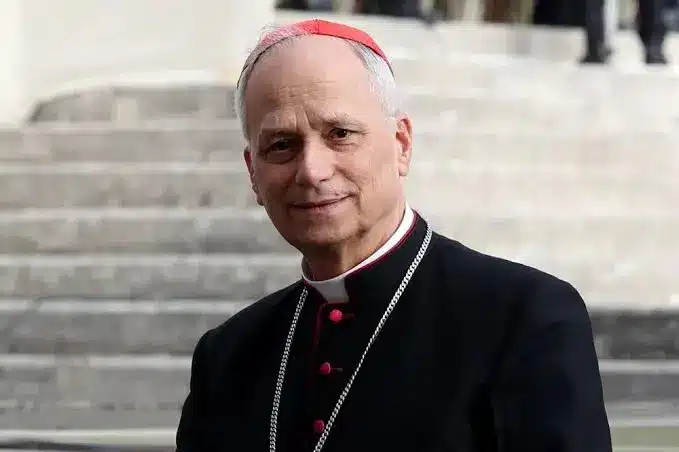
Pope Leo XIV‘s visit to Argentina is setting the stage for a potentially uncomfortable encounter with President Javier Milei, whose aggressive spending cuts and free-market policies have drawn criticism from religious leaders and organisations supporting vulnerable citizens.
The pontiff’s three-day visit, the first by a pope to Argentina since 1987, comes amid growing disagreements over disability assistance, workers’ welfare, poverty and the government’s approach to public services.
One of his first engagements on Monday, November 9, will be a visit to Cottolengo Don Orione, a Catholic-run residential facility in Claypole, approximately 26 kilometres from Buenos Aires.
The institution accommodates about 400 people with disabilities, but its management says government cuts have severely affected its ability to provide essential care and supplies.
Fernando Montero, the facility’s coordinator, said authorities had stopped providing medications, special foods and diapers, leaving the institution struggling to meet residents’ needs.
“[The government] cut off the supply of medications, special foods and diapers. They haven’t delivered any since last November. The matter is in court,” Montero said.
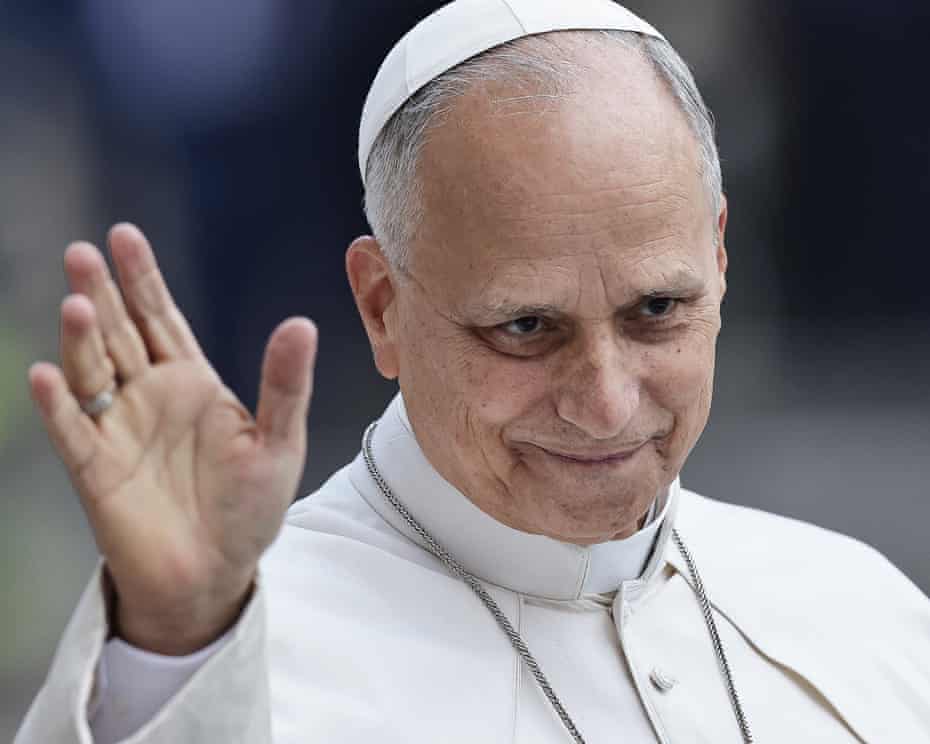
He believes the pope and Milei represent fundamentally different approaches to human welfare, particularly over whether people’s worth should be determined by their economic productivity.
Describing the president as a “hyper-capitalist”, Montero argued that Leo’s teachings emphasise the dignity of every individual, including those unable to compete in the marketplace.
Pope Leo XIV and Javier Milei face contrasting social philosophies
The visit is particularly significant because Argentina has not hosted a papal visit since Pope John Paul II travelled there in 1987.
Pope Francis, the country’s first pontiff, never returned to Argentina during his papacy, making Leo’s arrival another major moment for the nation’s Catholic community.
However, the trip is also attracting political attention because of Milei’s previous hostility towards Francis and his criticism of the Catholic Church’s position on economic justice.
In 2020, Milei called Francis an “imbecile” and “the representative of the Evil One on Earth”. He also accused the former pope of promoting communism and described social justice as theft.
The president subsequently claimed that he apologised during a meeting with Francis at the Vatican in February 2024.
Since taking office in December 2023, Milei has implemented extensive reductions in government expenditure, arguing that the measures were necessary to control inflation and stabilise Argentina’s economy.
His administration has defended the programme as an essential correction to years of economic mismanagement, but critics say the burden has fallen heavily on pensioners, people with disabilities and low-income households.
The Mate thinktank estimates that retirees receiving the minimum pension, who account for 63 per cent of pensioners, have suffered a loss of approximately 30 per cent in purchasing power.
The hardship has fuelled protests, including a demonstration outside Congress last Wednesday where a pensioner displayed a cardboard appeal reading: “Save us Pope Leo XIV – Milei is killing us.”
Buenos Aires Archbishop Jorge García Cuerva has warned that the pope will encounter a country divided by economic hardship and social inequality.
He said Leo would find “a divided Argentina and a large number of very poor brothers and sisters.”
Disability assistance becomes a major dispute between Church and government
The crisis affecting disability institutions has become one of the clearest points of disagreement between Argentina’s Catholic leadership and Milei’s government.
The country’s conference of bishops has repeatedly raised concerns about the ability of organisations caring for people with disabilities to continue providing essential services under the current funding arrangements.
On April 1, the bishops wrote to Health Minister Mario Lugones, drawing attention to what they described as “the serious situation facing numerous institutions dedicated to the care and support of people with disabilities in our country”.
The ministry subsequently held discussions with Church representatives in April and again on October 5, but the meetings failed to resolve the dispute.
The disagreement is linked to a disability funding law that has remained in limbo amid tensions between the executive and Congress.
The government has sought to reduce the possibility of a public confrontation with the visiting pontiff. Social Policy Minister Sandra Pettovello recently insisted that Leo would not travel to Argentina to intervene in domestic political affairs.
“There’s no way the pope is going to come here to comment on local politics,” she said.
Amnesty International has also written to the pope, expressing concern about government decisions affecting the exercise of fundamental rights in Argentina.
Artificial intelligence exposes another disagreement between Leo and Milei
Beyond poverty and public spending, the two leaders hold contrasting positions on the growing influence of artificial intelligence and the relationship between technology and human welfare.
In May, Leo called for the “disarming” of artificial intelligence, reflecting his concern about the potential consequences of technological development when human dignity and responsibility are overlooked.
Milei, by contrast, has opposed regulating AI and promoted proposals to attract investment in datacentres across Argentina.
His administration has also introduced bills seeking to grant legal status to “no-human corporations”, while Federico Sturzenegger, the minister overseeing state reductions, has said he used artificial intelligence to draft legislation.
Milagros Miceli, a sociologist and computer scientist who leads the Critical AI Lab in Berlin, described the contradiction between the two positions as particularly clear.
She welcomed Leo’s intervention, arguing that the pope was seeking to ensure that technological progress did not take precedence over human beings.
Miceli praised the pontiff’s intention to put “human beings at the centre by stripping these technologies of the values that are presented to us as taking precedence over humanity.”
Juan Grabois, a left-wing Peronist lawmaker and social activist who previously served in the Vatican’s Dicastery for Promoting Integral Human Development, also criticised the administration’s approach.
“The idea of absolute deregulation is at the heart of the president’s agenda, and the replacement of the human element with these forms of algorithmic power has clearly also become a policy priority for the government,” Grabois said.
Pope’s programme highlights workers’ rights and domestic production
The itinerary for Pope Leo XIV’s visit to Argentina has added to expectations that his message will touch on issues central to the country’s economic and political debate.
After visiting Cottolengo Don Orione, the pontiff will travel to Buenos Aires to meet business representatives and union leaders.
On Tuesday, he is scheduled to celebrate Mass at the grounds of FAdeA, Argentina’s state-owned military aircraft factory in Córdoba.
The facility has become associated with protests against Milei’s spending reductions, with workers concerned about the consequences for employment and domestic industrial production.
Juan Cruz Esquivel, director of Buenos Aires University’s Barometer of Religions and Beliefs, said the locations selected for the papal engagements were significant.
“I don’t want to speculate [about what the pope will say], but clearly any mention of defending domestic production, labour, disability or social justice in the pope’s rhetoric naturally clashes with the ideology that Milei’s government has been promoting,” Esquivel said.
Mariano Oberlin, a Catholic priest working in a poor neighbourhood of Córdoba, expects Leo to maintain the Church’s social teachings without turning the visit into a direct political confrontation.
He said the pontiff had consistently defended the Church’s social doctrine and was unlikely to abandon those principles during his engagements with the president.
Oberlin added: “If Milei wants to use him, he’ll probably have to do a lot of juggling to make him say the opposite of what he’s been saying – and of what he’ll surely say when he comes: that the Gospel invites us to feel like brothers, to respect each person’s deep, inherent dignity, and to fight so that this dignity becomes real in access to rights.”
Argentina’s social movements embrace the Church’s humanitarian message
The relationship between Catholic institutions and social movements in Latin America has become closer during recent years, particularly under the leadership of Pope Francis.
In Argentina, activists representing poor communities have increasingly engaged with the Church’s teachings on inequality, social protection and human dignity.
Grabois, who participated in this development, argued that the relationship benefited both the Church and the communities it sought to support.
He rejected the idea that Francis was simply a priest who arrived to help disadvantaged people, saying his encounters with marginalised communities also influenced his understanding of social issues.
“[Francis] wasn’t the ‘good priest’ who came to help the poor,” Grabois said, explaining that the exchanges helped Francis “develop his social thinking”.
He added: “Without the cartoneros (cardboard pickers) and the villeros (people from impoverished neighbourhoods), Francis would not have been Francis.”
Grabois believes Leo’s own experiences with social movements, including his support for indigenous communities in Peru, contributed to Francis’ decision to recognise his leadership potential.
“Francis took notice of Leo because he saw him supporting the Peruvian indigenous movement,” he said.
Nevertheless, the Church’s influence in Argentina faces challenges, including disagreements over LGBTQIA+ rights and the growing popularity of evangelical Christianity.
LGBTQIA+ rights and declining Catholic affiliation shape religious debate
The pope’s arrival coincides with Buenos Aires’ 35th Pride March, held on Saturday, November 7, bringing renewed attention to tensions between Catholic doctrine and LGBTQIA+ rights.
María Rachid, a member of the march’s organising committee, said the Church had not fundamentally changed its position on same-sex families.
“The church’s dogma regarding our families has not changed at any time, neither under the previous pope nor under this one,” she said.
However, Rachid acknowledged that Francis’ public statements on gay rights had offered reassurance to some families and their communities.
Argentina is also experiencing a significant shift in religious identification, with evangelical churches gaining followers as the proportion of people identifying as Catholic declines.
Research by Buenos Aires University found that 57.7 per cent of Argentines identify as Catholic, while 17.4 per cent identify as evangelical.
Nearly two decades earlier, Catholic identification stood at 76.5 per cent, while evangelical affiliation was recorded at nine per cent.
Milei recently inaugurated an evangelical temple in Neuquén, where he delivered a political speech and promised to seek re-election next year.
Esquivel said Catholicism remains Argentina’s largest religious tradition but has lost much of its previous cultural dominance and influence over legislative priorities.
Despite these changes, many Argentines are expecting Leo to deliver a strong message on humanitarian issues, poverty and social responsibility.
Grabois said the pope’s visit has generated enthusiasm even among people who were previously hostile towards the Catholic Church.
He described the growing interest as evidence that ordinary people were seeking moral leadership amid what he called increasing dehumanisation.
“In the face of dehumanisation, ordinary people are taking refuge in the only global voice that’s speaking out about this today – which is Francis and Leo’s,” Grabois said.
The visit places Milei in a delicate position as he welcomes a pontiff whose emphasis on social justice, workers’ welfare and the dignity of vulnerable people could intensify scrutiny of his administration’s economic policies.
About The Author