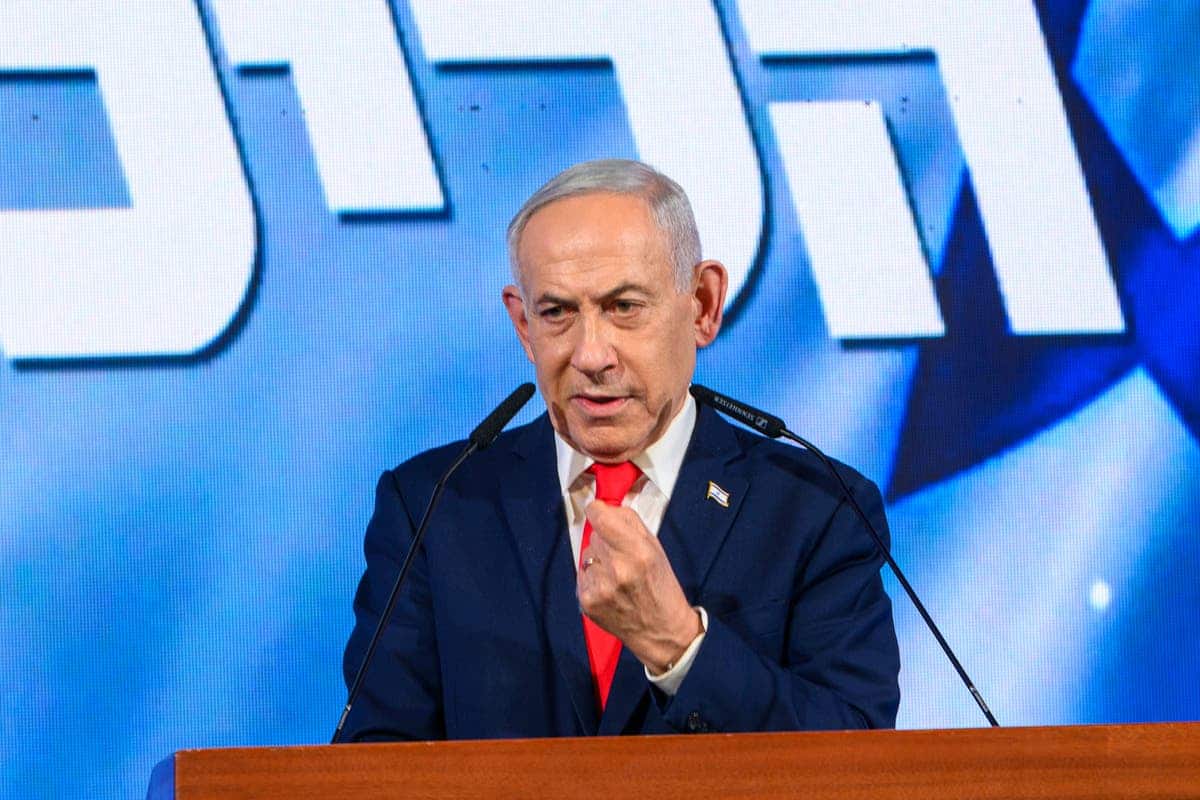
Israeli President Isaac Herzog has given Gadi Eisenkot government mandate to form the country’s next administration, following consultations with political parties that placed the opposition leader ahead of Prime Minister Benjamin Netanyahu.
Herzog announced his decision on Saturday evening, selecting the leader of the Yashar party and former Israeli military chief to undertake the challenging process of assembling a new governing coalition.
The presidential decision followed consultations with parliamentary parties, which submitted recommendations indicating their preferred candidate for the responsibility of forming Israel’s next government.
In a statement, Herzog’s office confirmed that Eisenkot had been invited to the President’s Residence on Sunday at 5 p.m. to formally receive the mandate.
The announcement represents an important development in Israel’s political affairs, particularly as Netanyahu faces competition from an opposition leader who secured more recommendations during the consultations.
However, receiving the presidential assignment does not automatically guarantee Eisenkot’s success, as he must overcome disagreements among political parties before securing the parliamentary majority required to govern.
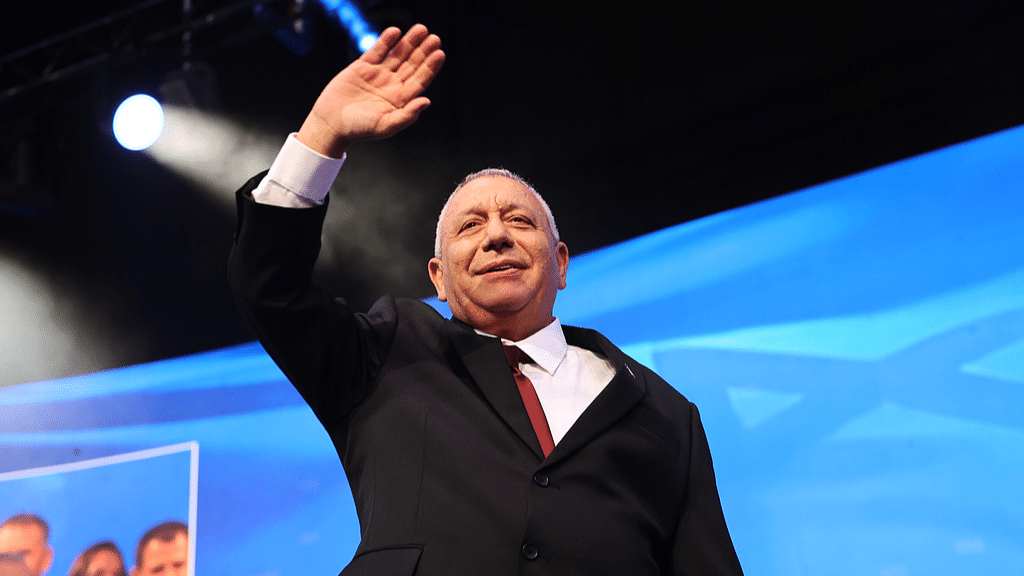
Eisenkot receives backing from 67 lawmakers
The recommendations submitted to Herzog demonstrated considerable support for Eisenkot among opposition politicians and representatives of Arab-led political parties.
Four parties belonging to the opposition bloc recommended the Yashar leader, securing endorsements from 48 lawmakers during the presidential consultations.
Another 19 representatives from Arab-led parties also backed his candidacy, bringing the total number of recommendations in his favour to 67 lawmakers.
Netanyahu, who remains Israel’s prime minister, received recommendations from 46 lawmakers, placing him behind Eisenkot in the consultations.
The seven representatives of the ultra-Orthodox United Torah Judaism party declined to recommend either candidate, leaving their position uncertain as negotiations over the next administration approach.
Despite securing more recommendations, Eisenkot still faces the difficult task of converting the support into a functioning parliamentary coalition.
Israel’s parliament, the Knesset, has 120 seats, meaning a prospective administration requires the support of at least 61 lawmakers to command a parliamentary majority.
The Gadi Eisenkot government mandate therefore begins with a numerical advantage in the presidential consultations, but the opposition leader must still demonstrate that his supporters can work together.
The challenge is particularly significant because the parties involved have different political interests and disagreements over whether Arab-led groups should participate in supporting the next administration.
Eisenkot pledges to pursue national emergency government
Following the announcement, Eisenkot indicated that he intended to pursue a broad political arrangement capable of bringing different groups together under a national emergency government.
The former military chief communicated his position through a statement published on X, expressing his determination to justify the responsibility entrusted to him.
“This is the time to establish a national emergency government. I will do anything possible to prove us worthy,” Eisenkot said.
His statement suggests that he wants to present the proposed administration as a government built around national priorities rather than the narrow interests of individual political parties.
Such an arrangement could potentially attract support from lawmakers beyond those who recommended him during the consultations.
However, establishing a broad coalition will require negotiations with parties whose positions differ over national security, political representation and cooperation with Arab-led groups.
Some opposition politicians have reservations about relying on Arab parties to establish a government, despite the important contribution their recommendations made to Eisenkot’s numerical advantage.
This disagreement could become one of the most difficult issues confronting the Yashar leader as he begins discussions with prospective coalition partners.
He must also consider the positions of ultra-Orthodox lawmakers, whose participation could become relevant if negotiations fail to produce sufficient support within the opposition bloc.
Israeli law gives Eisenkot 28 days to assemble coalition
Israeli law provides a specific period within which a candidate receiving the presidential mandate must negotiate with political parties and establish a government.
Eisenkot has 28 days to assemble a coalition after formally receiving the assignment from Herzog, giving him approximately four weeks to secure the necessary parliamentary backing.
The law also allows him to request an additional 14 days from the president if negotiations require more time before an agreement can be reached.
This extension could become important if disagreements over political appointments, policy commitments or cooperation between different parliamentary groups delay the formation process.
If Eisenkot fails to establish a government within the permitted period, Herzog may entrust another candidate with the responsibility.
There is also another constitutional route through which lawmakers can influence the selection of a prospective prime minister.
At least 61 members of the 120-seat Knesset can request that the president give the mandate to a candidate of their collective choice.
That arrangement provides another opportunity to identify an individual capable of securing sufficient parliamentary support to establish an administration.
However, if these efforts also fail, the parliament will be dissolved, and Israel will be required to conduct another general election.
The Gadi Eisenkot government mandate consequently carries significant implications for Israel’s political future, as unsuccessful negotiations could lead to another electoral contest.
Arab-led parties become central to coalition calculations
The involvement of Arab-led political parties presents a major challenge for Eisenkot because their recommendations contributed substantially to his position during the presidential consultations.
Their 19 endorsements helped raise his total recommendations to 67, giving him a clear numerical advantage over Netanyahu.
Nevertheless, the support does not necessarily mean that all opposition parties are comfortable with an administration relying on Arab political groups.
Some opposition politicians disagree with such cooperation, creating a potential obstacle to maintaining unity throughout the coalition negotiations.
Eisenkot must therefore determine whether he can retain the backing of Arab-led parties while accommodating the reservations of other groups whose participation may also be necessary.
The situation highlights the complicated parliamentary arithmetic confronting the opposition leader as he attempts to establish a government.
The ultra-Orthodox parties also have a potential role in the negotiations, given their combined representation of 13 lawmakers in the Knesset.
United Torah Judaism, with seven representatives, declined to endorse either Eisenkot or Netanyahu during the consultations.
Their eventual position could influence negotiations if the opposition leader needs additional parliamentary support or if disagreements emerge among his existing supporters.
Consequently, Eisenkot’s ability to reconcile competing political interests will be central to determining whether his presidential assignment produces a functioning coalition.
Netanyahu proposes national unity administration
Meanwhile, Netanyahu has called for a national unity government, presenting his proposal as an alternative to an administration dependent on support from Arab-led political parties.
Earlier on Saturday, the Israeli prime minister warned against a government relying on such support and accused the Arab parties of seeking Israel’s destruction.
Netanyahu argued that a national unity arrangement should bring together parties currently represented in his governing coalition alongside other political groups.
Explaining the composition he favoured, he said the administration should include “all the Zionist parties that want to protect our country.”
His statement reflects his position that Israel’s next government should be built around parties sharing his preferred approach to national security and the country’s political direction.
However, the proposal comes as Eisenkot begins the process of exploring an alternative governing arrangement after receiving more recommendations from lawmakers.
The competing proposals expose the political divisions between Netanyahu’s camp and opposition parties seeking a different coalition arrangement.
Whether Netanyahu’s appeal can attract sufficient support remains tied to the positions of parties that participated in the consultations and the negotiations that follow.
Coalition negotiations will determine Israel’s next government
Eisenkot now faces the task of turning the support demonstrated during the presidential consultations into an administration capable of commanding the confidence of parliament.
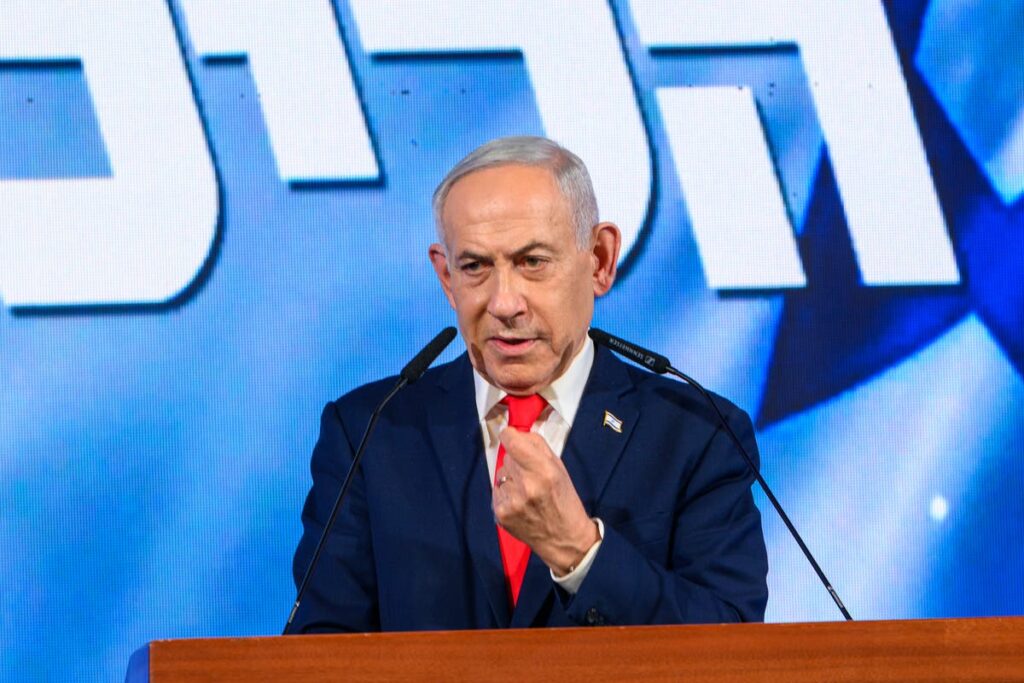
His immediate priorities include negotiating with opposition parties, addressing disagreements over Arab political participation and determining whether additional lawmakers can support his proposed coalition.
The success of the Gadi Eisenkot government mandate will depend on securing at least 61 parliamentary supporters while maintaining cooperation among parties with different political interests.
For Netanyahu, the developments create a challenge to his efforts to retain the existing governing arrangement and secure support for his proposed national unity government.
If Eisenkot succeeds, Israel could have a new administration led by the former military chief, who has publicly committed himself to establishing a national emergency government.
If negotiations fail, Herzog could assign the responsibility to another candidate or the country could move towards the dissolution of parliament and fresh elections.
The coming weeks will therefore be important in determining whether the recommendations received by Eisenkot translate into an effective governing coalition.
For now, the opposition leader must navigate the competing demands of parliamentary groups while working within the timeframe established by Israeli law.
His negotiations will determine whether Herzog’s announcement leads to a change in Israel’s political leadership or another attempt to resolve the country’s parliamentary deadlock.
About The Author