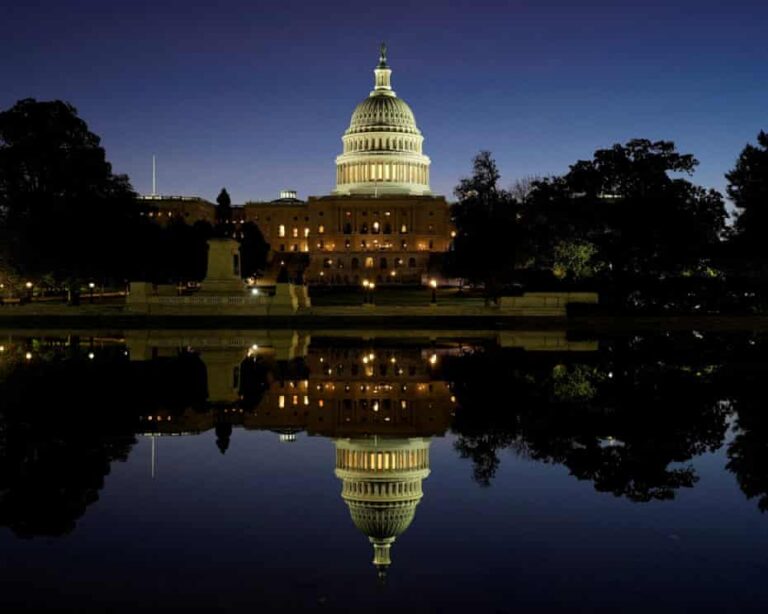
The 2026 US midterm election results have strengthened the Democratic Party’s control of Congress, with the party gaining additional House seats while awaiting the outcome of the final two closely contested Senate races in Mississippi and Alaska.
The results have intensified the political pressure on Republicans following a major electoral setback for President Donald Trump’s party, as Democrats continue to expand their congressional advantage.
According to The Guardian’s live coverage on Friday, November 6, Democrats had flipped another eight seats in the House of Representatives, taking their lead over Republicans to 253–157, with 25 contests still awaiting final declarations.
The remaining Senate races are attracting particular attention because Democratic candidates are seeking to defeat Republican incumbents and increase their party’s influence in the upper chamber.
The contests in Mississippi and Alaska could further shape the balance of power, although neither had been called as of Friday afternoon.
Democrats extend their gains in Congress
The latest House developments have reinforced the scale of the Democratic Party’s electoral gains, with Republican candidates struggling to withstand the political backlash that swept across several parts of the country.
Democrats secured eight additional House seats, strengthening their majority in the lower chamber and leaving Republicans trailing considerably in the outstanding contests.
The reported tally stood at 253 seats for Democrats against 157 for Republicans, with 25 races yet to be decided.
However, Republicans managed to retain two seats in western states. Congressman Mike Kennedy won re-election in Utah, while Amanda McKinney secured victory in Washington.
The remaining contests will determine the final composition of the House, but the latest figures already indicate a substantial shift in congressional representation.
The 2026 US midterm election results have also placed the two outstanding Senate contests under intense scrutiny, as Democrats look to build on their gains beyond the House.
Mississippi and Alaska Senate races remain unresolved
The Senate contests in Mississippi and Alaska are among the most closely watched remaining races in the election.
Democratic candidates are attempting to unseat Republican incumbents, a development that could further increase their party’s strength in the upper chamber.
The outcomes are particularly important because control of the Senate influences legislative priorities, congressional investigations and the confirmation of presidential appointments.
Although Democrats have already made significant gains, the final results from these two states will provide a clearer picture of the party’s overall position in Congress.
Until the outstanding votes are resolved and official results declared, the precise balance of Senate seats remains subject to change.
Latino voters contribute to Republican setback
The Republican Party’s disappointing performance has also drawn attention to the role of Hispanic and Latino voters, particularly in battleground communities where immigration enforcement became a major campaign issue.
Many Latino voters who supported Trump in the 2024 presidential election reportedly turned against Republican candidates during the midterms.
Read also: Trump’s global strategy faces congressional resistance after Democratic midterm victory
https://swiftreportnow.com/trumps-global-strategy-faces-congressional-r/
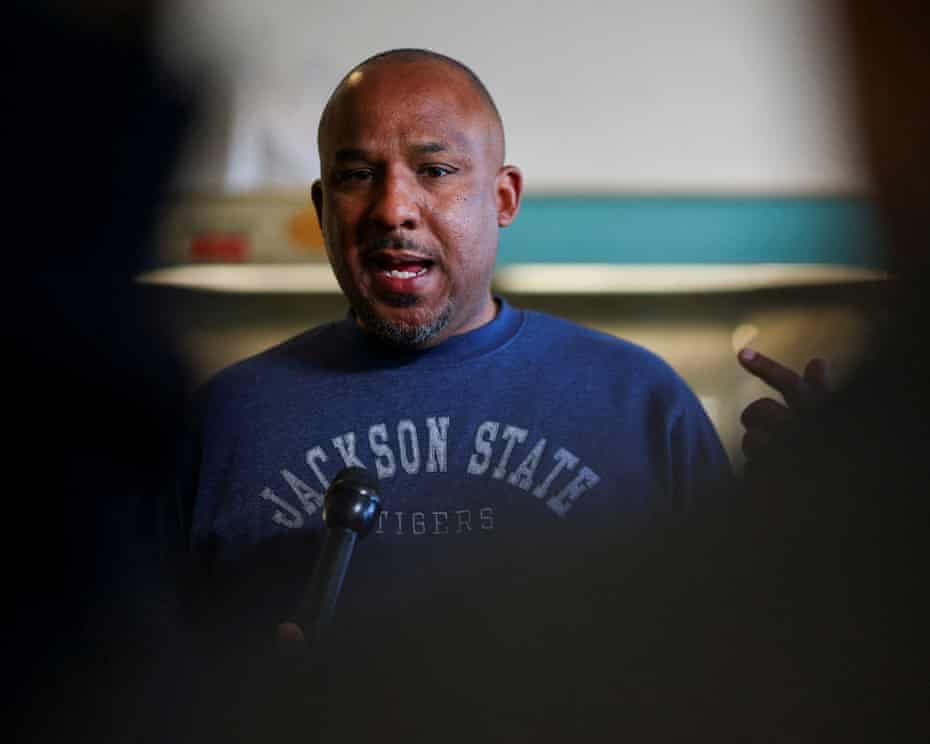
The Guardian’s reporting highlighted the experience of Benny Melendez, a small housebuilding company owner from Weslaco, Texas, who voted for Trump two years earlier.
Melendez said his decision to support Democrats this time was driven by anger over immigration raids carried out by the administration.
“Trump went against us,” he said, explaining that his relatives and employees had been affected by deportation operations conducted by Immigration and Customs Enforcement.
According to Melendez, two of his cousins and as many as 15 workers from his building company had been detained and deported to Mexico.
He said he had initially expected the administration’s immigration operations to concentrate on people with criminal records rather than relatives, employees and members of local communities.
“They’re taking our neighbors. They’re taking our friends. They’re they’re taking our workers, and they’re taking our family members. This is an attack against our community.”
His experience reflected wider concerns among Latino communities in Texas, Florida and other politically competitive states.
The account suggests that immigration enforcement became an important factor in the decisions of some voters who had previously supported Trump’s political movement.
Nithya Raman wins Los Angeles mayoral election
The Democratic gains extended beyond congressional contests, with progressive urban planner Nithya Raman elected mayor of Los Angeles after defeating incumbent Karen Bass.
Raman’s victory represents a significant change in the city’s political leadership and adds another prominent Democratic success to the wider midterm results.
She had served on the Los Angeles City Council since 2020 before entering the mayoral contest.
Her narrow victory over Bass reflects growing dissatisfaction among sections of the electorate with the direction of the city.
The outcome also demonstrates how the political consequences of the midterms have extended into important local elections, rather than being restricted to the congressional races.
Trump ally Harmeet Dhillon resigns from Justice Department
Another significant development following the Republican electoral defeat was the resignation of Harmeet Dhillon, a prominent Trump ally who headed the Justice Department’s Civil Rights Division.
Attorney General Todd Blanche confirmed that he had accepted her resignation.
Dhillon became the first high-ranking Justice Department official reported to have left the department following the midterm elections.
Her departure comes as Democrats prepare to exercise their congressional authority to scrutinise federal agencies, including the Justice Department.
The party is expected to pursue investigations into executive branch activities, potentially placing additional pressure on officials associated with the Trump administration.
Her resignation has therefore become one of the early personnel developments following the Republican Party’s poor performance.
Democratic senator-elect questions Schumer’s leadership
The election has also opened discussions about leadership within the Democratic Party, particularly over who should lead its new Senate majority.
Abdul El-Sayed, the Democratic senator-elect from Michigan, said the party’s new majority would need decisive action from its leadership.
During his campaign, El-Sayed declined to endorse Senator Chuck Schumer, who currently serves as the minority leader.
Speaking to CNN, he reiterated his support for Maryland Senator Chris Van Hollen, describing him as an “amazing Senate majority leader”.
However, El-Sayed did not completely rule out supporting Schumer, leaving open the possibility of further discussions within the party.
The leadership question could become increasingly important as Democrats prepare to use their congressional majority to advance their legislative priorities and oversee the administration.
Ted Cruz describes Republican defeat as a major repudiation
Republican Senator Ted Cruz of Texas has joined party members criticising the outcome of the midterm elections.
Cruz described the Republican defeat as an “ass-kicking”, acknowledging the scale of the losses suffered by his party.
Reflecting on the result during his podcast, he said: “It was not simply a bad 2006 midterm election, it was a Watergate-level repudiation.”
His comments underline the growing debate among Republicans about the reasons behind their electoral setback and the direction the party should take.
The results have also prompted early discussions about potential Republican presidential contenders for 2028.
Vice-President JD Vance, Senator Ted Cruz and Florida Governor Ron DeSantis are among the figures being discussed as possible successors to Trump as the party considers its political future.
Trump promotes artificial intelligence investment after election
Despite the Republican setback, Trump has continued to promote his administration’s support for artificial intelligence and investment in technology infrastructure.
In a statement published on Truth Social, the president urged American states to attract artificial intelligence companies, data centres and investment, arguing that such developments could generate substantial wealth.
He wrote:
“As President, I am 100% in favor of Super Intelligence (SI), and will work with the many States in the U.S. that want to become RICH by having them. They are GOLD, and only foolish leadership will say “NO” to the riches they bring!”
Trump’s remarks followed another post in which he sought to distance himself from the Republican losses by arguing that his personal presence on the ballot would have changed the outcome.
He declared:
“I JUST WASN’T ON THE BALLOT. IF I WERE, WE WOULD HAVE WON IN A LANDSLIDE!”
The comments came as Republican officials and commentators continued examining the factors behind the party’s poor performance.
Elon Musk loses $113bn following market decline
The post-election financial market downturn has also affected some of the country’s wealthiest business figures, particularly billionaire Elon Musk.
Musk reportedly lost approximately $113bn in paper wealth over two days following the midterm results, according to figures from Bloomberg’s Billionaires Index.
His losses were linked to declines in the market value of Tesla and SpaceX, two companies in which he holds significant ownership interests.
Tesla shares fell by 3.34% on Wednesday before dropping another 10.7% on Thursday.
SpaceX also recorded declines of 3.8% on Wednesday and 9% on Thursday.
Musk reportedly lost $33.5bn in paper wealth on Wednesday, followed by another $79.7bn on Thursday.
Despite the losses, he remained the world’s richest person, with an estimated paper wealth of $785bn, compared with Jeff Bezos’s $370bn.
The market reaction has added an economic dimension to the political developments, particularly amid concerns that the election outcome could lead to tougher regulation of the artificial intelligence industry.
The Nasdaq index fell by 5.5% on Thursday, recording its worst daily performance in 19 months.
Trump designates Oval Office and Cabinet Room as national monuments
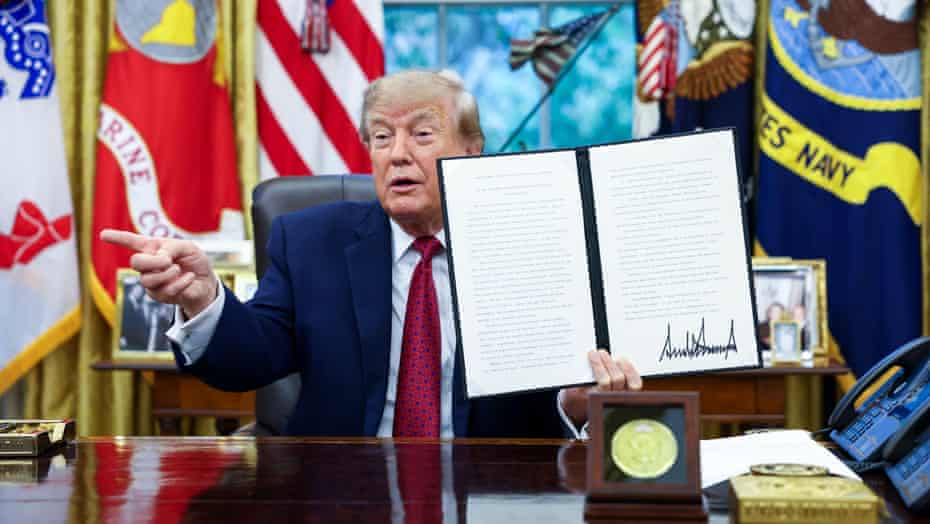
In his first official action following the Republican electoral setback, Trump signed a proclamation preserving the Oval Office and Cabinet Room as national monuments.
The decision came after several days in which the president focused attention on renovation projects and changes to the White House.
The proclamation was an early indication of the administration’s activities following the midterms, even as political attention remained fixed on the Democratic gains and the remaining Senate contests.
With the final results still pending in Mississippi and Alaska, the political consequences of the 2026 US midterm election results will continue to unfold as both parties prepare for the next phase of congressional activity.
About The Author