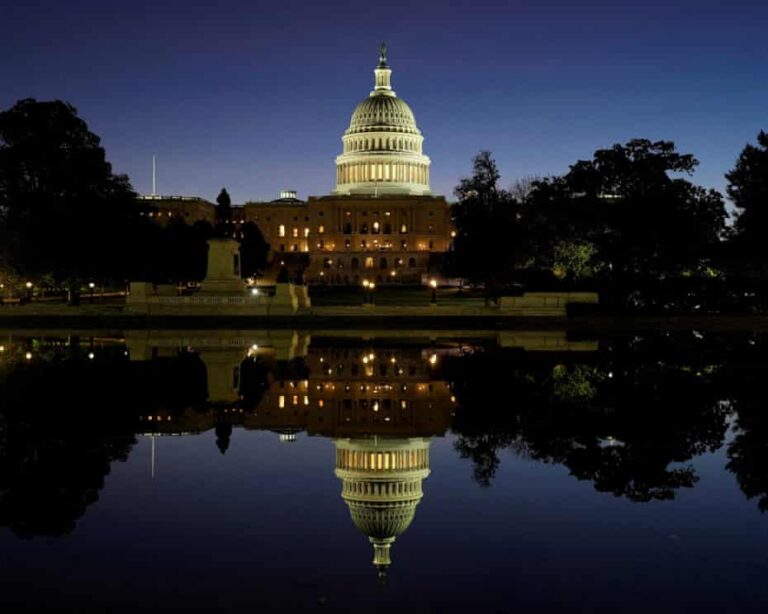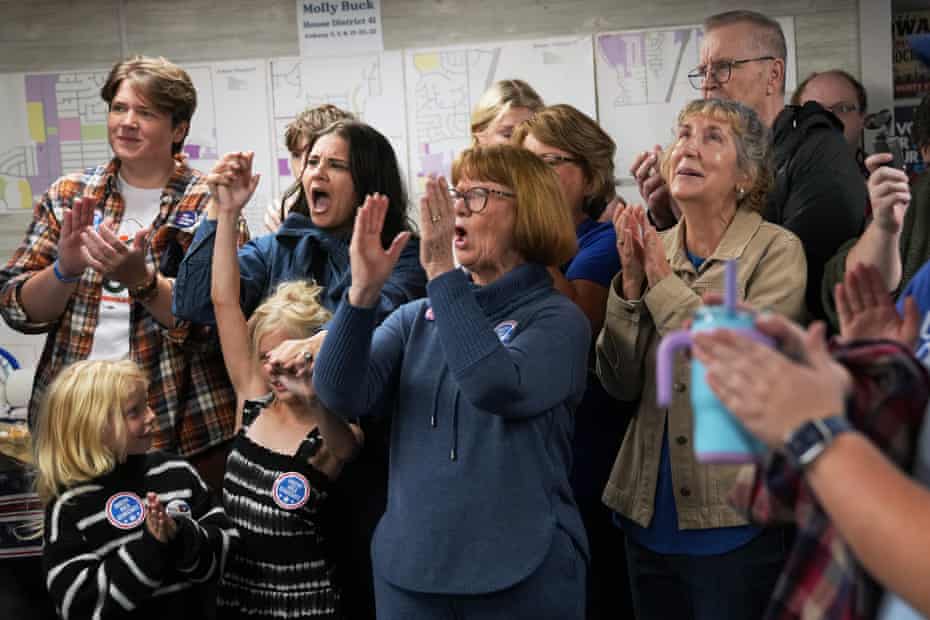
The Democratic congressional takeover has delivered a major political setback to President Donald Trump, with Democrats winning control of both chambers of Congress in the 2026 midterm elections after a sweeping series of victories across traditionally Republican states and competitive battlegrounds.
The results represent a dramatic reversal of political fortunes in Washington, ending Republican control of the House of Representatives and Senate and giving Democrats the opportunity to challenge Trump’s agenda during the final two years of his presidency.
The Associated Press reported that Democrats captured at least seven Republican-held Senate seats, including victories in Kansas, Iowa, Texas, Ohio, Maine, North Carolina and South Carolina. The party also overturned Republican advantages in several House districts, including constituencies Trump carried by as much as 18 percentage points in the 2024 presidential election.
The scale of the victories extended beyond Congress, with Democrats also winning governorships previously held by Republicans in Georgia, Ohio, Iowa and Texas.
The results have placed the Republican Party under pressure and raised questions about the political consequences of Trump’s second-term policies, particularly the administration’s handling of the economy, the Iran conflict and government accountability.

Democrats overturn Republican control of Congress
The Democratic victory in the Senate followed successful campaigns in several states where Republicans had entered the election with established political advantages.
Democrats crossed the 51-seat threshold required for control of the Senate, flipping at least seven Republican-held seats in the process.
Kansas produced one of the most striking results. Democrat Adam Hamilton defeated Republican incumbent Roger Marshall in a state that had not elected a Democratic senator in nearly a century.
Iowa also changed political hands, with Democrat Josh Turek defeating Republican Ashley Hinson for the Senate seat being vacated by Joni Ernst.
Turek celebrated the result by describing his victory as an achievement many had considered impossible.
“They told me it was impossible to win this Senate race, but tonight, Iowa, we have once again proved that the impossible is possible,” he said.
He also promised to represent residents regardless of their political affiliations, declaring: “My political North Star has always been about what is best for the people, not about party.”
Republican strongholds fall to Democratic candidates
Texas delivered another significant upset, with Democrat James Talarico defeating Republican Ken Paxton in the Senate contest.
Talarico used his victory speech to appeal for political unity, telling supporters that his campaign had rejected the politics of division.
“We are tired of being told to hate each other,” he said.
He added: “We didn’t win this race by alienating our neighbors or shaming our neighbors.”
In Ohio, former Democratic senator Sherrod Brown defeated Republican Jon Husted in a contest that attracted enormous campaign spending. The Associated Press reported that spending by campaigns and outside groups exceeded $500 million.
Brown told supporters that the result carried a clear message from voters.
“You sent an undeniable message tonight: Ohio is not for sale,” he declared.
Maine also changed hands after Democrat Troy Jackson defeated Republican incumbent Susan Collins, ending her bid for a sixth Senate term.
North Carolina and South Carolina contributed further Democratic gains, with victories that strengthened the party’s position in the Senate.
Democratic victories extend to the House and state governments
The congressional breakthrough was not restricted to the Senate. Democrats also won the House of Representatives, giving the party unified control of Congress.
Their victories included districts that had supported Trump by substantial margins in the previous presidential election.
In Indiana’s 5th Congressional District, Democrat J.D. Ford defeated three-term Republican representative Victoria Spartz in a constituency Trump had carried by nearly 17 percentage points in 2024.
Iowa also recorded substantial Democratic gains in the House. The party captured three of the state’s four congressional districts, defeating Republican candidates in contests involving Christina Bohannan, Sarah Trone Garriott and Lindsay James.
Democrats additionally secured control of the North Carolina House, ending Republican dominance of the chamber and strengthening the position of Democratic governor Josh Stein.
The governorships produced further victories. Keisha Lance Bottoms won in Georgia, Amy Acton in Ohio, Rob Sand in Iowa and Gina Hinojosa in Texas.
Hinojosa’s victory was particularly significant because she became Texas’ first Latina governor.
Historic changes in political representation
The election also produced notable milestones for representation in American politics.
Minnesota Democrat Peggy Flanagan won her Senate contest against Republican Michele Tafoya, positioning herself to become the first Native American woman to serve in the United States Senate.
In the House, Democratic leader Hakeem Jeffries is poised to become the first Black speaker if elected by his colleagues when the new Congress convenes on January 3.
His expected rise would represent a historic development in the leadership of the lower chamber.
Meanwhile, Michigan Democrat Abdul El-Sayed declared victory over Republican Mike Rogers, although the Associated Press had not called the race at the time of its report.
El-Sayed told supporters in Detroit: “We did it.”
He also described himself as the state’s senator-elect.
Voters’ economic concerns contribute to Republican losses
The results have been widely interpreted as a rejection of the direction of the Trump administration, particularly over the cost of living and dissatisfaction with government performance.
According to the Associated Press Voter Poll, nearly nine in ten voters considered living costs a crucial or major factor in their election decisions.
The survey also indicated that nearly two-thirds of voters blamed Trump for high prices, while approximately three-quarters expressed anger or dissatisfaction with the country’s direction.
These findings provide an indication of the economic and political concerns influencing voters, although they do not establish that one issue alone determined the election outcome.
The Iran conflict also featured prominently in the election debate, alongside concerns about corruption and the administration’s exercise of executive power.
Democratic candidates used these issues to challenge Republican incumbents and appeal to voters who believed the government was not adequately addressing their concerns.
New York senator Kirsten Gillibrand, who chairs the Democratic Senatorial Campaign Committee, said the extent of the party’s success had exceeded her expectations.
“The size of the blue wave is bigger than I ever imagined,” she told the Associated Press.
She identified Kansas as one of the most remarkable victories, noting that the state had not elected a Democratic senator since 1932.
Gillibrand also pointed to the issues that resonated with voters, including “housing costs, fuel costs, medical costs and how they are going to fight for these families across America.”
Trump rejects personal responsibility and turns criticism towards Fox News
Despite the Republican defeats, Trump initially resisted suggestions that the election represented a personal rejection of his presidency.
In an interview with Fox News, he congratulated Democrats for their campaign efforts but argued that the Republican candidates themselves were responsible for their losses.
“The Democrats did a good job. They fought hard,” Trump said.
He also rejected the suggestion that the results amounted to a judgment on his leadership.
“I don’t view it as a hit on me,” he declared, adding: “We’ve had the greatest two years in the history of the presidency.”
However, the president had also directly blamed Fox News for the Republican setbacks, accusing the network of repeatedly providing a platform for Democratic opposition figures.
“Fox News bears responsibility for these losses by constantly and consistently putting on the Dumocrat opposition, and worse,” Trump wrote.
Trump attacks Fox News polling during live broadcast
In an unusual intervention, Trump called into Fox News’ election coverage and defended himself against responsibility for the Republican Party’s poor performance.
He also questioned the network’s election polling, directing particular criticism at its pollsters.
“The Fox polls are terrible. You ought to get yourself a good pollster, because your pollsters are the worst,” Trump said.
Fox News anchor Bret Baier challenged the president’s assessment by pointing out that the results emerging on election night were broadly consistent with the network’s projections.
“Tonight, actually, the results are pretty close to what the Fox polls showed,” Baier responded.
The exchange brought Trump’s disagreement with the broadcaster into the centre of election-night coverage, as the scale of Democratic gains became increasingly clear.
Los Angeles mayoral race adds to Democratic election celebrations
The Democratic victories also generated excitement in Los Angeles, where supporters of progressive city council member Nithya Raman gathered outside the Greek Theatre on Tuesday night.
Early returns showed incumbent Mayor Karen Bass holding a narrow advantage over Raman, her former political ally.
However, the atmosphere at the gathering became increasingly celebratory as reports of Democratic victories across the country reached supporters.
Raman has presented herself as a candidate capable of addressing the city’s housing affordability problems, homelessness and wider concerns about the direction of Los Angeles.
Her campaign gained momentum in recent months as frustration increased among residents over living costs and the city’s response to housing challenges.
Affordable housing becomes a major campaign issue
Among those attending the gathering was Max Rico, a high school teacher from South Central Los Angeles who arrived wearing a Halloween costume designed to resemble a ballot box.
Rico said he supported Raman because of her position on affordable housing.
He explained that he had frequently watched students leave school before completing the academic year because their families relocated to areas where the cost of living was lower.
Although he had previously supported Bass, Rico said her administration had disappointed him, arguing that its policies had not adequately assisted communities in need.
Despite Bass maintaining a narrow lead in the early returns, he remained hopeful that Raman could make progress as ballots from younger voters were counted.
The Los Angeles contest provided another illustration of the political enthusiasm surrounding Democratic candidates, even as the final mayoral result remained uncertain in the early report.
Democratic control presents new challenge for Trump’s administration
The Democratic takeover of Congress will significantly alter the political environment confronting Trump.
With the opposition controlling both chambers, the president will face greater resistance to his legislative proposals and increased congressional scrutiny of his administration.
Democrats will have opportunities to influence federal spending, organise investigations and demand accountability from government departments.
The new majority could also complicate efforts by the White House to advance policies without significant opposition from Congress.
However, controlling the legislature does not automatically give Democrats the power to implement every campaign promise. Trump remains president, and disagreements between the executive and legislative branches could produce confrontations over legislation and government funding.
The election has also placed responsibility on Democratic leaders to respond to the economic concerns that helped shape their victories.
For Republicans, the losses represent a major challenge to their congressional position and raise questions about the political consequences of closely associating candidates with Trump’s administration.
The outcome has therefore changed the balance of power in Washington, leaving the president to govern during the remaining two years of his term with both chambers of Congress controlled by Democrats.
About The Author