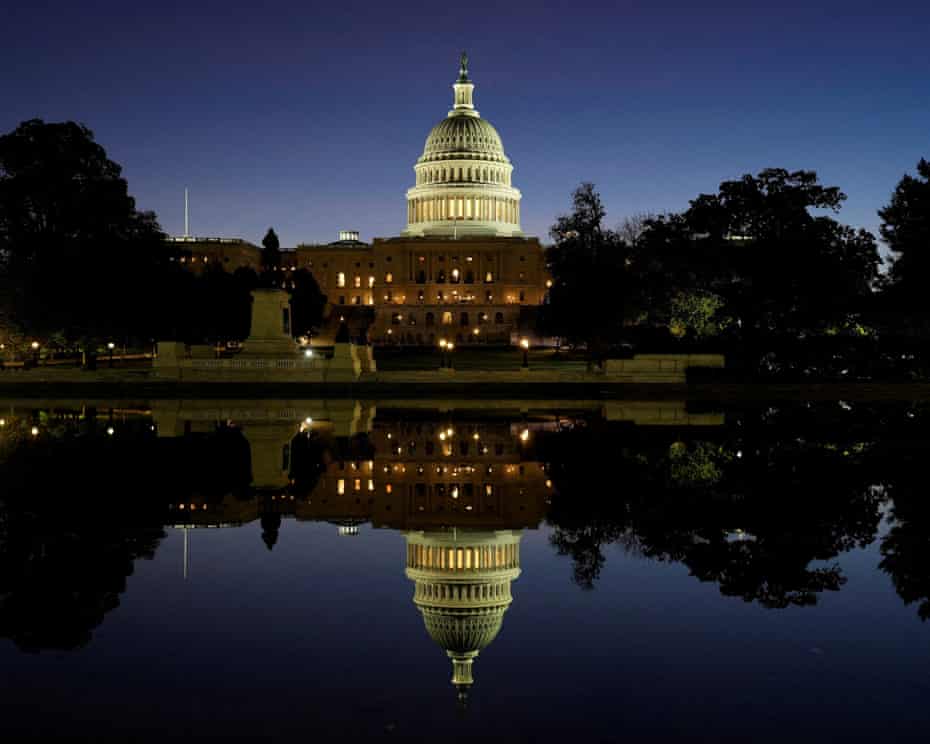
The Republican midterm battle is entering a decisive stage as millions of Americans vote in elections that could weaken President Donald Trump‘s influence in Washington and hand Democrats greater control over the country’s legislative institutions.
Although Trump is not personally contesting a seat, his policies and leadership have become central to the campaigns. The outcome will determine whether Republicans retain their congressional advantage or face a more difficult political environment during the remainder of his second administration.
The stakes extend beyond Washington. Voters are choosing members of Congress, governors, state legislators and local representatives, while several ballot measures are also being decided across the country.
Republicans are defending a narrow majority in the House of Representatives and a more comfortable advantage in the Senate. Democrats believe the political climate offers them an opportunity to reverse the balance of power.
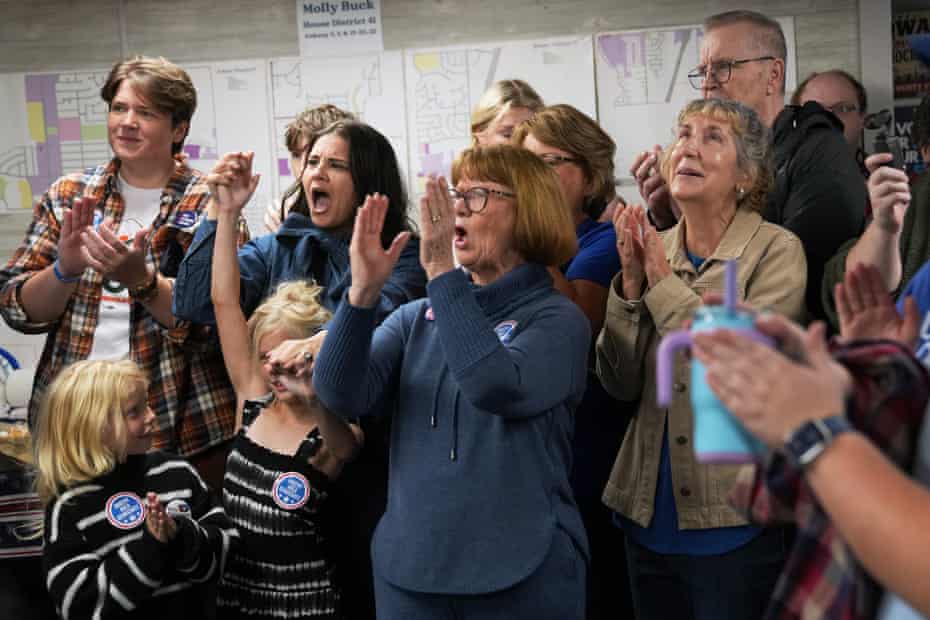
Congressional control hangs in the balance
The House of Representatives is facing a complete electoral contest, with all 435 seats appearing on the ballot.
Republicans currently hold the chamber, but their slim advantage means relatively few constituency victories could change its leadership. Democrats require a net gain of four seats to take control.
The Senate contest is equally significant, although the mathematical challenge facing Democrats is different. Republicans currently have 53 seats, compared with 47 held by Democrats and independent senators who caucus with them.
With 35 Senate seats being contested, Democrats need to gain four seats to establish a majority.
The elections include 33 regularly scheduled Senate contests and two special elections in Florida and Ohio.
The Republican midterm battle also encompasses 39 gubernatorial contests across 36 states and three territories, alongside thousands of state legislative positions and numerous local and judicial elections.
The eventual winners will influence policymaking at federal, state and community levels.
Millions vote before election day
Participation has already been substantial, with more than 58 million Americans casting ballots before election day, according to an analysis by the University of Florida.
The early voting figure demonstrates the scale of mobilisation by political parties and campaign organisations seeking to secure support before the final day of voting.
The campaigns have concentrated on persuading undecided voters, encouraging supporters to participate and presenting competing explanations for the country’s economic and political challenges.
Cost of living and Trump’s policies shape the campaign
The economic situation has become one of the major talking points, with voters weighing the cost of everyday necessities against promises made by candidates and the administration.
Republicans are seeking to defend Trump’s policy direction, while Democrats are using concerns about affordability to question the administration’s performance.
Immigration enforcement has also divided voters. Trump’s administration has pursued tougher measures, but the implementation of those policies has attracted criticism, including from some Republican politicians.
Other important campaign issues include abortion rights, healthcare provision, Medicaid and the future of federal institutions.
The rapid expansion of artificial intelligence has also entered local political discussions, particularly over data centre construction, electricity consumption and pressure on public infrastructure.
These issues have helped turn the congressional elections into a wider debate about the direction of American society.
Several Senate contests could determine the outcome
The struggle for Senate control is particularly intense in states where incumbents face competitive challengers.
Michigan is among the most closely watched. Democrat Abdul El-Sayed is challenging Republican Mike Rogers in a contest complicated by divisions within the Democratic Party.
Haley Stevens, who lost the Democratic primary to El-Sayed, subsequently endorsed Rogers.
Senate Democratic leader Chuck Schumer condemned the decision, describing it as “a despicable betrayal”.
El-Sayed also criticised political manoeuvring by established politicians, saying: “Whatever they’re trying to distract you, it’s because they’re picking your pocket.”
Georgia presents another important contest, with Democratic senator Jon Ossoff defending his seat against Republican Mike Collins.
In Maine, Republican Susan Collins is seeking re-election against Democrat Troy Jackson.
Ohio is witnessing a contest between former Democratic senator Sherrod Brown and Republican Jon Husted, while Texas Democrat James Talarico is challenging Republican Ken Paxton.
Texas attracts significant campaign spending
The Texas contest has attracted considerable attention because of the state’s long-standing Republican voting record.
Republicans have reportedly spent approximately $210m supporting Paxton’s campaign, reflecting the importance attached to retaining the seat.
Democrats have not won a statewide election in Texas since 1994, while Trump secured the state by almost 14 percentage points in the 2024 presidential election.
Nevertheless, the contest has attracted national interest because of the possibility of an upset and its potential implications for the Senate majority.
Alaska is another state under close scrutiny, where Democrat Mary Peltola is challenging Republican incumbent Dan Sullivan.
The race has generated controversy over an alleged similar-name challenger. Peltola has denied knowledge of the matter.
The US Justice Department also pursued legal action seeking to prevent certification if Sullivan lost, but a judge dismissed the lawsuit.
Kansas, Iowa, North Carolina and New Hampshire are among the other states attracting attention.
Should the Senate finish with an equal number of seats for both parties, Vice-President JD Vance would be entitled to cast the deciding vote.
Florida adjusts voting arrangements after flooding
Election officials in Florida have had to make changes to polling arrangements following flooding in several counties.
Eighteen polling locations were moved across Brevard, Highlands, Indian River, Martin, Okeechobee, Palm Beach and St Lucie counties.
Governor Ron DeSantis declared an emergency on Monday as authorities responded to the flooding.
The state also has important political contests, including a special Senate election between Democrat Angie Nixon and Republican Ashley Moody.
In another race, Republican representative María Elvira Salazar is facing Democratic challenger Eliott Rodriguez.
Salazar has previously expressed concerns about the extent of Trump’s immigration enforcement measures, arguing that the administration had gone too far.
Her position illustrates how disagreements over federal immigration policy have also emerged within Republican political circles.
Iran tensions create another challenge for the administration
The international situation has added another dimension to the Republican midterm battle, particularly as developments involving Iran continue to affect American foreign policy and energy markets.
Read also: Postwar security force could defend Ukraine against Russian attacks
https://swiftreportnow.com/postwar-security-force-could-defend-ukraine/
The United States conducted strikes on Iran’s Qeshm Island on Monday. American officials described the operation as defensive, saying it targeted surface-to-air missile systems used against US assets.
The Wall Street Journal first reported the strikes, which were subsequently reported by Reuters and the Associated Press.
Trump sought to play down the prospect of a renewed military confrontation, declaring: “We had a war with Iran. We won.”
He also said: “I don’t know if you even call it a war because we haven’t been doing any fighting for months.”
Vice-President JD Vance indicated that diplomatic discussions were continuing, saying there had been “a number of good conversations with the Iranians”.
He expressed hope that the discussions would produce “a negotiated settlement”.
However, Iran’s continued closure of the Strait of Hormuz has maintained pressure on international energy markets, contributing to concerns over fuel prices.
Trump has also suggested that military operations could resume after the midterm elections, leaving uncertainty over the future direction of the confrontation.
Democrats gain encouragement from battleground polling
Recent opinion surveys have offered Democrats reasons for optimism in several competitive states.
Final polls conducted by The New York Times and Siena College placed Democratic candidates ahead in five of seven key battleground contests, including Texas and Kansas.
However, polling advantages do not automatically translate into election victories, particularly in states where Republican candidates enjoy established support.
Michigan’s Democratic divisions also demonstrate the difficulties facing the opposition as it attempts to unite its supporters behind its candidates.
The parties are therefore concentrating on turnout, campaign organisation and persuading voters who have yet to make their decisions.
Iowa becomes a battleground for political messaging
In Iowa, Democratic gubernatorial candidate Rob Sand has been presenting himself as a candidate capable of attracting support beyond traditional party boundaries.
During a town hall meeting in Waverly, Sand criticised the country’s political divisions and called for greater accountability from elected officials.
He said: “We need to focus that anger and point it at where it ought to be pointed, which is at a broken two-choice political system that is too easily abused to allow elected officials to be corrupt and to be lazy and still hold power.”
Sand also argued that politicians sometimes encourage divisions among ordinary Americans.
“A lot of politicians want people to be angry with their neighbors,” he said.
His campaign has emphasised cooperation between voters from different political backgrounds, while supporters such as Sarah Booz have been involved in canvassing activities.
Republicans have responded by intensifying their own campaign efforts.
At a rally in Des Moines, Republican senator Chuck Grassley described Democrats as “outlandish socialists” and argued against Sand’s political ambitions.
“We don’t need Sand in that machinery,” Grassley said.
Republican candidate Ashley Hinson also attacked her opponent Zach Turek, calling him “Too Liberal Turek”.
“We fire liberal phonies, we don’t promote them,” she told supporters.
The exchanges reflect the intensity of the campaign as both parties attempt to mobilise their political bases.
Election results could reshape Washington
Polling stations opened first in Vermont before voting began in Connecticut, Indiana, Kentucky, Maine, New Jersey, New York and Virginia.
North Carolina, Ohio and West Virginia were among the states scheduled to open their polling stations later.
The first results are expected after 6pm Eastern Standard Time, corresponding to 11pm GMT.
Nevertheless, close contests may require additional counting before winners can be declared. Some results could take hours or several days to become clear.
The historical record offers another important consideration for Republicans. The party occupying the White House has lost seats in the House of Representatives in 18 of the last 20 midterm elections.
That represents approximately 90 per cent of midterm contests since 1946, although historical patterns cannot determine the outcome of the current elections.
A Democratic takeover of either congressional chamber would significantly change the political calculations facing Trump.
Control of the House would give Democrats greater influence over legislation, federal spending and congressional investigations. A change in Senate control would also affect the administration’s ability to advance its legislative and other political priorities.
If Republicans retain both chambers, Trump would have greater congressional support to continue implementing his second-term agenda.
The Republican midterm battle is therefore about more than individual victories. It will determine the balance of political power in Washington and establish the conditions under which Trump governs during the remaining years of his presidency.
With millions of ballots already cast and several competitive contests awaiting results, the elections could produce significant consequences for both parties and the future direction of American politics.
About The Author