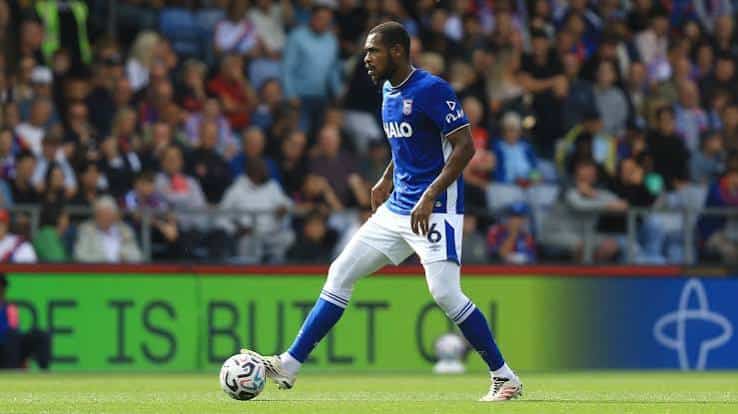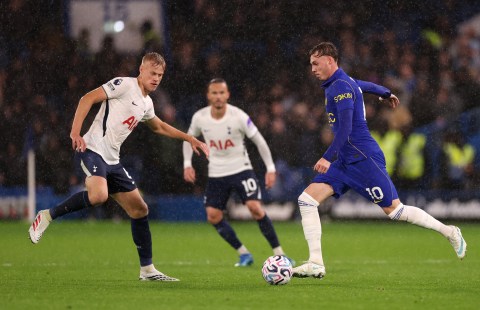
Chelsea player ratings vs Tottenham reflected a disastrous evening at Stamford Bridge as the Blues suffered a 2-0 Premier League derby defeat, with Cole Palmer’s sending-off and Mike Penders’ costly error helping Roberto De Zerbi’s visitors secure victory.
Xabi Alonso’s Chelsea struggled to impose themselves against Tottenham Hotspur on Saturday, October 24, 2026, as Spurs delivered a stronger performance and capitalised on two decisive second-half moments.
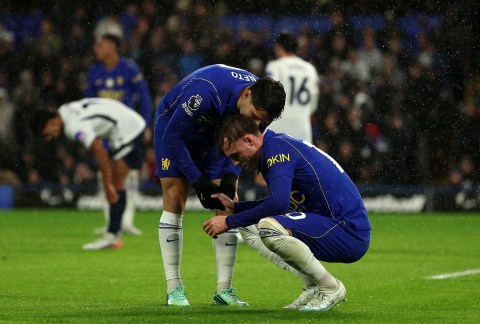
Tottenham entered the contest encouraged by their first Premier League victory of the season against Coventry. They carried that momentum into west London, where James Maddison impressed before injury forced him off shortly after half-time.
The visitors eventually broke the deadlock through a goalkeeping mistake before Mathys Tel produced an excellent individual finish to seal the points. Palmer’s dismissal further complicated Chelsea’s attempt to recover.
Chelsea Player Ratings vs Tottenham: Goalkeeper and Defence
Mike Penders — 4/10
Penders produced important work in the opening half, including a good save to deny Omar Marmoush when the Tottenham forward threatened to open the scoring.
However, the Belgian goalkeeper endured a damaging moment after the interval. Under pressure as an inswinging corner arrived, he attempted to punch the ball clear but sent it into his own net.
The unfortunate intervention handed Tottenham the breakthrough and overshadowed the promising moments from Penders’ first Premier League start. It was a costly mistake at a crucial stage of the derby.
Josh Acheampong — 6/10
Acheampong faced a demanding assignment against Tottenham’s lively attackers, particularly Tel, who repeatedly looked dangerous down the left flank.
The Chelsea defender handled much of the first-half pressure reasonably well, although he received limited defensive assistance from Pedro Neto.
Alonso subsequently moved him to right-back when Chelsea adjusted their defensive formation. Acheampong could not prevent Tel from powering past him during the move that produced Tottenham’s second goal.
Maxence Lacroix — 5/10
Lacroix struggled to maintain his defensive positioning during Tottenham’s promising first-half attacks. Marmoush and Maddison repeatedly forced him to adjust, leaving the Chelsea centre-back vulnerable to movement around the defensive line.
His difficulties continued when Tel surged forward to score the visitors’ second goal. Lacroix allowed the forward too much room, and Tottenham punished Chelsea with a decisive finish into the bottom-left corner.
Levi Colwill — 6/10
Colwill delivered a relatively steady performance despite Chelsea’s overall defensive difficulties. He won his individual duels when required and was not consistently overwhelmed by Tottenham’s attacking movement.
The defender also attempted to contribute offensively, producing an excellent long pass that nearly released Neto through on goal.
The ball skipped away from the Portuguese winger before Chelsea could turn the opportunity into a serious threat. Colwill nevertheless offered one of the more encouraging contributions among the home side’s defenders.
Chelsea Midfield and Wing-Back Ratings
Pedro Neto — 6/10
Neto remained one of Chelsea’s more energetic attacking players, using his movement on the right wing to create opportunities and stretch Tottenham’s defensive structure.
He enjoyed additional freedom to advance after the break, but failed to make the most of a promising opportunity shortly after the hour mark.
His effort was directed straight at Tottenham goalkeeper Antonin Kinsky, allowing the visitors to escape without conceding. Neto showed attacking intent, although his final execution needed improvement.
Moises Caicedo — 6/10
Caicedo brought physicality to Chelsea’s midfield, making several forceful early challenges as the home side attempted to compete with Tottenham in central areas.
However, the Ecuadorian struggled to control possession and establish the rhythm Chelsea needed. Maddison’s influence during the first half made the midfield battle particularly difficult for the hosts.
Caicedo’s defensive work remained noticeable, but Chelsea needed greater composure and creativity from him to challenge Tottenham more effectively.
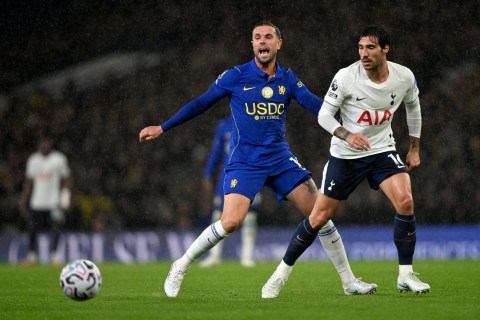
Jordan Henderson — 6/10
Henderson had an opportunity to give Chelsea an early advantage after a sweeping move delivered the ball to him in space near the edge of Tottenham’s penalty area.
The midfielder failed to make the chance count, striking his effort too close to Kinsky, who made a relatively comfortable save.
That missed opportunity proved frustrating as Chelsea struggled to create clear openings. Henderson contributed to the midfield battle, but his failure to capitalise on the promising first-half position stood out.
Jorrel Hato — 6/10
Hato handled his defensive responsibilities reasonably well against Mohammed Kudus, limiting the Tottenham attacker’s opportunities to dominate their individual contest.
However, the Chelsea player offered limited influence going forward and struggled to become a consistent outlet during the home side’s attempts to build attacks.
He was substituted shortly after the hour mark, with Marco Palestra introduced as Alonso sought to change Chelsea’s approach.
Chelsea Attack Ratings: Palmer Disappoints Before Red Card
Geovany Quenda — 4/10
Quenda endured a difficult outing in his first Premier League start, struggling to influence Chelsea’s attacking play against a Tottenham side that looked more confident and organised.
The young attacker failed to register a shot on target and managed only one touch inside the penalty area, highlighting his limited involvement in dangerous areas.
Alonso eventually withdrew him for Estevao as Chelsea searched for greater attacking impact. Quenda’s performance offered little evidence of the threat the home side needed during a disappointing derby.
Cole Palmer — 3/10
Palmer received one of Chelsea’s lowest ratings after a largely ineffective performance ended with his dismissal in the second half.
The England international struggled to influence proceedings, with the absence of Joao Pedro appearing to affect Chelsea’s attacking structure and Palmer’s ability to operate effectively in advanced positions.
His evening deteriorated further when he received a second yellow card for a late challenge on Conor Gallagher. Palmer had already been booked for pushing Mateus Fernandes off the ball.
The dismissal reduced Chelsea to ten players just three minutes after Penders’ own goal, making an already difficult task significantly harder.
Palmer could have few complaints about the disciplinary decisions, while his limited attacking contribution meant Chelsea lost an important player without having benefited sufficiently from his presence.
Morgan Rogers — 5/10
Rogers also found it difficult to make an impression in Chelsea’s attack, particularly without Joao Pedro leading the forward line.
Operating further forward on the left, he lacked the influence he had shown in previous matches when given more freedom to move across the attacking positions.
Chelsea needed Rogers to provide greater creativity and movement, but he struggled to trouble Tottenham consistently. His performance reflected the wider problems affecting the Blues throughout the match.
Why Tottenham Defeated Chelsea at Stamford Bridge
Tottenham’s victory was built on stronger attacking moments and their ability to take advantage of Chelsea’s mistakes.
Marmoush threatened early, while Maddison controlled important periods of the first half before his injury forced him to leave the pitch shortly after the restart.
Although Tottenham’s opening goal came through Penders’ unfortunate punch into his own net, the visitors continued to apply pressure after taking the lead.
Palmer’s dismissal then shifted the balance further in Tottenham’s favour, giving De Zerbi’s team a numerical advantage that Chelsea struggled to overcome.
Tel supplied the decisive moment with an outstanding individual run and finish, leaving Chelsea with no realistic route back into the contest.
For Alonso, the defeat highlighted concerns about defensive concentration, attacking cohesion and discipline. Chelsea will need a stronger collective response to avoid further damaging results.
Tottenham, meanwhile, can take encouragement from a performance that combined attacking ambition with the ability to punish opponents when opportunities emerged.
About The Author