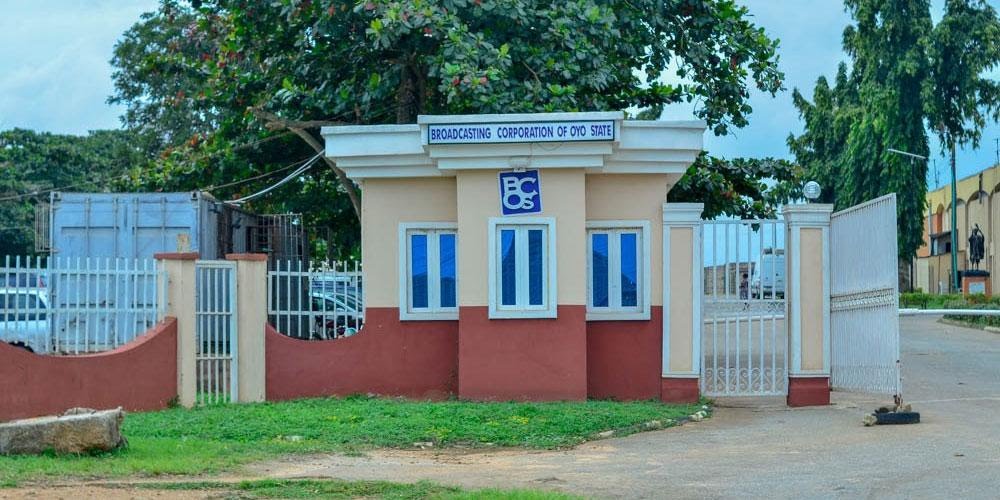
BCOS faces mounting scrutiny over salary arrears and alleged asset sales as stakeholders urge the Oyo State Government to restore accountability and stability.
The Broadcasting Corporation of Oyo State (BCOS), is facing renewed public scrutiny as concerns mount over delayed salary payments to workers and allegations involving the disposal of hundreds of government-owned assets.
The developments have sparked calls from stakeholders for greater transparency, accountability, and urgent intervention to stabilise the state-owned broadcaster.
For decades, BCOS occupied a prominent position in the media landscape, serving as a trusted platform for news dissemination, educational programming, entertainment, and the promotion of Yoruba language and culture.
The broadcaster which built a reputation for connecting communities across Oyo State while preserving cultural values through its radio and television services is facing one of the most challenging periods in its history.
Stakeholders, labour advocates, and media professionals have raised concerns that the corporation’s operational difficulties are becoming increasingly visible, with workers bearing the greatest burden of the crisis.
One of the major issues attracting public attention is the continued delay in the payment of staff salaries.
According to reports, employees were still receiving their May salaries as of July, leaving many workers struggling to meet their financial obligations amid Nigeria’s rising cost of living.
The delayed payments have reportedly created uncertainty among employees, many of whom depend entirely on their monthly earnings to provide for their families, settle accommodation costs, pay school fees, and meet other essential responsibilities.
Labour observers argue that consistent salary delays not only affect workers’ welfare but also reduce productivity and weaken morale within the organisation.
According to ThePressNgr, the recurring salary backlog has drawn criticism from stakeholders who believe that prompt payment of wages is a basic obligation that every employer, particularly a government-owned institution, should fulfil.
Several observers contend that the issue reflects deeper administrative and financial challenges that require immediate attention.
Beyond the salary concerns, allegations involving the reported disposal of BCOS assets have further intensified public scrutiny.
Reports claim that more than 700 government-owned items, including industrial generators, broadcasting equipment, office infrastructure, and other operational materials, were allegedly sold or transferred under circumstances that have raised questions among concerned stakeholders.
Although the allegations have generated widespread debate, there has been no publicly available independent investigation confirming whether any laws or procurement procedures were violated.
Nevertheless, many stakeholders believe the seriousness of the claims warrants a comprehensive inquiry to establish the facts and reassure the public.
Critics have argued that every disposal of public assets should comply with established procurement regulations and financial accountability procedures.
They insist that openness in the management of government property is essential for maintaining public confidence and protecting state institutions from allegations of mismanagement.
Media analysts say the situation has evolved beyond a routine management challenge and now represents a broader institutional issue capable of affecting the broadcaster’s long-term sustainability if left unresolved.
A stakeholder within the media industry reportedly described transparency as the foundation upon which every public institution should operate, warning that prolonged silence over sensitive allegations could further erode public trust in the organisation.
Attention has also shifted to the leadership of BCOS, with several stakeholders calling on the management to address public concerns through greater openness and improved communication.
According to critics, the combination of salary arrears, declining operational performance, and allegations surrounding asset management has heightened demands for stronger administrative accountability.
There are also concerns that existing internal mechanisms designed to protect employees’ welfare have become ineffective, leaving many staff members without sufficient institutional support during the ongoing crisis.
The controversy has equally placed increased pressure on the Oyo State Government. Stakeholders are urging Governor Seyi Makinde’s administration to intervene promptly by engaging all relevant parties, reviewing the corporation’s financial situation, and implementing measures capable of restoring stability within the organisation.
Some public affairs analysts believe that preserving BCOS is important because the broadcaster represents more than just a media establishment.
Over the years, it has served as an important cultural institution, documenting the history of Oyo State, promoting indigenous languages, supporting public education campaigns, and providing information during elections, emergencies, and other significant events.
According to analysts, allowing such an institution to continue experiencing operational decline could weaken public broadcasting in the state and diminish an important platform for cultural preservation and public engagement.
To address the growing concerns, stakeholders have proposed several measures aimed at restoring confidence in the organisation.
Among the most prominent recommendations is the establishment of an independent forensic audit to examine all reported asset disposals, verify compliance with relevant regulations, and determine whether any administrative irregularities occurred.
Observers also recommend implementing financial reforms that would ensure salaries are paid promptly while strengthening internal oversight mechanisms to improve transparency and accountability in the management of public resources.
Additionally, there are increasing calls for the BCOS board and management to provide a detailed explanation regarding recent administrative decisions and outline a practical recovery strategy capable of improving operational efficiency and rebuilding staff confidence.
Labour advocates argue that restoring workers’ confidence should be treated as a priority, noting that motivated employees are essential to the success of any broadcasting organisation.
They maintain that resolving salary issues promptly would contribute significantly to improving productivity and stabilising the institution.
As public discussions continue, many stakeholders insist that the future of BCOS depends largely on decisive leadership, transparent governance, and sustained institutional reforms. They believe timely intervention can still preserve the broadcaster’s legacy and reposition it as a vibrant public media organisation capable of serving future generations.
For now, attention remains focused on how the corporation’s leadership and the Oyo State Government respond to the growing concerns.