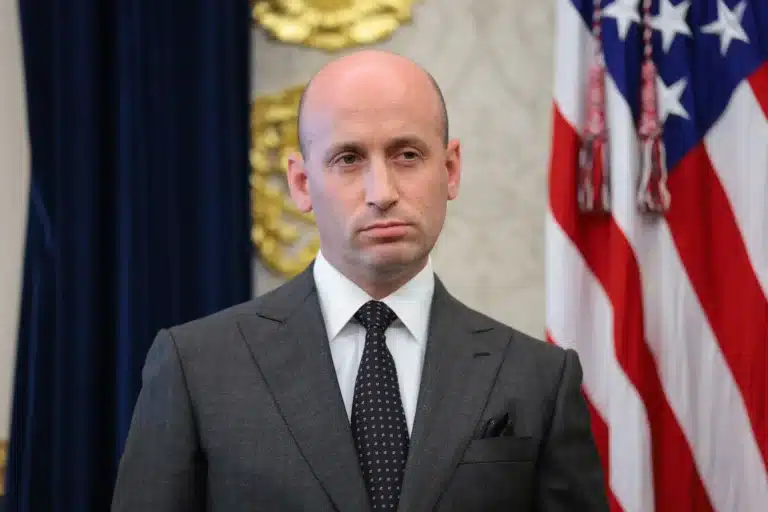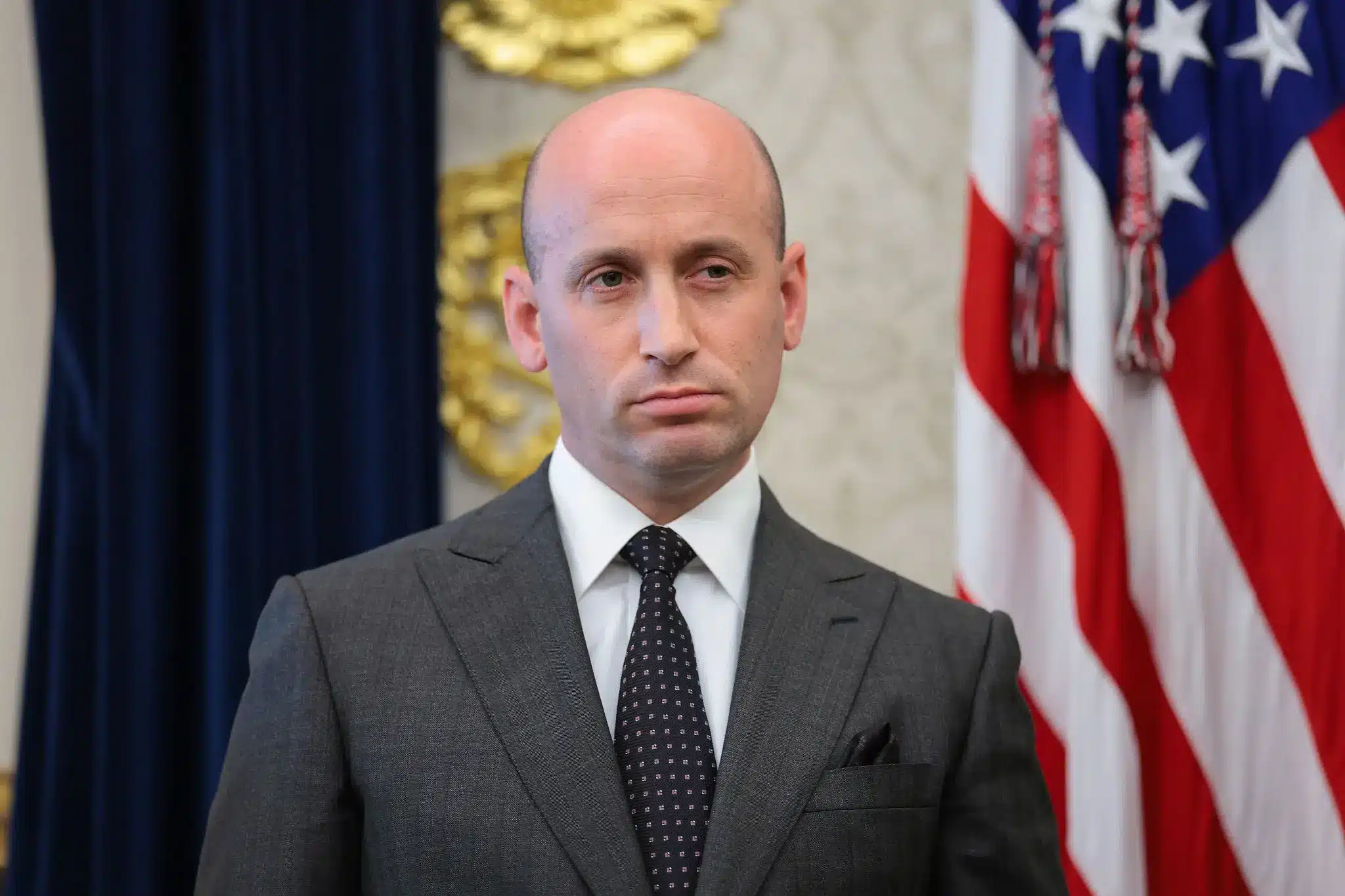
The Stephen Miller appointment as White House chief of staff has provoked an intense political backlash in Washington, with Democratic leaders and some Republicans accusing US President Donald Trump of rewarding a controversial adviser despite his party’s crushing midterm election setback.
Trump announced on Friday that Miller, his trusted deputy chief of staff and the driving force behind much of his immigration crackdown, would replace Susie Wiles in one of the most powerful positions within the White House.
The decision came only days after Democrats secured major victories in the US midterm elections, ending Republican control of Congress and delivering a significant rejection of the president’s political agenda.
Instead of appointing someone perceived as capable of changing the administration’s direction, Trump has elevated an adviser closely associated with some of his most divisive policies.
The move has consequently intensified questions about whether the president intends to reconsider his approach following the election results or double down on the policies that contributed to his party’s losses.
Democratic lawmakers have described Miller as a dangerous extremist, while Republican supporters insist that his experience, loyalty and commitment make him suitable for the position.
Democrats accuse Trump of ignoring the election message
The announcement immediately attracted condemnation from senior Democratic politicians, several of whom questioned why Trump would promote Miller after voters delivered such a significant electoral setback to Republicans.
Dick Durbin, a Democratic senator from Illinois, described Miller as a “hatemonger” and argued that his elevation demonstrated that the president had learned nothing from the election.
“For Trump to promote this hatemonger shows he has learned nothing,” Durbin wrote on X.
Chuck Schumer, who is expected to become Senate majority leader, also criticised the president’s decision, accusing him of failing to recognise the significance of his party’s defeat.
Schumer said Trump “learned nothing from his historic defeat” and “couldn’t have made a worse choice” in promoting Miller.
Hakeem Jeffries, the Democratic leader in the House of Representatives, issued an even stronger condemnation, describing Miller as “a dangerous xenophobe and reckless extremist who has American blood on his hands”.
Jeffries demanded that Trump fire Miller, making clear that Democrats intend to challenge the appointment rather than accept it as an ordinary White House personnel change.
Chris Van Hollen, a Democratic senator from Maryland, described the decision as “another kick in the teeth to the American people”.
He also called it “a sign of Trump’s contempt for the voters”, arguing that the president had disregarded the demand for change expressed through the midterm elections.
The criticism reflects a wider Democratic position that Trump’s choice of chief of staff should have demonstrated an understanding of the political message delivered by voters.
Miller’s role in Trump’s immigration crackdown
Much of the opposition to the Stephen Miller appointment centres on his influence over the administration’s immigration policies.
Miller has been one of Trump’s closest advisers and is widely credited with helping design the mass deportation agenda that has become a defining feature of the president’s second administration.
As a senior policy adviser, he has played a prominent role in developing and defending measures aimed at restricting immigration and expanding the government’s enforcement operations.
His influence has made him one of the most controversial officials in Trump’s political circle, particularly among Democrats and organisations opposed to the administration’s immigration crackdown.
Miller was also an author of the right-wing Project 2025 manifesto, which outlined proposals for a far-reaching transformation of federal government policies and institutions.
He has regularly appeared on television to defend Trump’s agenda, criticise political opponents and promote controversial policy positions.
These have included efforts to end birthright citizenship and suggestions that the United States could invade Greenland.
For Miller’s critics, his appointment represents a decision to give greater authority to an adviser whose political positions have already generated considerable controversy.
Gavin Newsom launches personal attack
Gavin Newsom, the outgoing governor of California, was among the prominent Democrats who reacted angrily to the president’s announcement.
Newsom described Miller as “one of the most vile thugs to ever slither into the Oval Office”.
He also called the promotion “an insult to every American who voted for change” in Tuesday’s elections.
His reaction reinforced the argument among Democratic leaders that Trump’s decision demonstrates a refusal to acknowledge the outcome of the midterms.
The criticism has also placed Miller at the centre of the political debate over whether the administration should change course after losing Republican control of Congress.
Trump loyalists defend controversial adviser
Despite the backlash, several Republican lawmakers and senior administration officials welcomed Miller’s elevation, presenting him as an experienced and dependable defender of Trump’s political objectives.
Steven Cheung, the White House communications director, described Miller as a “Trump OG”, highlighting his longstanding relationship with the president.
“There is no bigger advocate for the Trump agenda than Stephen,” Cheung said.
Republican senator Mike Lee of Utah also defended Miller, describing him as “a staunch defender of law and order against illegal invasions and leftist lawlessness”.
Eric Schmitt, a Republican senator from Missouri, similarly expressed confidence in Miller’s ability to serve the country at a critical political moment.
“Our country is at a pivotal point and Stephen Miller understands exactly what is at stake,” Schmitt wrote on X.
The endorsements demonstrated that Trump’s most committed allies regard Miller’s promotion as an opportunity to strengthen the administration’s ability to implement its policies.
Their position contrasts sharply with the Democratic argument that the president should have responded to the midterm results by reconsidering the direction of his government.
Vance, Hegseth and Rubio among officials praising Miller
The appointment also received support from several influential members of Trump’s administration.
Vice-President JD Vance, Defence Secretary Pete Hegseth, Health Secretary Robert F Kennedy Jr and Secretary of State Marco Rubio publicly praised Miller following the announcement.
Their reactions underscored his strong standing within the president’s inner circle and the importance of his contribution to the administration’s political and policy operations.
Miller had already exercised considerable influence as deputy chief of staff, working closely with Trump and helping advance key government initiatives.
His elevation to chief of staff places him in an even more influential position within the White House, where he will have greater responsibility for coordinating the administration’s work and supporting the president’s priorities.
The support from senior officials also suggests that the administration has no immediate intention of distancing itself from Miller’s controversial policy record.
Republican opposition emerges over deportation policies
Although most prominent Republican allies welcomed the announcement, Miller’s promotion was not universally supported within the party.
Congressman Marlin Stutzman, an Indiana Republican who retained his seat in the midterm elections, had argued earlier in the week that Miller should be fired.
His criticism came amid growing anger over the administration’s deportation drive.
However, when asked on Friday about Trump’s decision to promote Miller instead, Stutzman described the move as a “horrible decision” in comments to Semafor.
The congressman’s response revealed that concerns about Miller’s influence are not restricted to Democratic lawmakers.
It also highlighted the political difficulties confronting Republicans as they consider the reasons for their midterm losses and whether the administration’s approach to immigration has become an electoral liability.
With Democrats now controlling Congress, disagreements over the president’s policies and appointments could become increasingly significant in the coming political battles.
Former Trump official describes promotion as dangerous
Miles Taylor, who served as chief of staff at the Department of Homeland Security during Trump’s first administration before becoming an outspoken critic of the president, also condemned the appointment.
Taylor said his experience working with Miller for two years had convinced him that the promotion represented an exceptionally dangerous personnel decision.
“I spent two years working with Stephen Miller. His appointment as White House chief of staff is among the most dangerous personnel decisions in the history of our republic. I say that without reservation,” Taylor said.
His remarks were particularly significant because he had previously occupied a senior position within the Trump administration.
Taylor’s warning added to concerns among opponents that Miller’s expanded authority could have consequences for the government’s approach to immigration, national security and domestic affairs.
His criticism also demonstrated that opposition to Miller extends beyond Democratic politicians to individuals who have firsthand experience of working within Trump’s administration.
White House insists Miller will deliver Trump’s agenda
The White House rejected the criticism and defended Miller’s record, describing him as a key figure responsible for advancing the president’s priorities.
In its response, the administration credited him with spearheading its crime crackdown in Washington DC and Memphis.
It also praised his contribution to deregulation, the expansion of American energy production, efforts against drug cartels and measures to secure the country’s border.
The White House stated:
“He has spearheaded the administration’s crime crackdown including in DC and Memphis, record setting deregulation, unleashed American energy, dismantled drug cartels, and secured our border.”
It further declared: “In his new role, he will continue to deliver historic successes for the American people.”
The defence made clear that the administration considers Miller’s record a major achievement and intends to rely on his experience in the new position.
Rather than distancing itself from the adviser following the electoral setback, the White House has presented his promotion as a continuation of its commitment to Trump’s agenda.
Miller promises to fight for Trump
Miller accepted the appointment with a message expressing gratitude to the president and his determination to support the administration.
He described himself as “honored beyond words” to have been selected for the influential position.
In a statement posted on X, Miller also outlined what he considered his central responsibility in the new role.
“The mission now is more clear than ever: Fight with all of our soul to support our President and defend this magnificent Republic,” he wrote.
His remarks reinforced his reputation as one of Trump’s most committed political allies and suggested that he intends to maintain the administration’s existing direction.
According to The Guardian’s report, the appointment has attracted condemnation from Democratic lawmakers, some Republican politicians and a former senior Trump administration official, while the president’s cabinet members have largely welcomed the decision.
Read also: Qatar’s plan for Strait of Hormuz reopening links shipping access to nuclear inspections in Iran
https://swiftreportnow.com/qatars-plan-for-strait-of-hormuz-reopening/
The Stephen Miller appointment has therefore become a major political controversy at a particularly sensitive moment for the Trump administration.
Democrats see the promotion as evidence that the president has ignored voters’ concerns, while his supporters regard Miller as an essential figure in delivering the policies that Trump promised.
With Republicans having lost control of Congress, the decision could further intensify the struggle over immigration, presidential authority and the future direction of American politics.
About The Author