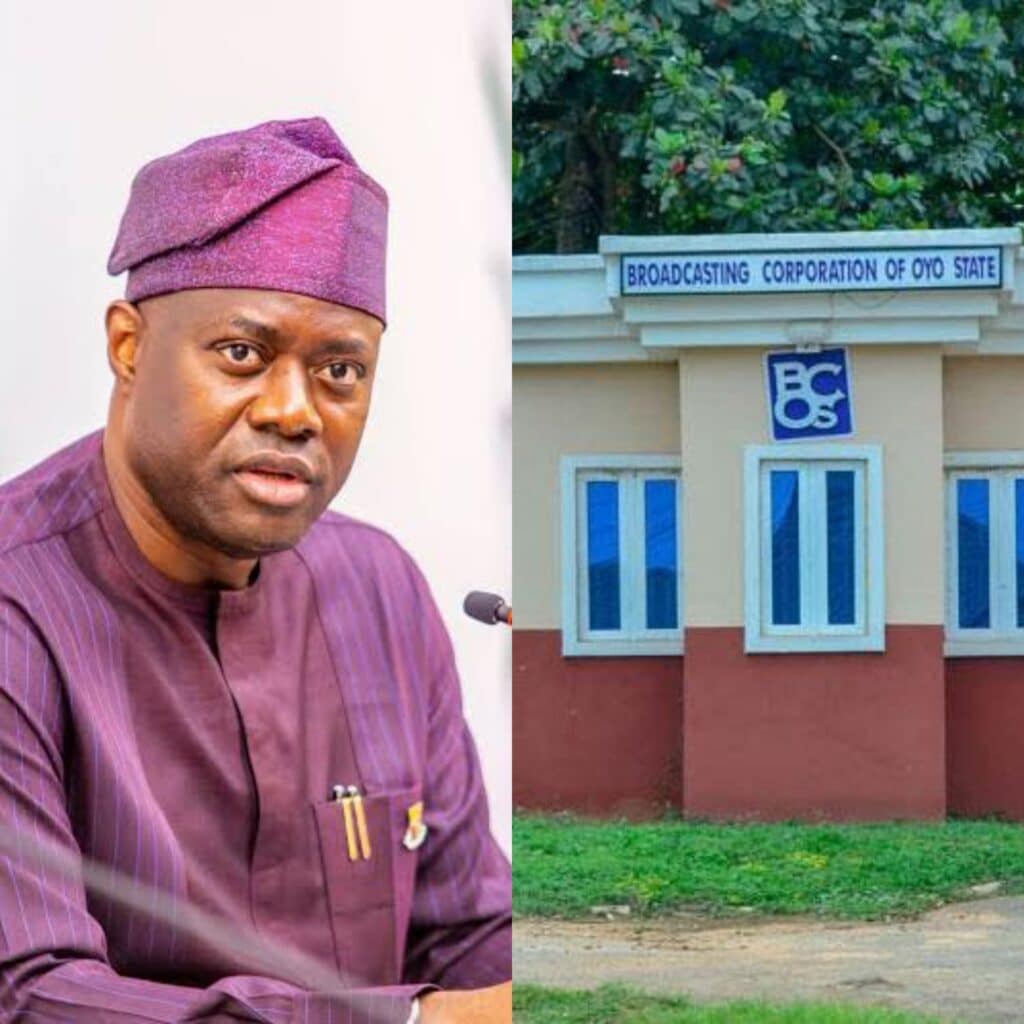
The Oyo State Government has opened discussions with stakeholders of the Broadcasting Corporation of Oyo State (BCOS) to address challenges affecting the state-owned media organisation, including irregular salary and pension payments, staff shortages and inadequate operational facilities.
The meeting took place at the Conference Hall of the Secretary to the State Government (SSG), Secretariat, Agodi, Ibadan, with representatives of the BCOS management, the Nigeria Union of Pensioners (NUP), the Nigeria Union of Journalists (NUJ) and the Radio, Television, Theatre and Arts Workers Union of Nigeria (RATTAWU) in attendance.
Government representatives at the meeting included the Secretary to the State Government, Professor Musibau Babatunde, who coordinated the engagement, and the Head of Service, Dr Mrs Adenike Fasina, alongside two other government officials.
According to Biodun Ipadeola, Secretary of NUP BCOS, who provided an account of the meeting, discussions centred on the financial and administrative challenges facing the corporation, particularly the welfare of its workforce and retirees.
Government urges BCOS to improve programming, generate more revenue
Addressing participants at the opening of the meeting, Babatunde called on BCOS to embrace innovation and adapt its operations to the changing demands of the broadcasting industry.
He expressed concern that some of the station’s programmes appeared outdated, urging the management to review its content and develop more attractive offerings capable of drawing the attention of prospective advertisers.
The SSG stressed the need for the corporation to adopt a business approach that would improve its revenue-generating capacity and help address concerns over its financial sustainability.
His remarks highlighted the importance of combining government support with efforts by the management to reposition the station and make its programmes more competitive in the media industry.
BCOS management presents eight-point request
During the meeting, the BCOS management presented an eight-point request to the state government, outlining areas where intervention was considered necessary to improve the corporation’s operations and address workers’ welfare concerns.
One of the major demands was the payment of outstanding subvention arrears covering January to June 2025.
The management also requested that monthly pensions for BCOS retirees be paid separately and that the pensioners be transferred to the mainstream pension system.
Another request was for the recruitment of new employees to replace officers who had retired, a development expected to address staffing gaps within the organisation.
The remaining requests focused on the purchase of modern broadcasting equipment, the provision of an alternative source of electricity and the settlement of outstanding debts owed to the Nigerian Communications Satellite Limited (NIGCOMSAT), among other operational concerns.
The proposals formed part of the issues presented for consideration as the government and the various stakeholders explored possible solutions to the corporation’s challenges.
NUP Chairman supports transfer of pensioners to mainstream system
Speaking on behalf of the pensioners, NUP Chairman Ayorinde Adisa expressed appreciation to the state government for initiating discussions with the relevant stakeholders on the way forward for BCOS.
Adisa commended the government for giving attention to the welfare of workers and pensioners, describing the situation at BCOS as an isolated case.
He also observed that the corporation’s subvention had begun to increase after the government started returning to BCOS the pension files of individuals who retired from other establishments.
Against this background, the NUP chairman appealed to the government to consider the BCOS management’s proposal to transfer all the corporation’s pensioners to the mainstream pension system.
The proposal became a major point of discussion when Babatunde and Fasina asked participants whether moving the pensioners to the Pensions Board would help resolve the problem of inadequate subvention.
According to Ipadeola’s account, the participants collectively answered in the affirmative, signalling their support for the proposed arrangement as a possible solution to the pension funding challenge.
Meeting considers outstanding pension payments
The stakeholders also discussed outstanding arrears arising from a five-month pension increment, an issue that was noted during the deliberations.
Attention was equally drawn to unpaid pensions for August and September, as well as the October payment. The outstanding amount was put at approximately ₦87 million, according to the account of the meeting.
The issues were documented for further consideration as discussions continued on the financial obligations affecting BCOS pensioners.
However, the meeting did not conclude the discussions on all the matters raised, as another session was scheduled for the following day, with the state governor expected to attend.
Government’s position on pension restructuring yet to be finalised
Although the discussions indicated support among participants for transferring BCOS pensioners to the mainstream pension system, a final decision by the state government was not announced in Ipadeola’s account of the meeting.
The next session is expected to provide an opportunity for further discussions on the proposals submitted by the management, the outstanding pension obligations and other challenges confronting the corporation.
The engagement brings together government officials, management representatives and labour unions to examine the issues affecting BCOS and consider measures that could improve its operations and address the concerns of workers and retirees.