The Alberta separatist referendum has put Canada‘s national unity under renewed scrutiny, with 66% of voters planning to oppose separation as the oil-rich western province considers whether to break away from the country.
The non-binding referendum, held on Monday, October 19, 2026, comes amid longstanding grievances over federal policies, environmental regulations and the distribution of economic benefits between Alberta and Canada’s central government.
Although opinion polls suggest the separatist campaign is likely to suffer defeat, political analysts warn that the movement could remain influential long after the votes are counted.
Alberta, home to approximately five million people, is Canada’s energy heartland and a major producer of oil and gas. Separatists argue that the province contributes more to the national economy than it receives in return.
The vote also presents a challenge for Canadian Prime Minister Mark Carney, who has made defending the country’s sovereignty a central priority amid trade tensions with the United States and President Donald Trump’s repeated suggestions that Canada should become America’s 51st state.
Alberta Separatist Referendum Tests Canada’s National Unity
The Alberta separatist referendum marks a significant moment in a debate that has continued for decades but has gained renewed momentum in recent years.
The referendum asks voters whether Alberta should pursue separation from Canada. However, the vote is non-binding, meaning it does not automatically make the province independent.
An Angus Reid poll released on Friday indicated that 66% of Albertans intended to vote to remain in Canada, suggesting that supporters of national unity hold a substantial advantage.
Despite the expected defeat for separatists, the same poll found that three in five Albertans believed the independence movement would never disappear.
The findings suggest that opposition to federal policies may continue to fuel political tensions even if the majority rejects separation.
Duane Bratt, a political scientist at Mount Royal University in Calgary, said the movement had developed networks and mobilised supporters who were unlikely to abandon their campaign immediately.
“This issue is not going away now. Because the separatists are mobilized. They’ve networked. They’re connected,” Bratt said.
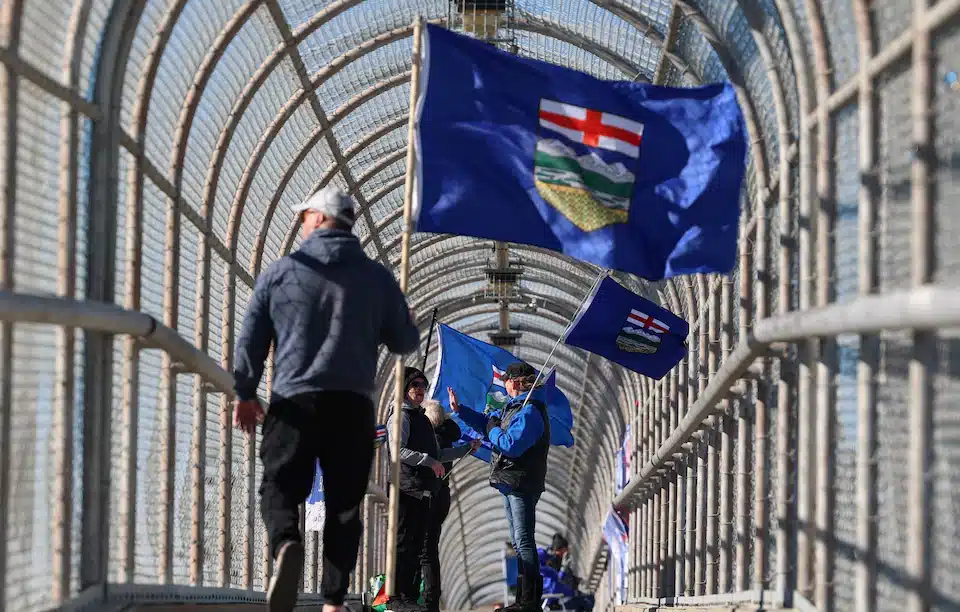
His assessment highlights the possibility that the referendum could become the beginning of another phase in Alberta’s political struggle rather than the end of the independence debate.
Why Alberta Separatists Want to Leave Canada
Disputes Over Oil, Gas and Federal Policies
Economic grievances are central to Alberta’s separatist movement, particularly concerns about federal environmental policies and their perceived impact on the province’s oil and gas industry.
Many supporters argue that Alberta’s energy sector generates substantial national wealth, yet federal decisions restrict the province’s ability to develop its natural resources.
They also contend that Alberta contributes more financially to Canada than it receives through federal spending and programmes.
Cory Morgan, founder of the pro-separation advertising organisation Pathway to Independence, criticised what he described as an imbalance in Canada’s federal system.
“Canada has an imbalanced system which feeds the central population and government at the expense of the outlying producing provinces such as Alberta,” Morgan said.
The argument reflects a longstanding grievance among some Albertans who believe the province’s economic contribution is not adequately recognised in federal decision-making.
However, opponents of separation dispute the idea that independence would automatically resolve Alberta’s economic concerns. Leaving Canada would raise difficult questions about trade, public finances, government services and the province’s future relationship with the rest of the country.
Economic Grievances Rather Than Cultural Identity
Unlike Quebec’s separatist movement, which has historically been shaped by language and cultural differences, Alberta’s independence campaign is primarily driven by economic and political disagreements.
Read also: Ukraine Russian Missile strikes: Kyiv reports missing US warnings amid Trump-Zelenskyy feud
https://swiftreportnow.com/ukraine-russian-missile-strikes-kyiv-reports/
Monday’s referendum is the first vote on separation from Canada to be held in a province outside majority French-speaking Quebec.
For many Alberta separatists, the central issue is whether the province receives fair treatment from Ottawa, Canada’s federal capital.
The movement has also drawn support from people who want to use the possibility of independence to pressure the federal government into changing its policies.
An Angus Reid poll found that among Albertans who would support a future binding referendum on separation, 60% said their motivation was to send a message to the federal government.
Only 37% said their primary motivation was to establish an independent country.
The figures suggest that support for the referendum does not necessarily translate into a firm commitment to creating a new nation.
For some voters, the independence campaign may be a political bargaining tool intended to secure greater provincial control over energy policy, taxation and other economic issues.
Danielle Smith Faces a Historic Political Decision
Alberta Premier Danielle Smith is the first provincial leader to put the question of separation to voters.
She called the referendum after months of pressure from a small but vocal faction within her governing United Conservative Party.
Although Smith has urged Albertans to remain part of Canada, the decision to hold the vote has brought the independence question directly before the electorate.
The referendum represents a delicate political balancing act for the premier. She must respond to separatist supporters within her political base while avoiding a rupture that could damage Alberta’s economic and constitutional position.
Smith has said that if a majority votes in favour of separation, she would seek a binding referendum on the issue.
Such a development would raise the stakes considerably, potentially moving the debate from a non-binding political expression to a more consequential constitutional confrontation.
However, with polling showing that most Albertans intend to remain in Canada, the immediate prospect of a decisive mandate for independence appears limited.
The longer-term political consequences may depend on whether the referendum weakens the movement or strengthens its organisation for future campaigns.
Mark Carney Campaigns to Keep Alberta in Canada
Canadian Prime Minister Mark Carney has spent much of the past week campaigning for the ‘stay’ side, urging Albertans to vote against separation and appealing to national pride.
Carney, who grew up in Alberta, has argued that Canada’s unity should not be reduced to financial calculations about which provinces contribute more or receive greater benefits.
“Canada is not a transaction between provinces. It’s not about gross and net, gives and gets,” Carney said on Friday in Red Deer, Alberta.
His message seeks to counter the argument that Alberta would be better off financially outside Canada.
Carney’s government has also taken steps to address some of the grievances behind the separatist campaign.
He has overturned certain environmental policies and supported a proposed oil pipeline designed to increase Alberta’s exports to Asian markets.
These measures indicate that Ottawa is attempting to ease tensions by responding to concerns about energy development and the province’s economic future.
However, it remains unclear whether policy adjustments will satisfy separatist supporters who believe Alberta needs greater control over its resources and financial contributions.
Separatist Movement Faces Questions About Independence
Even if support for separation grows, Alberta’s path towards independence would involve major practical and constitutional challenges.
Separatist groups have published transition plans, but important questions remain unresolved about how an independent Alberta would operate.
These include the future of defence arrangements, currency, border controls, trade relationships and the distribution of government responsibilities currently shared with Ottawa.
An independent Alberta would also need to determine how it would manage its international relationships and maintain access to markets for its oil, gas and other products.
Such issues could complicate the campaign’s efforts to persuade voters that independence would deliver clear economic benefits.
The referendum’s non-binding nature also means that a favourable result would not, by itself, settle the constitutional process required for separation.
Even a future binding vote would raise further questions about negotiations with the federal government and the legal requirements governing a province’s departure from Canada.
For now, the separatist movement must decide whether to continue organising around the prospect of another referendum or transform itself into a more powerful political party.
Bratt said that decision could shape the movement’s future direction.
“Do they focus on generating support for a future referendum? Or do they splinter off and create their own party — a real, powerful separatist party?” he asked.
Alberta Separatist Referendum May Not End the Debate
The Alberta separatist referendum is expected to deliver a setback to the independence campaign, but its wider political significance could extend well beyond the immediate result.
The poll findings suggest that most Albertans want to remain in Canada, while many voters who sympathise with separatist arguments may primarily want to pressure Ottawa into changing its policies.
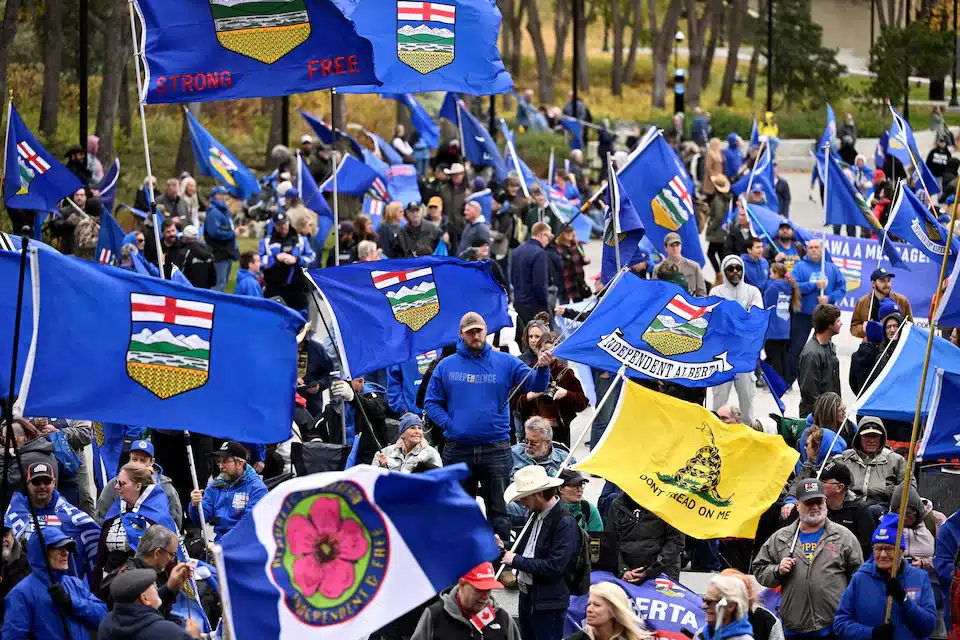
That distinction could determine how the movement develops after the referendum.
If economic grievances remain unresolved, separatist campaigners may continue to mobilise supporters around oil and gas development, federal taxation and the province’s contribution to the national economy.
For Carney, the challenge will be maintaining national unity while addressing Alberta’s concerns without creating further conflict with other provinces or undermining federal priorities.
The referendum also unfolds against a wider backdrop of pressure on Canadian sovereignty, including trade disputes with Washington and Trump’s repeated calls for Canada to become the 51st US state.
Although Alberta’s separation campaign has its own economic and political roots, its persistence adds another challenge to the country’s national cohesion.
Ultimately, even a decisive vote to remain in Canada may not settle Alberta’s independence debate. The outcome could instead determine whether separatists regroup for another referendum, pursue electoral power or continue using the threat of separation to demand concessions from Ottawa.