Abramovich tax evasion allegations have emerged following a BBC Panorama investigation that uncovered evidence of falsified documents allegedly used to conceal Roman Abramovich’s wealth and potentially evade millions of dollars in taxes, raising serious questions about the conduct of professional advisers who managed the Russian billionaire’s finances.
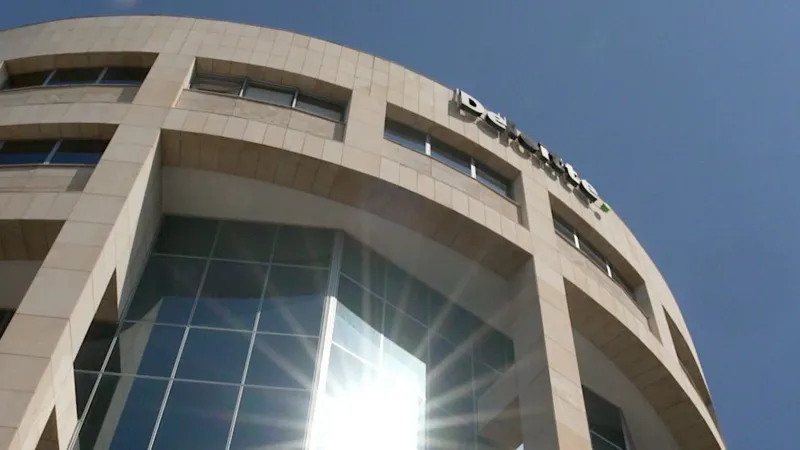
The investigation alleges that Deloitte’s Cyprus operations signed off company accounts that made luxury assets worth $672 million disappear from Abramovich’s financial records. The assets included superyachts, private jets, mansions and other properties.
According to the findings, documents were allegedly backdated to make it appear that valuable assets had been transferred to offshore companies years before the transactions were recorded, helping keep Abramovich’s wealth away from public scrutiny.
The investigation was conducted jointly by BBC Panorama and the Bureau of Investigative Journalism, drawing on thousands of leaked documents relating to Abramovich’s financial dealings and a network of offshore companies administered from Cyprus between 1995 and 2022.
Abramovich’s lawyers denied that he evaded taxes or concealed his fortune. They also said there was no evidence that he knew about, authorised or directed the alleged falsification of documents.
Deloitte Cyprus said it acted in compliance with applicable laws but declined to comment on the specific allegations, explaining that the documents were more than 20 years old and no longer accessible.
Deloitte and Abramovich’s Alleged Wealth Concealment
For nearly two decades, Abramovich was one of the most prominent Russian oligarchs in Britain. He purchased Chelsea Football Club in 2003 and financed a period of considerable sporting success before selling the club following Russia’s full-scale invasion of Ukraine in 2022.
The British government subsequently sanctioned Abramovich, describing him as an associate of Russian President Vladimir Putin. He was forced to sell Chelsea, while billions of pounds connected to his wider financial interests remained subject to legal restrictions.
In Jersey, approximately £5.4 billion in Abramovich-related assets remain frozen, and a criminal investigation has been ongoing for four years. His lawyers have rejected allegations connected to that investigation, describing it as politically motivated.
The latest findings concern how Abramovich’s business empire operated through offshore companies, with advisers allegedly manipulating financial records to conceal the ownership and location of substantial assets.
The documents indicate that Deloitte and MeritServus, a corporate services firm based in Limassol, Cyprus, worked closely with Abramovich’s associates after Deloitte ceased owning MeritServus in 2005.
How $672 Million in Luxury Assets Disappeared
The first example identified by the investigation dates to 2006, when new legislation in Cyprus required company accounts to be made public, threatening to expose information about Abramovich’s extensive wealth.
Deloitte Cyprus had prepared draft accounts for Amiscan Investments, an Abramovich-linked company, covering 2003. The records listed luxury properties and other assets valued at approximately $672 million.
Among the assets were a mansion in West Sussex, a luxury London apartment and an estate in southern France. The accounts also listed helicopters, private jets and several boats, including the superyacht Pelorus, valued at $147.5 million.
According to the investigation, Abramovich’s associates and MeritServus devised a plan to transfer the assets to Amiscan’s parent company in the British Virgin Islands, where financial information could remain more difficult for the public to access.
The documents were allegedly backdated by three years to make it appear that the transfer had taken place in 2003, rather than being arranged later.
Deloitte Cyprus reportedly reviewed the backdated documents and described them as “adequate” for removing the assets from Amiscan’s accounts.
When Deloitte signed off the company’s 2003 accounts in 2006, the properties, aircraft and yachts had disappeared from the records. Only $75,000 in assets remained.
Lord Sikka, a professor of accounting at the University of Sheffield, criticised the alleged misrepresentation of transaction dates and the failure to publish accurate financial statements.
He described the conduct as a “violation of a statutory duty” and called it “pretty scandalous”.
The investigation said the leaked documents indicated that Deloitte knew the accounts were misleading, although the allegations have not been established as criminal wrongdoing by a court.
Alleged Tax Evasion Scheme Involving Nearly $2 Billion
A second set of documents concerned Kravin Investments, another Abramovich-linked company registered in Cyprus. The company reportedly held almost $2 billion in a bank account in 2003.
Because the funds generated substantial interest, the company was potentially liable for tax on that income under the applicable Cypriot tax arrangements.
However, the investigation uncovered correspondence suggesting that advisers discussed changing historical financial records to make it appear that Kravin did not own the money it held.
An August 2005 email from MeritServus to Abramovich’s Russian associates described a plan developed following a meeting with Deloitte.
The email stated: “If you agree, it will be necessary to change the financial statements and the accounting records accordingly for 2003 and 2004.”
MeritServus also informed the associates that Kravin’s provisional tax assessments for 2005 would be submitted on the basis that the company had earned no income from the funds.
A month later, an associate in Russia responded: “I agree”.
The investigation found that MeritServus subsequently created backdated documents that purported to show Kravin was holding and investing the money on behalf of its parent company in the British Virgin Islands.
That arrangement would make it appear that Kravin did not own the funds and therefore was not responsible for paying tax on the interest income in Cyprus.
In a September 2005 email, Deloitte reportedly stated that “certain changes will have to be made to the accounts (bank account balances, interest income, profit and loss account)” because of the changes to Kravin’s assets.
The BBC investigation concluded that the correspondence suggested Deloitte had been involved in advising on changes to financial records that could enable the company to avoid millions of dollars in tax.
Legal Expert Calls Scheme ‘Straightforward’ Tax Evasion
Barrister Andrew Mitchell KC, an expert in financial services law, examined the evidence presented by Panorama and gave a strong assessment of the alleged arrangement.
He described the scheme as “straightforward” tax evasion and said “it couldn’t be more blatant”.
Mitchell added: “If it happened in England and it was in the millions, His Majesty’s Revenue and Customs would be thinking about a prosecution.”
His comments underline the potential legal consequences if the alleged conduct were established by the relevant authorities.
Cypriot MP Christos Christofides also called for accountability if tax evasion had occurred.
He said: “we have to see how we can get our money back and how, if some people are guilty, they have to pay the price according to our law.”
The allegations raise questions about the responsibilities of accountants and financial advisers who prepare or approve company accounts, particularly when those records are used to determine tax liabilities and disclose corporate assets.
Documents Allegedly Concealed More Than $10 Billion
The investigation uncovered a third example involving Electus Investments, a company in Cyprus associated with Abramovich’s business fortune, reportedly worth more than $10 billion.
According to the leaked records, MeritServus backdated documents to make it appear that the Cypriot company did not own the fortune.
The alleged arrangement involved another company with the same name, Electus Investments, registered in the British Virgin Islands, where company accounts did not have to be made public in the same way.
Emails indicated that MeritServus acknowledged in 2006 that the fortune belonged to Electus Investments in Cyprus.
However, the firm allegedly proposed transferring the beneficial ownership to the British Virgin Islands company while making the transaction appear to have taken place three years earlier.
One email stated that it was necessary “to transfer the beneficial ownership to Electus Investments in the BVI”.
MeritServus subsequently signed and backdated documents that purported to show the offshore company had owned the more than $10 billion fortune since 20 November 2003.
When the Cypriot company’s accounts were published, its reported assets amounted to only $145,000.
The arrangement allegedly made billions of dollars appear to have disappeared from the publicly available accounts, despite the investigation’s findings that the wealth had been associated with the Cypriot company.
Mitchell said the evidence highlighted concerns about the conduct of professionals involved in managing substantial private fortunes.
“What you take away from it is there are professionals who are prepared to bend and break the rules of their profession and therefore the law,” he told Panorama.
He added: “And it looks that they will stop literally at nothing in terms of creating documents.”
Abramovich’s Lawyers Deny Wrongdoing
Abramovich’s legal representatives rejected the allegations that he personally evaded taxes or concealed his fortune through the falsification of documents.
They said he was “not involved in the day-to-day operation of those companies” and argued that relying on advice from professional advisers was entirely proper and legitimate.
His lawyers also maintained that Panorama had provided no evidence showing that Abramovich knew about, authorised or directed the alleged falsification of any document.
They further denied allegations connected to the separate criminal investigation in Jersey, arguing that it had been undertaken for political purposes.
Deloitte Cyprus said it could not comment on the specific allegations because the documents were more than two decades old and were no longer accessible.
MeritServus, the corporate services firm at the centre of several transactions described in the leaked records, closed following the Cyprus Confidential leak.
The Abramovich tax evasion allegations have renewed scrutiny of the role played by accountants, lawyers and corporate service providers in managing the wealth of powerful international clients. The investigation raises questions about the alleged backdating of documents, the accuracy of published company accounts and whether tax obligations were avoided through the disputed arrangements.
Vladimir Milov, Russia’s former deputy energy minister and now a critic of the Russian government, described the broader system as one in which wealthy oligarchs could rely on Western professional services to protect their financial interests and reputations.
He said: “For each Russian oligarch or Middle Eastern or African corrupt oligarch, there’s an army of Western financial and legal services and PR services providers, who is easily taking money for whitewashing their reputation and making them look normal.”
The investigation forms part of the wider Cyprus Confidential project, which has examined offshore financial arrangements involving wealthy individuals and businesses. Media organisations, including the BBC, the Guardian and other investigative partners, have reported on the leaked documents since 2023.
The allegations have not, by themselves, established criminal guilt on the part of Abramovich or Deloitte. Any determination of legal responsibility would depend on further investigation and the relevant legal processes.